.png)
 1 month ago
34
1 month ago
34
Faisal IslamEconomics editor

 Getty Images
Up until late on Thursday the rise in global oil markets appeared to be more of an unfortunate bump than imminent oil shock.
The immediate response to the closure of the Strait of Hormuz, a 10% price increase, appeared rather benign for what was long-assumed to be the oil market's nightmare scenario.
On Friday the situation changed, pennies started to drop.
Derivative petrochemical products vital for livelihoods, and industrial supply chains that are also dependent on free passage in the Gulf, from jet fuel, to urea, are also spiking in price.
While this is not yet an energy shock, the markets are starting to assume worse scenarios if not yet the worst case. It won't take much for oil to breach the $100 barrier next week.
Iran has not actually formally closed the Strait. They have de facto been closed voluntarily as insurance costs soar, and sailors fear for their safety.
The net result is a wave of inflationary pressures emanating from the conflict zone, and upsetting global markets for energy, fuel, food, industrial chemicals, and credit.
On Monday night I gently suggested that forecasts from the Office for Budget Responsibility, the UK government's independent forecaster, could prove rather out of date even before publication on Tuesday.
The extent of that mismatch has surprised me, four days on from the Spring Statement and a week into this conflict.
On Tuesday the price of a barrel of crude oil was assumed to be $63. It closed at $94 on Friday.
A therm of gas delivered to the UK was assumed to cost 74 pence. It is £1.35, and got as high as £1.70 this week.
The gilt rate, the effective interest rate on 10-year government borrowing was assumed to be 4.4%, it ended the week at 4.6%, having nearly hit 4.7%, a significant difference.
The UK's bonds have been hit more than other countries as traders recall the UK's sensitivity to energy price inflation during the Russia-Ukraine crisis.
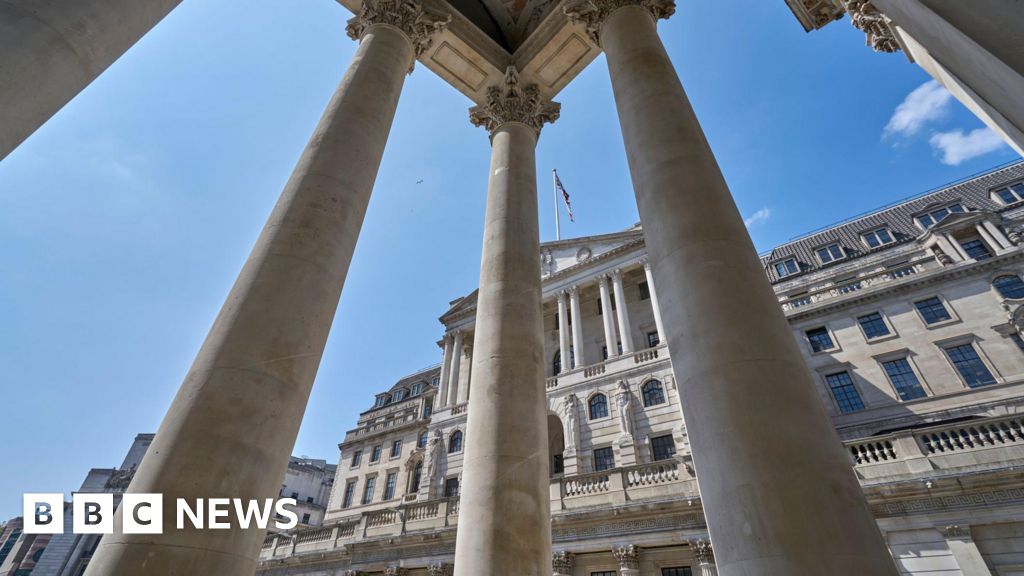
The essential bet is that the Bank of England (BoE) will rein in interest rate cuts as inflation stays sticky.
All this came just at the moment when the markets had started to give credit to the government for the speed of its planned fall in borrowing.
There will be no mortgage price war while all this is going on. The BoE, which had been heavily backed to cut rates this month, is now expected to wait and see.
Of course, these clouds might lift, but US President Donald Trump seems to be suggesting a conflict of weeks or months. Some of the economic warnings from the Gulf may be a way to focus his mind.
It isn't just about the stoppage in the flow of energy through its most important artery.
From Bahrain's oil facilities, to Qatar's gas processing, the port near the Dubai Palm, or tankers near Kuwait, there have been a pattern of attacks that raise questions about a conscious Iranian strategy to up the economic price for the US-Israeli attacks.
The economic consequences are not an accidental byproduct of this conflict, they are an intrinsic aspect of the war.
This makes the precise consequences very difficult to predict, but this new wave of inflation from the Gulf will wash up on the shores of the rest of the globe, including here in the UK.