.png)
 4 weeks ago
43
4 weeks ago
43

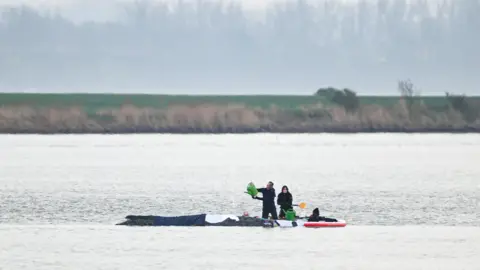 Reuters
Rescuers attempting to rescue the whale in shallow waters near Wismar, Germany
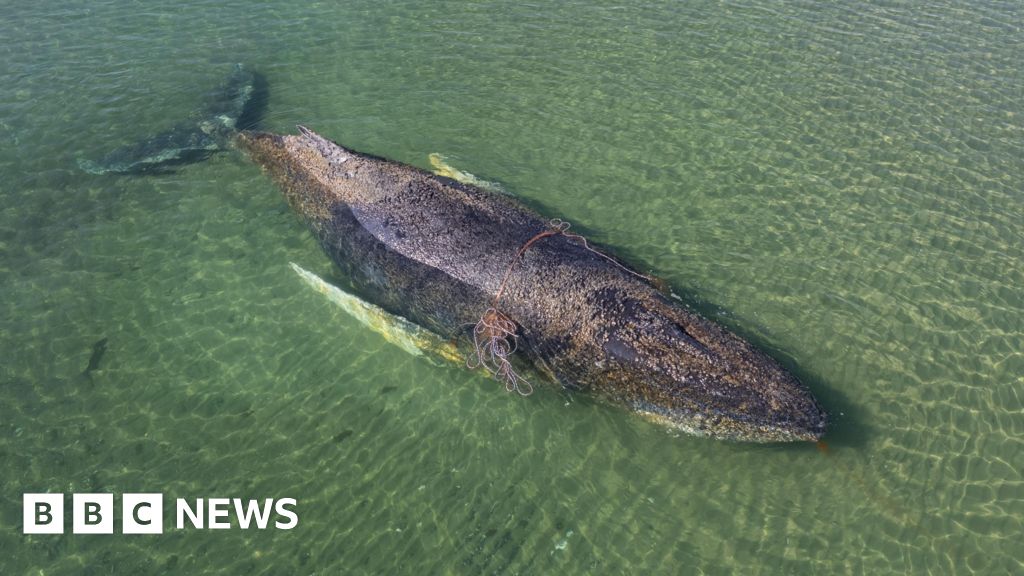
Rescuers plan to use air cushions in the latest attempt to free a humpback whale that has been stranded off Germany's northern coast for weeks.
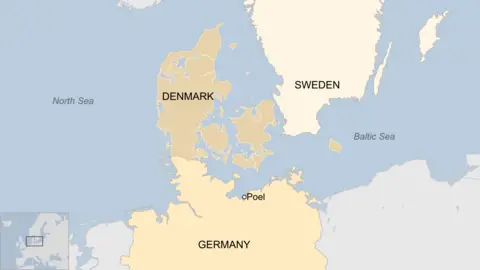
The whale, nicknamed Timmy by local media, was first spotted in the Baltic Sea, far from its natural habitat, at the beginning of March and is currently stuck in a shallow coastal area off the island of Poel.
A private company plans to refloat the injured mammal from the sea floor by its flippers and onto a tarp attached to a tug boat, officials said.
The state of Mecklenburg-Western Pomerania described this as a "minimally invasive" approach - but wildlife experts said any interventions carried considerable risk after previous rescue attempts failed.
They had concluded the chance of survival was very low. However, the German state's environment minister Till Backhaus said a reassessment had found a less intrusive approach.
The air cushions - not unlike inflatable arm bands - will pull the ailing whale back to the surface, where it can be dragged around Denmark's coastline and into the North Sea - and possibly further on to the Atlantic.
The injured whale is still showing signs of life but is severely weakened, the state of Mecklenburg-Western Pomerania said.
"The prognosis remains critical. But a chance of survival cannot be completely ruled out," Backhaus said.
"Against this background, it is justifiable to allow this attempt, and I thank the initiative for it."
Authorities previously conceded that they should let the "majestic animal go in peace".
The whale's plight has attracted international headlines and warnings from the state government about "wild conspiracy theories and misinformation" spreading online.
An exclusion zone has also been established around the whale.
A 67-year-old woman jumped off a boat over the weekend to get close to the whale before she was stopped, the Associated Press reported.
"The outpouring of sympathy shows how deeply the animal's fate moves people," Backhaus said. "At the same time, I ask that you respect the work of the emergency services and adhere to the existing protective measures."
The whale is thought to have become entangled in netting before eventually becoming stranded on a sandbank, while suffering from a skin condition brought on by the lower salt levels of the Baltic Sea.
Rescuers used excavators to dig a channel, allowing the whale to swim free - but attempts to guide it to the North Sea proved unsuccessful as it veered towards shallower waters.
Greenpeace Germany, which has been involved in previous rescue efforts, said it did not support this latest attempt, citing the whale's poor health.
Wildlife experts from the German Oceanographic Museum and the Institute for Terrestrial and Aquatic Wildlife Research said the whale was severely injured with visible skin detachments.
It is assumed to have considerable internal injuries "likely caused by the pressure of its own body weight on its organs over several days".
They also said its injuries indicated it had contact with a ship propeller and a fishing net.
It is unclear how the whale found its way into the Baltic Sea.