.png)
 1 month ago
175
1 month ago
175
Kevin PeacheyCost of living correspondent

 Getty Images
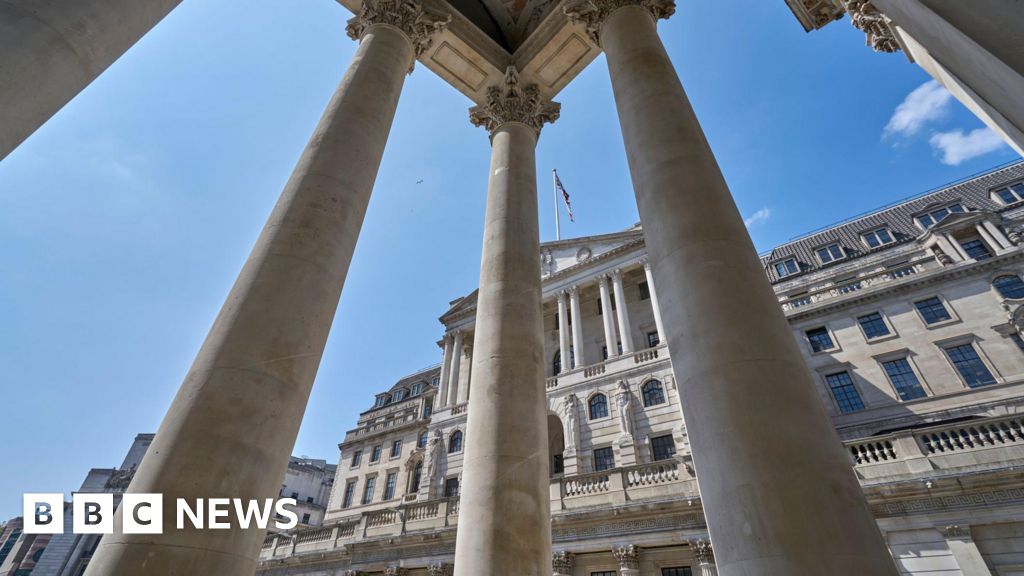
Economic impacts of the war in Iran are expected to lead the Bank of England to hold interest rates later.
Before the conflict began, analysts had predicted a cut in the Bank rate at this meeting, but upheaval in the markets and a higher oil price have all but ruled out such a move.
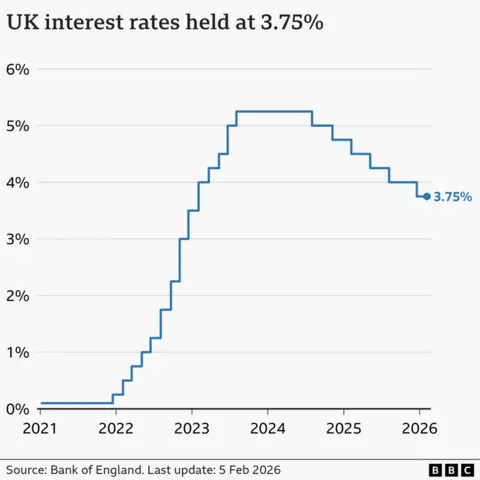
The Bank's Monetary Policy Committee (MPC) is likely to keep the benchmark rate, which influences the cost of borrowing for individuals and businesses, at 3.75%.
Commentators are far more uncertain about the likelihood or frequency of any interest rate cuts later in the year, with some discussing the possibility of an increase in the event of a drawn-out war and an extended economic shock.
The MPC's latest decision will be published at 12:00 GMT.
Economists had pencilled in an interest cut after the rate of inflation dropped to 3% in January. The Bank rate was already at its lowest level since February 2023.
The Bank's rate-setters had held the benchmark rate at the start of February, in a knife-edge vote but, at the time, Bank governor Andrew Bailey told the BBC that there was likely to be "some further reduction" in rates later in the year.
But all that was soon thrown into the air following the US-Israeli strikes on Iran, and the subsequent impact on the economy in the UK and globally.
Oil prices have surged owing to disruption in crucial trade routes, primarily the Strait of Hormuz.
That is likely to eventually feed through to the price of domestic energy, and has caused increases to heating oil costs and the price of petrol at the pumps.
Official forecasters say that is likely to put upward pressure on the rate of inflation, which had been expected to fall towards its target of 2%.
Interest rates are the primary tool available to the Bank to hit that inflation target rate, so economists now expect the MPC to stand back from any changes to the rate to gauge the duration and severity of the price shock.
Mortgage rates on the rise
The Bank of England's base rate is what it charges other banks and building societies to borrow money. It influences what they charge their own customers for mortgages as well as the interest rate they pay on savings.
Markets and lenders have now priced-in an interest rate hold, but they have also reacted to the wider uncertainty by pulling deals and raising rates on new fixed deals.
The average two-year fixed rate has jumped from 4.83% at the start of March to 5.30% now, its highest since last February, according to the financial information service Moneyfacts.
For those looking for a five-year deal, the average rate has gone up from 4.95% to 5.35% over the same period and is now at its highest level since August 2024.
Wider borrowing costs are also likely to be affected, such as the rates on credit cards and personal loans.
"This will be particularly challenging for lower income households, many of whom were hoping that falling rates would ease pressure on already stretched budgets," said Tamsin Powell, consumer finance commentator at Creditspring.
"Instead, they are now facing a prolonged period where the cost of credit remains high, while essentials like food, utilities and transport continue to take up a greater share of income. This leaves far less flexibility to absorb financial shocks or unexpected expenses."
A fall in interest rates is usually bad news for the returns paid to savers. A hold should offer "some short respite", according to Rachel Springall, of Moneyfacts.
"Over the past couple of weeks, there have been more savings rate increases than reductions, most notably on one-year fixed rates, but the true benefit rests in the margins, so average rates are not moving much," she said.
"The market needs stability and savers need to feel encouraged to build a nest egg."
About two-thirds (60%) of UK savings accounts fail to beat the Bank rate of 3.75%, she said.