.png)
 1 month ago
39
1 month ago
39
It’s not dramatic to say the labor negotiations between the WNBA and its players feel like an old-timey western standoff. The opposing sides have been holding in a quick-draw stance over a new collective bargaining agreement for the past 17 months, passing proposals back and forth that contain what each side envisions for the future of the league. But with less than 70 days until the 30th WNBA season is supposed to tip off, there’s still no resolution.
The two sides blew past the original deadline of 31 October 2025 and the 9 January extension, entering a “status quo” period. The league said that if a term sheet hasn’t been agreed to by 10 March, the 2026 season is at risk of not meeting its planned 8 May start.
The WNBA has more eyes watching its games than ever before, and the players are demanding more, too: more money, more revenue share and more respect. The league and its owners want to be more cautious. Who blinks first?
How did we get here?
In October 2024, the Women’s National Basketball Players Association (WNBPA) opted out of the 2020 collective bargaining agreement (CBA). This meant the agreement would expire on 31 October 2025, rather than its original 2027 end date. The 2024 season – in part because of a superstar draft class that included Caitlin Clark and Angel Reese – saw historic growth. According to the WNBA, attendance grew by 48% from the previous season, reaching the highest level in 22 years. Viewership skyrocketed 170%, and merchandise sales increased by 600%.
This tracked with the steady growth of the league over the years prior. The WNBA’s ratings had been increasing since 2021, behind superteams such as the Las Vegas Aces and New York Liberty. The league secured a record $75m in capital funding in 2022. Even in 2023, the WNBA notched 36 million unique viewers, its highest since 2008.
New expansion franchises were awarded in 2024. Toronto and Portland became the 14th and 15th teams. Then the league signed a monumental 11-year media rights deal with Disney, Amazon, and NBCUniversal, totaling an eye-popping $2.2bn, or $200m per year.
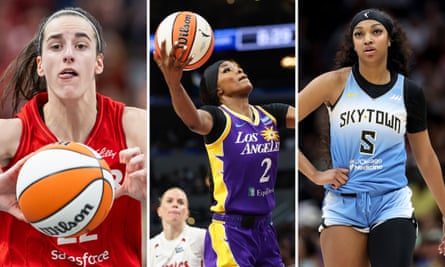
All of this made it natural for the players to opt out and capitalize on the growth they were directly contributing to. Since that decision in 2024, even more history has been made. Three more expansion teams – Cleveland, Detroit, and Philadelphia – will join the league by 2030, each paying a record $250m expansion fee. The 2025 season set an attendance record with more than 3.1 million fans, and ESPN saw the highest regular-season and postseason viewership ever.
Frustrated by the lack of movement in negotiations last summer, the union decided to take a public stance. The players wore “Pay Us What You Owe Us” T-shirts at the All-Star Game in July, and they held signs with the same blunt message while the game’s awards were given in primetime. Union vice-president Napheesa Collier called out commissioner Cathy Engelbert during her end-of-season October press conference, saying: “We have the best players in the world. We have the best fans in the world, but right now we have the worst leadership in the world.”
What are the players asking for in the new CBA?
In short, the players want a bigger piece of the pie. They feel that the record-shattering statistics aren’t a coincidence; it’s because they are the best women’s basketball players in the world, and people want to watch (and pay) to see them perform. The WNBPA is pushing for higher salaries (the previous supermax contract was $249,000, and the top rookie contract maxed out around $78,000), a higher salary cap (about $9.5m in Year 1), and team-provided housing (something that’s been in place since the first CBA in 1999) among other items such as pensions, pregnancy trade protections and standardized team practice facilities.
The key point of emphasis, though: the revenue sharing system. Under the most recent CBA, the WNBA players have received less than 10% of league revenue. That’s significantly less than their NBA counterparts’ roughly 51% revenue-share split. In its most recent proposal, sent on 27 February, the WNBPA is said to have asked for 25% of gross revenue (revenue before subtracting expenses) in the first year, increasing over the lifetime of the agreement to an average of about 26%. This offer is a concession to the original ask of an average of 31% over the lifetime of the agreement.
What’s the league’s response?
The WNBA side – which includes Engelbert, league staff, legal counsel and team owners and executives – has held firm on its offer of over 70% of net revenue (revenue after subtracting expenses) for the players, amounting to less than 15% of gross revenue. Its 2026 salary cap offer would come in at $5.75m (up from $1.5m in 2025) and would grow in line with revenue growth in subsequent years.
The league’s proposal is said to include a maximum salary of about $1.3m in 2026, projected to approach $2m in 2031. It would increase the average player salary from $120,000 in 2025 to $540,000 in 2026 and $780,000 by 2031.
On 18 February, it was reported that the league felt the WNBPA’s proposal was “unrealistic” and “would cause hundreds of millions of dollars in losses for our teams”.
The union said on 23 February, though, that the 2025 season generated enough money for the players’ revenue share to kick in for the first time in WNBA history. This resulted in about $8m being divided among players under contract during the 2025 season.
The WNBA has yet to provide bank statements or open its books for full transparency.
“We don’t think, obviously, what we’re asking for is unfair, otherwise we wouldn’t be asking for it,” Collier told USA Today Sports last month. “But we understand it’s a negotiation, and I think we are trending in the right direction. But, we have to be able to stand strong in what we believe in and make sure that we are getting a fair cut in this pie that we are building together as a league and as players.”
Is the WNBA really at risk of not having a 2026 season?
Yes. If the two sides can’t reach an agreement, the players could strike, or the owners could initiate a lockout.
The reality is, there is so much that needs to happen before the scheduled 8 May opening weekend. A two-team expansion draft must occur with the Portland Fire and Toronto Tempo. More than 80% of the players are free agents, and teams cannot meet or negotiate new contracts with players or their representatives until the CBA is official. Then there needs to be a college draft (currently slated for 13 April). All players are expected to report to their teams’ training camps, most of which are scheduled to open 19 April.
A typical WNBA offseason runs from October to April. With the CBA still unsigned, there’s a rush to cram six months’ worth of events into about five weeks.
What does this mean going forward?
The players are ready to strike if necessary. In mid-December, the WNBPA sent a survey to every player asking for authorization for the executive committee to call a strike; of the 93% of players who responded, 98% provided authorization. With the new 10 March deadline looming, there was a heated union meeting on 24 February involving roughly 30 players, , with the majority of player leadership reportedly remaining in favor of a potential strike. There are no plans for a new strike authorization vote, though, and some players spoke publicly this week against a possible strike.
“I don’t think a strike is good for anyone, because as the league loses money, or if we have a delay, we also lose money,” union vice-president Breanna Stewart said Monday. “That’s not just me as a player. That’s me thinking as, like an overall business person. Nobody wants to lose money, so how can we try to prevent that in all ways possible?”
The growth of the WNBA – and women’s sports on the whole – makes this CBA the most important in the league’s history. The players know their worth and are demanding to be paid accordingly. Not only can they point to the revenue-share kickback from the 2025 season, but WNBA team valuations are the highest in the world for women’s sports franchises. The New York Liberty are worth $450m, more than 30 times what majority owners Joe and Clara Wu Tsai paid in January 2019; the Golden State Valkyries, who sold out all 17 home games in their inaugural 2025 season, are valued at a whopping $500m.
Since January, almost 50 WNBA stars have been in Miami playing in Unrivaled, the professional three-on-three league founded by Stewart and Collier. It pays some players more than their WNBA salaries and offers them equity in the growing league. Las Vegas Aces guard Chelsea Gray won the one-on-one tournament in February and took home a $200,000 check for 31 minutes of gameplay, an amount higher than her $196,267 WNBA base salary last year.
What happens next?
The WNBA sent a new proposal to the players on Sunday night, including enticing updates to rookie-scale contracts but maintaining its stance on revenue share.
Both the WNBA and the players’ association are racing against the clock to ensure the 2026 season starts on time. Even if the new 10 March deadline is met and the two sides reach an agreement, it could take weeks to ratify the deal. Only then can expansion drafts, free agency and the college draft follow.
For now, WNBA teams have released their schedules without knowing who will be suiting up for them – or whether there will even be a season to play.