.png)
 1 month ago
15
1 month ago
15
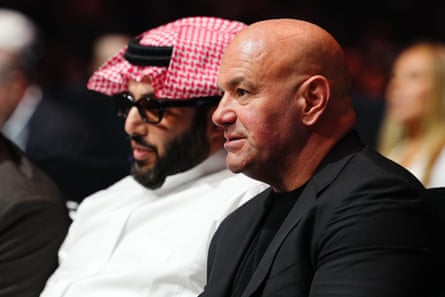
Even Turki al-Sheikh’s most severe critics acknowledge that, under his guidance, the Saudi interests that have dominated professional boxing in recent years have paid generous purses to fighters. Now the Saudis have turned to TKO Group Holdings and Dana White to oversee Zuffa Boxing – a newly created vehicle designed to expand the footprint of its equity partners in the United States.
Zuffa Boxing is taking a far less generous approach toward fighters than Sheikh did. That’s evidenced by the contract that many of the fighters being recruited by Zuffa are being asked to sign.
Almost two dozen people have been interviewed for this article. Some of them asked that they not be mentioned by name out of concern that it could invite retaliation or damage professional relationships. Others had no such reservations. Let’s put the matter in context.
TKO Group Holdings is a sports and entertainment company whose vast portfolio includes UFC and World Wrestling Entertainment (WWE). On 6 August of last year, TKO president and COO Mark Shapiro announced:
(1) TKO was forming a boxing promotional company called Zuffa Boxing that would be a joint venture between TKO Holdings, the Saudi Arabian General Entertainment Authority, and Sela (a live-experiences and recreational company owned by Saudi Arabia’s Public Investment Fund)
(2) Zuffa Boxing would promote approximately 12 “league” fight cards annually for a period of five years
(3) TKO would also work with Sheikh to promote several super-fights (such as Canelo v Crawford) each year. The league fights and super-fights would be separate businesses
Sela owns 60% of Zuffa Boxing and TKO owns 40%.
UFC president and CEO Dana White has been charged with overseeing Zuffa Boxing.
“I live in my own little bubble,” White told Brian Campbell of CBS Sports. “I’m gonna do my own thing. I’m not worried about what any of those [other promoters] are doing. Those guys don’t think big enough. Those guys all think small. They don’t think the way that I think. My goal is to rebuild boxing in the United States.”
Unlike Riyadh Season’s boxing program (which has been written in red ink), Zuffa Boxing is designed to run in the black.
On 29 September, Zuffa Boxing and Paramount announced a media rights agreement that makes Paramount+ the “exclusive home of Zuffa Boxing” in the US, Canada and Latin America. “Beginning in January 2026,” the announcement read, “Paramount will exclusively distribute a full slate of Zuffa Boxing events starting with 12 action-packed cards with plans to grow that number in subsequent years. The bouts will be available via Paramount’s direct-to-consumer streaming platform Paramount+, with the potential for select events to be simulcast on CBS and other Paramount platforms.”
Paramount is believed to be paying Zuffa Boxing $100m a year for these 12 fight cards.
But there’s a potential stumbling block. Zuffa’s boxing program as presently conceived runs afoul of the Professional Boxer Health and Safety Act and the Muhammad Ali Boxing Reform Act (often referred to jointly and referred to herein as the Ali Act). Thus, Zuffa and its allies have launched a massive lobbying effort to change the law.
The Ali Act was enacted to curb the power of promoters and others who were exploiting fighters and dominating boxing.
The proposed legislation would water down several provisions of the act that currently protect fighters’ interests. More specifically, it would allow for the creation of “unified boxing organizations” (UBOs) as an “alternative system for compliance with the requirements of the Act”. Zuffa Boxing, by virtue of its capitalization and organization, could qualify as a UBO. Most promoters couldn’t.
The Ali Act was intended to create, among other things, a firewall between ratings organizations, managers and promoters. The proposed amendment destroys that firewall for UBOs. If the Ali Act is amended, Zuffa Boxing will be able to assume the roles of sanctioning body, promoter, manager and ranking authority. This latter point is significant because Zuffa has indicated that it will tie fighters’ purses directly to its own championships and rankings.
The Ali Act requires that promoters make certain financial disclosures to fighters and governing athletic commissions. If the proposed changes become law, fighters would be in the dark as to how much revenue promoters are receiving in conjunction with their fights.
The proposed amendments would also eliminate the Ali Act’s protection against “coercive contracts” imposed on fighters. UBOs could exclude boxers who have not signed a long-term contract with them from participating in any of their events.
A number of arena operators representing venues such as Madison Square Garden and Crypto.com Arena are supporting the Ali Act amendments. So are various state athletic commission officials.
“TKO and Zuffa play hardball,” one state regulator told the Guardian. “And they generate so much revenue from WWE and UFC that no one wants to cross them.”
“They’re very good at instilling fear,” another official said.
By and large, fighters are wary of the proposed changes. Muhammad Ali’s widow, Lonnie Ali, has supported the amendments. But Ali’s grandson, Nico Ali Walsh (a fighter with 15 pro bouts on his resumé), opposes them.
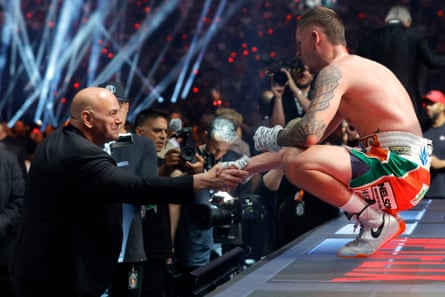
Former WBO 140lb champion Chris Algieri spoke for his brethren when he stated, “The Muhammad Ali Act does need changing. But it needs to be expanded and tightening up, not weakened in a way that will harm those who actually fight. Fighters – and I speak from experience – get exploited enough as it is.”
Evander Holyfield noted, “The loudest voices pushing for this rewrite aren’t boxers but the promoters of mixed martial arts – the people who made ‘business first, fighters last’ a mega-sport.”
And Oscar De La Hoya declared, “The bill would allow promoter-controlled Unified Boxing Organizations to own rankings, titles and fighters essentially duplicating the UFC’s single-entity model inside boxing. It would legalize the very conflicts of interest the original Ali Act was written to outlaw. The Ali Act was one of the few federal laws ever passed to protect athletes rather than corporations. The new legislation would gut that framework, and the open marketplace that keeps the sport honest would collapse into monopoly.”
Earlier, De La Hoya had been more blunt, saying, “TKO has been begging for these changes so they can fuck fighters over with their new league.”
Dana White’s response to that is to say Zuffa is giving fighters a great opportunity and, “The guys who want to fight under the Muhammad Ali Act exactly the way it is will have that opportunity to do that. Or you can bet on me and fight with me under our version of the Muhammad Ali Act.”
But that’s the same as saying fighters had a choice to sign or nor sign with Don King prior to the Ali Act being passed. Economically, fighters are a particularly vulnerable group who need protection.
Boxing’s world sanctioning bodies have long been criticised, and appropriately so. High sanctioning fees, questionable rankings and other practices cry out for reform. White played on that theme earlier this year when he told Stephen A Smith, “I’m going to get rid of the sanctioning organizations.”
But will Zuffa Boxing be any better?
“Zuffa will be a sanctioning body,” one promoter says. “They might not call themselves a sanctioning body. But they’ll be ranking fighters. They’ll be giving out belts. They just won’t take a sanctioning fee because they’ll be making money off fighters in other ways.”
Testing for the presence of banned performance enhancing drugs in a fighter’s system is one of the most important issues facing boxing today. The Voluntary Anti-Doping Association (Vada) is widely recognised as the most reliable PED testing entity in boxing. Sheikh, to his credit, has been supportive of Vada and employed its services for most Riyadh Season events.
Testifying before Congress in support of amending the Ali Act, UFC senior executive vice-president and chief operating officer Ike Lawrence Epstein referenced Zuffa’s UFC PED-testing program and claimed, “UFC maintains the most effective and progressive anti-doping program in professional sports.”
But Epstein’s claim is subject to dispute. When asked about it, one state regulator countered, “How many times since UFC instituted its own PED-testing program has a UFC fight been pulled down or the result of a UFC fight been changed because of a positive test result? Zuffa doesn’t even require that a positive test result be reported to the governing state athletic commission.”
In recent years, Jake Hurwitz has been the anti-doping compliance coordinator for UFC. He just left UFC to start his own PED-testing company (Global Sport Anti-Doping). His first client is Zuffa. That doesn’t inspire confidence.
Epstein also dropped a clue as to Zuffa Boxing’s intentions during his testimony before Congress when he declared, “The UBO would solve the problem of boxing’s historical lack of a centralized industry organization.”
In this instance, a “centralized industry organization” sounds like monopolization.
There are several positives in the proposed legislation. For example, the amendments would require that a fighter be paid at least $200 per scheduled round for each fight. But Congress could enact this minimum compensation and leave the rest of the Ali Act in place.
On 4 December, the House of Representatives Subcommittee on Workforce Protections held a one-day hearing on the proposed legislation. On 21 January, the Education and Workforce Committee voted to send the bill to the House floor for a full vote. Passage in the House is a foregone conclusion. The Senate has yet to hold hearings. There’s a small chance that the bill could be defeated in the Senate. But it’s likely to pass because monied interests are behind it and there’s no strong interest group in opposition.
At the 4 December hearing, Andy Foster (executive officer for the California State Athletic Commission) testified, “Professional boxers need help to achieve labor equity. Another key positive aspect of this bill is that the UBO model shifts the nature of the industry and would be less exploitative to boxers signed to a UBO.”
But one of the ways that Zuffa Boxing plans to make money appears to be by lowering labor costs. When asked by the Guardian if he had read the contract that Zuffa is asking fighters to sign, Foster said that he had not.
This writer has read the contract. There’s no indication that Zuffa has shared it with members of Congress. But the representative of a fighter who’s being recruited by Zuffa shared it with the Guardian.
The first few pages of the contract reference the number of bouts the fighter would be contracting for, the length of the contract term, and the purse for each fight. That’s followed by 31 pages of “Standard Terms and Conditions”.
The purses paid by Zuffa will differ from fighter to fighter depending on who the fighter is and variables such as whether or not the fight is for a Zuffa Boxing championship. Some fighters will be guaranteed three fights a year; others two. Some of the standard terms and conditions may be negotiable. Others aren’t.
The Zuffa Boxing contracts are similar in some respects to the contracts used by other major boxing promoters. In other respects, they go further and make Don King’s contracts of old look fighter-friendly. These contracts offer a window into how Zuffa will treat boxers if the proposed Ali Act amendments are enacted into law.
The contract is between the fighter and Zuffa Boxing but envisions that an entity called TKO Boxing Promotions will be the promoter of record for most of the fights and that fighters will enter into bout agreements with TKO for each of their fights.
Zuffa is given the exclusive unrestricted worldwide right to secure, promote and present all of the fighter’s bouts and related activities during the term of the contract. During that time, the fighter is prohibited from participating in any other boxing, mixed martial arts, professional wrestling or other combat sport competition or exhibition.
Zuffa has an obligation to offer a specified minimum number of bouts to the fighter during each year of the contract term. But unlike most promoter-boxer contracts which call for opponents to be mutually agreed upon, the Zuffa contract states, “Bout opponents are to be designated by Zuffa Boxing (subject to Fighter approval, which shall not be unreasonably withheld, delayed or conditioned).” If the fighter declines to take a fight that Zuffa offers him, it counts against one of the fights that Zuffa is obliged to offer him that year.
Worse, Zuffa’s standard terms and conditions state, “If at any time during the Term, Fighter claims to be injured or temporarily disabled, Zuffa Boxing may, at its election, for each such injury or disability claimed by Fighter, declare that Zuffa Boxing has satisfied its obligation to offer one of the Bouts hereunder, without any compensation due to Fighter for said Bout.” The proposed amendment to the Ali Act walks that back a bit and would require Zuffa to pay the fighter $2,000 unless the fighter was already collecting insurance money (for example, worker’s compensation for an on-the-job injury).
The Zuffa contract further provides that, if a fighter has an undercard bout and the main event is postponed or cancelled, Zuffa can pull the fighter’s fight down without any payment obligation to the undercard fighter.
The contract also gives Zuffa numerous “ancillary” and “marketing” rights, including the unrestricted worldwide right to use the fighter’s “identity” to promote “Zuffa Boxing, the Zuffa Boxing brand, Zuffa Boxing Content and each Zuffa Boxing Event” and to “promote any product or service of a Zuffa Boxing affiliate, licensee, sponsor or content distributor”.
“Zuffa Boxing event” is broadly defined to include the bouts, pre-bout events, post-bout events, promotional appearances, “Personal Data Capture Services”, and other activities arising out of services performed by the fighter pursuant to the terms of the contract.
“Zuffa boxing content” extends to any element of the fighter’s identity in connection with the Zuffa Boxing Events and any other programming produced or created by or on behalf of Zuffa Boxing from the effective date of the contract through the end of the term.
Merchandise is divided into two categories:
“Event Merchandise” is any merchandise or other product derived from, created, used, or sold in conjunction with any Zuffa Bouts, Pre-Bout Events or Post-Bout Events
“Merchandise” without the “event” qualifier is all other merchandise
Merchandise runs the gamut from apparel to banners, buttons, posters, jewellery, photographs, souvenirs, toys, collectibles, casino games, trading cards and memorabilia items.
Depending on whether the item is event merchandise or other merchandise, the fighter will receive either 15% of gross revenue received by Zuffa or 30% of net revenue. “Gross revenue” and “net revenue” can become exponentially smaller when filtered through a maze of companies with common ownership.
Try telling Peyton Manning or Patrick Mahomes that they’ll receive only 15% of the gross revenue paid for their name on an endorsement deal with Nationwide or State Farm.
The contract pays special attention to video games, giving Zuffa, in its sole discretion, the exclusive worldwide right to use the fighter’s identity in connection with the creation, development, manufacture, distribution, marketing and sale of video games by Zuffa or licensed third parties. The fighter’s identity includes, among other things, the fighter’s “moves, acts, gestures, vocalizations or physical performance during a bout or when otherwise captured at Zuffa Boxing’s reasonable request”.
Other rights given to Zuffa extend to the sale of virtual reality, augmented reality, hyper-reality, artificial intelligence, and enhanced reality games and experiences as well as motion pictures.
Many of these rights, while not exclusive beyond the term of the contract, extend non-exclusively in perpetuity.
The contract requires that fighters wear only equipment and the uniform approved by Zuffa during fights as well as at pre-bout and post-bout events. Zuffa shall have the right to include any logo, name, brand, advertising, or informational material of its choosing of the uniform and equipment. The fighter cannot incorporate any of these elements on his equipment or uniform without Zuffa’s prior written approval (and at Zuffa’s sole discretion).
The fighter must make promotional appearances to help market the Zuffa brand, Zuffa events, and Zuffa merchandise including appearances at press conferences, interviews and other sponsorship and promotional activities “as reasonably requested” by Zuffa. The timing of these appearances is to be mutually agreed upon by the fighter and Zuffa with the fighter’s consent “not to be unreasonably withheld”. Zuffa will arrange and pay for round-trip air fare and hotel accommodations for the fighter and a per diem for meals in conjunction with these appearances. But it will not be required to pay the fighter for the appearance itself.
Zuffa even gets a range of rights relating to any tattoos that the fighter may have on his body.
The fighter must arrive on site for his bouts at a time designated by Zuffa (which can be as much as eight days before the bout) and depart the lodging provided by Zuffa prior to the designated checkout time on the day after the fight.
The fighter will be provided with four tickets to each of his bouts. But if the fight is at the Meta Apex arena in Las Vegas, these tickets will only be good for his fight, not the entire card, unless the fighter is in the main event.
There’s a long list of expensive medical tests that the fighter must undergo. However, the contract states in solid capital letters, “ALL COSTS ASSOCIATED WITH THE MEDICAL EXAMINATION AND TESTS SHALL BE PAID BY FIGHTER.”
There are also mechanisms by which Zuffa can extend the contract well past its original term.
If a fighter is offered a bout against an opponent designated by Zuffa and does not accept that Bout “because the Fighter is unwilling or unreasonably refuses to compete for any reason whatsoever”, Zuffa may, at its election for each such declination, extend the contract term for “the length of time sufficient to find a new opponent to accept the Bout for up to a maximum of six months”.
If at any time during the contract term, a fighter is unable to compete (for example, if the fighter is “disabled, sick or injured; incarcerated; [his licence is] suspended or revoked by an Athletic Commission or anti-doping authority; or Fighter’s ability to travel is restricted by a governmental agency”), for each such period, the contract term shall automatically be extended for the longer of the period of time that fighter is unable to compete (as determined by Zuffa after consultation with fighter) or six months.
If a fighter is scheduled to fight and the bout is postponed for any reason other than Zuffa’s or TKO’s non-performance (for example, if the opponent is injured), Zuffa may extend the term of the fighter’s contract by the number of days between the date originally scheduled for the bout and the date on which the bout subsequently occurs.
If the fighter is a Zuffa Boxing “champion” at the end of the term, the term shall automatically be extended for one year or until the fighter has participated in three more Zuffa Boxing bouts (whichever eventuality occurs first).
A recent change to the proposed Ali Act amendments in committee in the House provides that the contract term imposed on a fighter may not exceed six years. Six years is a long time for a fighter.
Meanwhile, Zuffa’s rights may be locked in. But the fighter has very little job security. Zuffa has the right to terminate the contract and any bout agreement in effect if any of the following occur:
(1) The fighter is “not declared the winner of any boxing bout by the athletic commission.” In other words, if the fighter loses or draws or the bout is declared “no contest”, Zuffa can cut the fighter. So let’s assume that Zuffa has a fighter it wants to cut. Zuffa can match him against an opponent who is way over the fighter’s head. If the fighter, as expected, loses, Zuffa can cut him. And if he declines the fight, Zuffa can, without payment, count the declination against its contractual obligation to the fighter. Zuffa can also cut a fighter if the fighter makes two successive declinations.
(2) Zuffa can cut a fighter if Zuffa Boxing is “dissolved, ceases to operate, or discontinues the weight class or division that fighter participates in”.
(3) Zuffa can cut a fighter if the fighter is injured or disabled. Alternatively, if the fighter decides to retire or is permanently disabled at any time during the contract term, Zuffa may, at its election, suspend the contract term for the period of such retirement or disability (said suspension not to exceed four years). During the suspension period, Zuffa’s merchandise rights would remain in effect.
(4) Zuffa can cut a fighter if the fighter is charged with a felony or misdemeanor (other than a minor traffic offence); if the fighter’s licence to participate in bouts is suspended or revoked by an athletic commission; if the fighter violates Zuffa’s Athlete Conduct Policy; or if the fighter or any of the fighter’s affiliates materially breaches or defaults on any provision of the contract.
The proposed Ali Act amendments that have been reported out of the House committee would specifically allow a fighter to begin negotiations with another UBO or promoter during the 30 days preceding expiration of the fighter’s contract with Zuffa. But the Zuffa contract would give Zuffa six months to match the material financial terms of any competing offer for the fighter’s services on the same financial terms as the competing offer or any later modified offer made to the fighter.
UFC has been plagued by class actions in the past and, without admitting wrongdoing, recently paid $375m to settle an antitrust lawsuit brought against it by UFC fighters who claimed that they were illegally exploited by the company.
The Zuffa Boxing contract provides in part, “To the maximum extent permitted by applicable law, the parties agree that no claims may be initiated or maintained on a class action, collective action, or representative action basis either in court or arbitration.”
The contract precludes the fighter from seeking any consequential, incidental, or punitive damages from Zuffa, nor shall the fighter have the right to seek an injunction or other equitable relief.
It requires that the fighter relinquish the right to sue Zuffa in state or federal court and submit any claim he may have against Zuffa to binding arbitration in Clark County, Nevada.
In the event that either side engages counsel “in connection with the enforcement or interpretation” of the contract, the prevailing party would be entitled to recover attorneys’ fees and costs from the other party regardless of whether or not a legal action is filed.
These provisions would make it impractical for a fighter to institute litigation against Zuffa.
The fighter would have the right at his sole cost and expense to audit Zuffa’s books to see if he’s getting an honest accounting with regard to merchandise sold pursuant to the contract. But Zuffa must be given 30 days advance notice of the audit, which can only be conducted by “a reputable licensed and certified public accounting firm approved by Zuffa Boxing”.
The contract also states, “Fighter additionally agrees that, if Fighter chooses to undertake any training activities or preparation for Bouts, such activities and/or preparation for Bouts will not take place in California.”
Apparently, California law would protect Zuffa’s fighters in a manner that’s not to Zuffa’s liking. The Guardian reached out to Dana White for comment regarding the Zuffa Boxing contract but he was unavailable to respond on short notice.
Originally, there was ambitious talk from Zuffa about a boxing “league” that would divide 200 of the best male boxers in the world – women weren’t included in the plan – into 12 weight classes. But the “best” boxers in the world (as well as their promoters and managers) wouldn’t commit to a plan that was clearly against their best interests.
Thus, Zuffa shifted its focus from established stars to what it calls “exciting young prospects”.
“I’m still not putting any of my fighters in it,” Frank Warren, one of boxing’s leading promoters, said. “And if you’re a responsible manager, you wouldn’t put a young prospect in it. That’s simply not how you build a prospect as an attraction or as a fighter. The people running this are very smart but they don’t know boxing.”
On 23 January, Zuffa launched its Paramount+ series at the Meta Apex with a fight card denominated “Zuffa Boxing 01”. The main commentating team consisted of blow-by-blow commentator Joe Tessitore with Max Kellerman and Andre Ward as analysts. Three fights were streamed during the main portion of the card. There was a lot of shilling and more sizzle than steak.
Kellerman began his commentary with “I’ve waiting for this moment my whole life, since I was a little kid.” But in truth, the show had no more to recommend it than an average club-fight card.
The opening bout – Julian Rodriguez v Cain Sandoval – was a good one. The fighters were evenly matched. Rodriguez won a 99-91, 99-91, 98-92 decision but had to work hard for it.
Then things fell apart.
Dana White has said repeatedly that boxing fans are tired of A-side-v-B-side fights where the B-side is, in effect, a designated loser with virtually no chance to win. But the next two bouts were A-side-v-B-side fights.
Misael Rodriguez was a 6-to-1 favourite over Austin Deanda in a fight that matched an Olympic bronze medalist from Mexico against a guy from Virginia who had no amateur fights before turning pro. After four dreary rounds, Deanda said he was suffering from double vision and the fight was stopped.
The main event matched Callum Walsh against journeyman Carlos Ocampo. Ocampo had fought three step-up fights in his career and lost all of them, two by first-round knockout. Walsh (like Misael Rodriguez) was a 6-to-1 favourite.
It was a painfully boring fight. Ocampo is a one-dimensional boxer and fought like it in a 10-round sparring session. In round six, he hit Walsh on the back of the shoulder; Walsh’s left glove touched the canvas; and referee Allen Huggins called it a knockdown. Otherwise, Walsh won every minute of the fight. Neither fighter pushed the pace. Ocampo wasn’t very good. And neither was Walsh, who won a 98-90, 98-90, 97-91 decision.
At the post-event press conference, White declared, “The fights were great.” (They weren’t.) But in the next sentence, he acknowledged, “We got a lot of work to do.”
As for what comes next; Zuffa Boxing has announced that its second fight card will feature Jose Valenzuela v Diego Torres at the Meta Apex on 1 February. Valenzuela has lost three of his last five fights but opened as a 7-to-1 favourite. That will be followed by a 13 February card headlined by Efe Ajagba v Charles Martin. Martin, a 6-to-1 underdog, will be 40 years old in April and has won only two fights over the past six years. Ajagba, 31, lost his one step-up fight (against Frank Sanchez). These are not “exciting young prospects”.
Sheikh set a high standard for the quality of Riyadh Season and Ring fight cards. These fights fall short of that standard.
“Do you realize what a bad look this is,” asks a promoter who does business with Sheikh. “Max Kellerman calls Dana White the greatest combat sports promoter of his lifetime and [WWE president] Nick Khan the most effective executive he’s ever known and says that boxing was saved the day Turki al-Sheikh was born. And then, for its launch, Zuffa Boxing has Callum Walsh against Carlos Ocampo as the main event with Diego Torres against Jose Valenzuela and Efe Ajagba against Charles Martin after that. Come on!”
Meanwhile, there are signs that the relationship between White and Sheikh is fraying.
“His Excellency and Dana White both have big egos,” a promoter who knows both men says. “Those egos aren’t getting any smaller. And they’re clashing.”
Be that as it may, White insists Zuffa Boxing is in this for the long run. He has a substantial war chest and believes that fans who support UFC will support the Zuffa Boxing brand once the proposed amendments to the Ali Act become law.
And the same promoter warns, “The Saudis have a substantial equity interest in Dazn and substantial influence over what it does. Most of the major promoters have been pushed to Dazn and are now dependent on it. What happens to these promoters if Dazn exits from boxing and isn’t there for them? Most if not all of these promoters will be out of business and it will be just Zuffa. Dana has built UFC at the expense of the fighters. And once Zuffa has control, he’ll do the same thing here. Anybody who thinks differently, doesn’t have a clue. It’s UFC 2.0. That’s the plan. You can see it.”
With that in mind, another promoter who has done business with Sheikh says: “I don’t like what Zuffa is doing. They’re throwing the baby out with the bath water. They might change a few things for the better. But what they’re planning will destroy the best parts of boxing culture and wipe out some of boxing’s best traditions. And there’s another thing that bothers me. Competition is good. I like that Zuffa is bringing competition to change the business. The problem is, once Zuffa changes the business, it will want to kill all the competitors.”
And once the competitors are gone, fighters’ purses are likely to get smaller.
Zuffa currently pays 17% to 20% of its revenue to UFC combatants. In the NFL and NBA, the players receive 50%. In boxing at the elite level, the number is often in the neighbourhood of 80%, although that percentage is diminished by the share paid to a fighter’s manager and trainer, sanctioning-body fees and other costs. Also, there are far more poorly paid club fighters than there are well paid elite ones.
That said, the long-term outlook for boxers under a Zuffa Boxing regime isn’t good.
“Trust me,” an executive who has done business with TKO says. “The boxers will be treated the same as UFC fighters when it comes to the financial split. Anybody who thinks differently doesn’t know what they’re thinking about. Zuffa’s main business is UFC. And Dana isn’t about to jeopardize the UFC business model that made them all rich.”
As noted above, without admitting wrongdoing, UFC recently paid $375m to settle an antitrust class action brought against it by fighters who alleged that they had been illegally exploited by the company. A second class action that raises similar issues is pending. That, coupled with the proposed Zuffa Boxing contract, doesn’t sound like an organization that puts fighters first.
During the past year, the dominant political forces in the US have systematically enriched their wealthy patrons by tearing apart the safety nets that protect vulnerable Americans. If the proposed boxing legislation currently before Congress is enacted, the next beneficiaries of this largesse will be TKO Group Holdings and its equity partners. The long-term victims are likely to be boxing fans, other promoters and professional boxers.
-
Thomas Hauser’s email address is [email protected]. His most recent book – The Most Honest Sport: Two More Years Inside Boxing – is available at Amazon. In 2019, Hauser was selected for boxing’s highest honor - induction into the International Boxing Hall of Fame.