.png)
 1 month ago
24
1 month ago
24
It was the Olympics of politics and penises, of JD Vance being jeered and of Ukrainian bobsledders being banned from the competition, of a convicted criminal beating the teammate she was guilty of defrauding, of Lindsey Vonn crashing out 12 seconds into the race and of Ilia Malinin making one mistake too many, of the internet became momentarily obsessed with slow‑motion videos of a Canadian stroking a curling stone with the tip of his finger, and it was the Olympics where the Norwegian ski‑jump team refused to dignify questions about whether or not they were injecting acid into their genitals.
Like I said right at the beginning, Pierre de Coubertin never wanted a Winter Olympics. If that line sounds a little familiar it might be because you read it here a fortnight or so ago. “The great inferiority of these snow sports is that they are completely useless,” Coubertin wrote, “with no useful application whatsoever.” But it’s true, too, that over time he changed his mind. And by the end of the International Olympic Committee’s very first Olympic “winter sports week” at Chamonix in 1924 he gave a speech in which he told his audience that “winter sports are among the purest”.
You had to hold both these ideas in your mind at the same time at Milan-Cortina. By and large the Winter Olympic sports are, yes, “completely useless”. Unless you live in one of the handful of countries in the world where one or another of these pastimes actually counts in popular culture, the way speed skating does in the Netherlands, or cross-country skiing does in Norway, or ice hockey does in Canada, they’re not going to inspire mass participation. A decade from now, no one except a handful of future competitors will ever say they grew fitter, stronger, or more sporty, because they took place.
And it is exactly that uselessness that makes them what they are. Pure is the word Coubertin used. Inspiring is the one the Instagram generation would choose. Nobody is here because they’re going to get rich from competing, nobody comes with the aim of getting famous, a lot of the competitors don’t even hope to win a medal, and some of the ones who do know better than anyone that the biggest single advantage they have is the amount of money their country has decided to invest in their training, often in events where, in all honesty, there’s just not that much elite competition.
So why are they here? The answer is the same one that humans have always had in the mountains, the same one George Mallory gave when they asked him why he wanted to climb Everest: “Because it’s there.” They come to test themselves.
As the rest of us get to watch. You don’t need to want to ski downhill to be struck dumb by the bravery of Lindsey Vonn’s decision to try to race the Olimpia di Tofane with a ruptured anterior cruciate ligament. You don’t need to want to ride skeleton to admire Matt Weston’s relentless perfectionism. You don’t need to know how to cross-country ski to find something to love in Johannes Høsflot Klæbo’s bloody-minded determination to overcome every single obstacle in front of him across two weeks of competition.
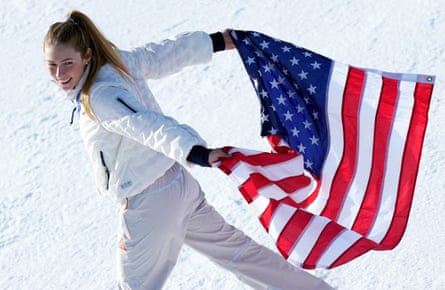
You don’t need to be able to slalom to experience the joy at watching Mikaela Shiffrin overcome her PTSD 16 months after she nearly died in a crash, or be astounded by the speed and grace of Federica Brignone 11 months after she broke her leg so badly that she wasn’t sure she would ever be able to walk normally. You don’t need to be able to tell a run-back takeout from a hit-and-run to feel regret at just how much it hurt Bruce Mouat, Hammy McMillan, Bobby Lammie and Grant Hardie, to win a silver medal in the men’s curling when they had spent four years dreaming about the gold.
And at the end of it all, it is still OK to ask whether the price paid was worth it. These Olympics, like almost every Olympics, have run grotesquely over budget. Athletes always talk about the jeopardy of winter sports, but there has been an abiding sense of uncertainty about these entire Games. A hell of a lot of effort went into making sure they looked good on TV, but on the ground it’s hard to avoid the sense that Italy only just got away with it. They left everything so late that well over 50% of the budgeted construction work on roads, rails, and car parks won’t even be finished until long after they’re over and everyone has gone home. The latest on the slate isn’t due to be finished till 2033.
There is a lesson here too, about accepting imperfection, not that anyone at the IOC will learn it. Because even though these Olympics were half-finished, they worked fine. The Games don’t always need to be more than the one before. There was no need to carve a new snow park into the mountains at Livigno when there was one in the next valley over, no need to cut down a forest to build a new sliding track in Cortina when there’s one 60 miles away in Innsbruck, no need to erect new, bigger, ski jumps when there’s a smaller one already next door. The Olympic creed is Faster, Higher, Stronger, but the IOC’s sometimes seems like Better, Bigger, Richer.
Because it’s the athletes who make them great. Give them ice, and they will race; give them mountains, and they will throw themselves down them. All the rest is just set dressing.