.png)
 1 month ago
25
1 month ago
25
Mercedes on the march
The big four – Mercedes, Red Bull, Ferrari and McLaren – have been at pains throughout testing to claim they are not the top dog, in something of an inverse Mexican standoff, each decrying their own strengths. Undeniably, however, Mercedes emerge from the three pre-season tests looking strong.
Mercedes’ car and engine were reliable, completing the most laps of any team. Perhaps most importantly the car looks balanced and easy to handle, planted through the corners, in stark contrast to their travails of recent years. It is performing just as the simulation data predicted, so George Russell has been purring.
The pecking order among the top four is still somewhat opaque and will remain so until qualifying in Melbourne, but if Mercedes have been sandbagging – and they have yet to run on low fuel and soft tyres – then their real pace is going to be formidable.
Ferrari fire from the blocks
With such a wide-ranging regulation change, nothing is quite cut and dried. Red Bull have shown efficient energy recovery architecture, enabling them to deploy more electrical power for longer to deliver a straight-line speed advantage.
Ferrari have the capacity to make blisteringly fast starts. A smaller turbocharger spins up to speed at starts. Such were the concerns over slow-starting cars, the FIA trialled a new launch procedure during testing. A five-second hold allows the cars at the back of the grid to bring their revs and turbo up to speed. When trialled, the Ferrari was revelatory, even more than their eye-catching rotating rear wing.
When Lewis Hamilton applied the power it punched him forward like a rocket, from the fifth row to leading into turn one. It was no fluke. Esteban Ocon in the Ferrari-powered Haas made a similarly striking rapid getaway, and the pattern was established. Better still in a start procedure that is now complex and requires careful management, the Ferrari-engined cars have enjoyed predictable and straightforward launches, suggesting they have the sweet spot when the lights go out. And not suffering from so much turbo-lag, they can enjoy a similarly feisty punch on corner exit.
Rule row still running
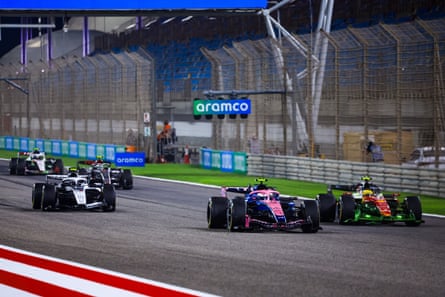
How the new regulations will affect the racing, particularly the fears that energy management will play too prominent a role, have swirled around the paddock since the first simulations of the new cars were run last year. Over testing, the drivers’ fears escalated, with Max Verstappen outspoken in how much he disliked the new cars. Stefano Domenicali, the F1 chief executive, has called for calm before the first race but considerable disquiet remains.
The drivers will doubtless adapt to the energy management requirements, including having to lift and coast and having their pace dictated by the need to harvest energy across a lap. But the acid test in Melbourne will be whether it affects the racing. If the changes have no broad effect on pace, the furore outside driver chuntering will probably fade swiftly. However, if it does prove to be a real issue, then action could be taken by the FIA and F1 to head off a painful start to the new setup.
Aston Martin under the cosh
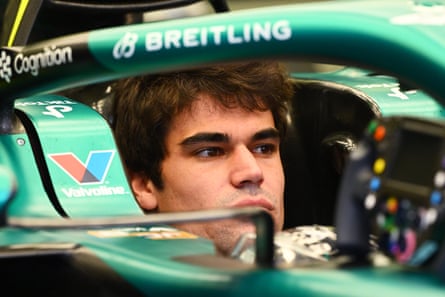
If Adrian Newey is to work his magic for Aston Martin, the designer has his work cut out. The team who had been looking to 2026 with huge optimism, given the arrival of the most gifted car designer of his generation, the factory and wind tunnel all in place, have endured a nightmare in testing. They have completed only 128 laps this week, the fewest of any team by some distance. Newey’s ambitious aerodynamic aims may yet come good but not while basic issues with the gearbox and transmission have stymied running.
Ominously, Aston Martin had to limit their run time on the final day of testing because engine manufacturer Honda had burned through so many parts they had a shortage. Honda’s trepidations about their readiness were clear when they launched their engine. “We need more power, simple as that, we’re just lacking on power and then we also need to improve the car, so a combination of things,” was a long-faced Lance Stroll’s assessment. While Fernando Alonso, who must be experiencing deja vu with another recalcitrant Honda engine, noted with no little understatement: “There are many things we need to fix.”
Cadillac make it to the party
Built from scratch in little over 12 months, F1’s newest team acquitted themselves well in testing. To have the car rolling across all three tests was an achievement in itself, given that Williams were not ready for Barcelona. Cadillac were not only running but putting some impressive miles on the clock.
For a startup, there are no illusions at the team who expect to be bringing up the rear of the grid, but are in it for the long haul. Efforts have been made to manage expectations and the target for the moment is bringing both cars to the flag. Then perhaps to take a first point and demonstrate improvement across the season. Valtteri Bottas and Sergio Pérez spoke encouragingly of the car’s balance and while the hard yards remain ahead, Cadillac have started on the front foot.
Tight midfield fight
Behind the big four, the pecking order is similarly tight. Haas have made the greatest step up under the new regulations, and might be the best placed in midfield given the benefits of having a Ferrari engine. An improving Alpine have made their most positive start for some time. Williams are struggling after missing the Barcelona test and clearly have some way to go but there was optimism that they are on the right path. Racing Bulls have enjoyed the impressive debut for the Red Bull engine and should have the edge on Williams, as might Audi on their debut, certainly in the early phase of the season.