.png)
 3 weeks ago
28
3 weeks ago
28
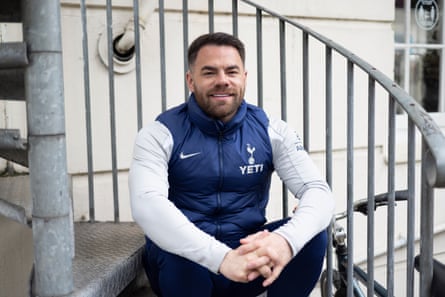
Martin Ho is ready to chat, after being playfully reprimanded by the waiter in a south London cafe for leaving a lone tomato on his plate. “It’s got more vitamin C in it than orange juice,” the waiter quips as he clears the table.
It has been quite the season for the 35-year-old Tottenham head coach, who took charge of a team in July that looked rudderless and despondent as it limped to an 11th-place finish in the WSL, one season on from finishing sixth and reaching an FA Cup final.
Spurs are back up the table with three games to play. They sit in fifth, three points away from matching their best WSL tally of 32 points, which was achieved in the 2021-22 season.
On Monday they face an FA Cup quarter-final against Chelsea, having reached the same stage of the League Cup, where they exited after a 2-1 defeat to Manchester United.
“If the season finished now, I’d say it’s been a success,” says Ho, who began his coaching career at 17 having not made it as a young player in Everton’s academy. “From where the team was to where it is now, internally we’ve achieved a lot of what we set out to do. We’re not where we ultimately want to be, but it’s good for this first season in terms of foundation building, growth and stability.”
It is a bold to label the season a success before its close, particularly after consecutive 5-2 losses, to Manchester City and Arsenal, but he is not wrong. The widely held belief that Spurs are moving in the right direction means those defeats, while unpleasant, are viewed in context.
When Ho arrived in north London, two years after taking his first head coach role with the Norwegian side SK Brann, the task was huge, but there wasn’t huge change. Despite inheriting a team that staggered over the line, just two players joined in the summer, the Norway forward Cathinka Tandberg and the Japan defender Toko Koga.
That was deliberate. “I made it very clear to the club when I came in that I wanted to assess the players myself,” says Ho. “I’ll always listen to the opinion of staff around a team, but I have to see it with my own eyes, in my environment, with my coaching style, my methodology and around the way I work.”
That was the approach he took when he left his assistant coach role at Manchester United, where he began as No 2 to Casey Stoney before working under Marc Skinner, for SK Brann. Ho took the time to learn as much as he could about the club, the fanbase, the squad, the country, the culture, the football culture and the potential that existed.
At Tottenham, changes would be minimal he told the club. “I wanted to give everyone an opportunity over that first four, five, six months to show what they could do. I believed that a different environment, a different voice and a different methodology might bring something different out of them and it did. There was vast change in the group and that’s a huge credit to the players because of where they’d been.
“I knew the task at hand. We finished second-bottom and Tottenham shouldn’t be in that position. I had to assess everything on and off the pitch; how things were done, the processes, how they trained, how they played and then connect that to the club’s values. I felt there was a bit of disconnection, so we aligned everything and made expectations really clear for players and staff.”
Lifting heads was an important part of the process too. Losing takes a mental toll, losing with no clear idea of how to turn things around is worse. “There was a lot of rebuilding psychologically because of the disappointment of that season,” Ho says. “I said to the players, we have to look forward. We can’t go back.
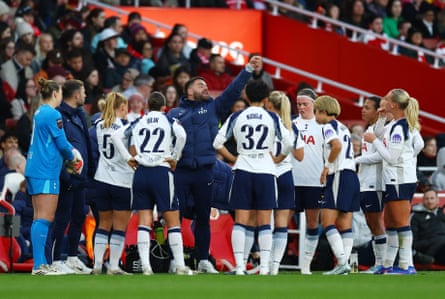
“We asked them to play a totally different way, to be brave with the ball, build up and press higher. That comes with mistakes and adversity, but internally we knew what we were doing. Ultimately, to have success, you have to fail at times and we did a lot of work in pre-season on togetherness, unity and mentality.”
The 5-1 loss to Manchester City three games into the new season, in September, was a key turning point. “The response after that showed the mentality had changed,” says Ho. “From there, it was about reinforcing belief, challenging them, and reminding them how far they’d come.”
Tottenham lost once more before Christmas in the WSL. Further reinforcements arrived in January, but consistency has been hard to find, with three wins from eight league games. Critically, though, the green shoots of potential remain and the plans for growth clear.
A big task Ho faces is managing expectations before they probably secure their best finish in the top flight. “The biggest thing is being honest and realistic,” he says. “If you’re not, you set yourself up for failure and difficulties. If you say ‘we’re going to do this’ and you don’t, it doesn’t help anyone. For me, it’s about saying: ‘We’re here, we need to take the next step to be sustainable, and then once we get there, we need consistency and continuity.’”
Expectations can be fickle, the first half of the season had some talking about Spurs bagging a Champions League spot. The slip away from that has not dipped heads. “We have to be realistic, European football would probably come too early for us right now,” says Ho. “You don’t want to just get there and drop out, you want to be sustainable at that level. It took Manchester United years to get into the Champions League.
“ It doesn’t happen overnight and you have to evolve everything; the squad, the staff, the processes and the investment. I have huge belief we’ll get there, but I want it to be steady progress, not a flash in the pan.”
With the pool of players small and the number of elite players even smaller, not having Champions League football presents challenges for any team with ambitions of reaching the top though, not least that a good season alerts those competing in Europe to your talent.
“It’s difficult, because players will always have ambitions, but what we try to do is be authentic and give players a really strong environment, good development, comprehensive support and offer clarity in what we’re doing,” says Ho. “If players are improving, evolving and becoming better, that’s powerful. They need to see their value and their pathway.
“You can’t compete with every club, sometimes players will move on, and you have to respect that, but we’ve managed to keep a lot of players, fend off interest and even attract players who have turned down bigger clubs.” Ho won’t say it, but he is a big pull. Many players that have worked with him in have only good things to say about his quality as a coach.
Born in Liverpool to a Chinese father and English mother, Ho was immersed in the sport early on, benefiting from his dad’s drive, passion and commitment to hard work and his mothers holistic questions: “Are you happy?” “Do you enjoy it?” “If you do, what does it look like in the short term for you and where can you see yourself?”
At 35, Ho is the first to say he is still learning and he particularly credits working with Andy Spence at Everton and joining Stoney at United as key to his development. “I always say all coaches are like thieves, because you take from one another all the time. What I’ve tried to do is always be authentic in the way I take things from people and think about how I can make it authentic to me, what I want, how I see football and how I want my team to look and behave.”