.png)
 12 hours ago
5
12 hours ago
5
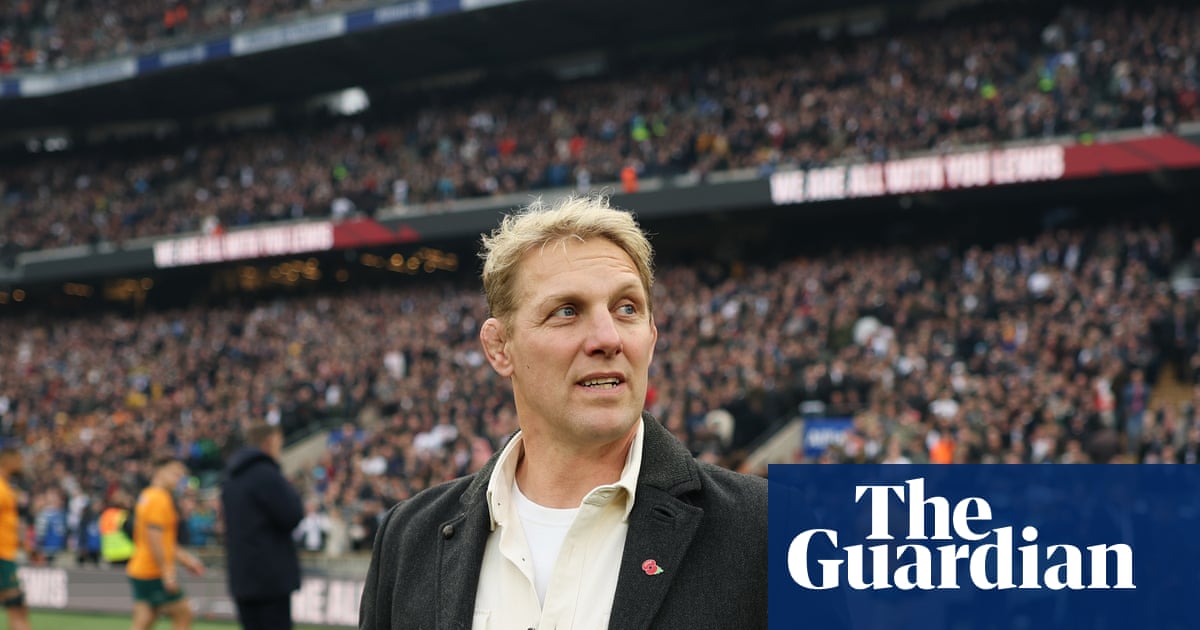
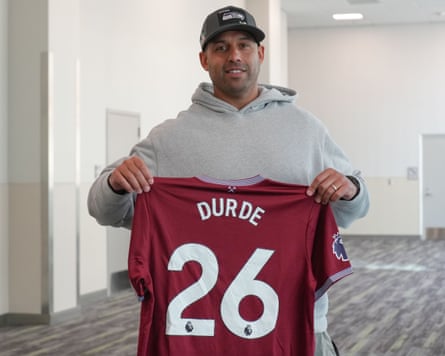
A middle-aged man pulls down his baseball cap, walks across Leicester Square and heads to Greggs for lunch before taking the Piccadilly Line home to Southgate. It’s only two months since he won the Super Bowl but none of the thousands of tourists milling around central London recognise him. Aden Durde should be a British celebrity.
Olympians often say there is a massive comedown after they win gold medals. Some think: ‘Now what?’ How have you felt after winning the Super Bowl? “I wouldn’t say it’s a comedown, but there were moments after you win it, like at the parade, I felt numb. The little letdown is, while you might get another chance to create it, you’re not going to do it again with that group of people. You realise that this special thing that we had is over. I thought that on the bus going back to the hotel from the game.”
You looked so satisfied at the end of the game, just soaking it all up rather than sprinting on to the field to celebrate. “Yeah. At a certain age, you don’t tear around or you’ll pull a hamstring or something. It’s good to just be grateful, take in the moment. If you don’t, they just pass you by.”
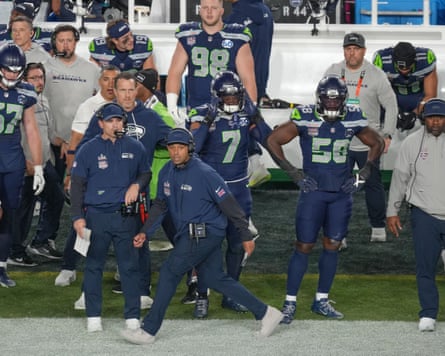
NFL teams have seven months between seasons. What do coaches do in the off-season? “A lot of self-scouting, looking at yourself as a group. How can you improve? What do you need to take out? What do you need to add? And then looking at players, free agency, the draft. You’re studying players all the time. There’s self-development: how can we be better teachers? Talking about leadership, culture, how can we refine that area of our team and build on that? So off-season days are full and actually pretty good fun. We’re doing a lot more collaborative work this year and that’s good fun too because you just talk football with different people and see the game from their eyes.”
How much time did you get off? “Not much! I had a week after the season ended and a week in London. But we have five weeks off in June when the whole NFL shuts down. We see the players this month in phase one. They can’t go on the grass, so you do some classroom stuff and they work out with a strength coach and start getting their body right. Then into phase two you can go on the grass, working with each player, all kind of fundamental development. And then phase three, you start working against each other, so it’s about eight to nine weeks pre-season.”
Given all the ups and downs of your career path – star domestic player, NFL Europe, NFL practice squad, junior coach, elite coach – do you find yourself saying to players: ‘I’ve been where you are’? “That’s a really good question. It’s like with kids. It’s hard to tell them that you’ve been there and done it because their experience might not be like yours. I’ve tried that before and it doesn’t always work. So it’s more: share what you see and how they can improve, what they’re doing well and where they can grow. Use your experiences to see those patterns, and how you can change them. If you just suddenly go at them, sometimes they’re just like: ‘Whatever, everyone says that.’ But you’re right, the practice squad is a hard place to be. The people who stay super focused, work on their craft and understand what they need normally end up coming out of the practice squad and playing.”
When you’ve got guys kitted up on the sidelines who are way down the pecking order, do you have to talk to them as if they might get on, even if you think you’re not going to need him? “You can’t think like that – you need everyone. We saw it last season. We had players who got hurt and people have to come in and play. The guys that play on the front, on defence, they all play, every game. That is a rotational spot. There’s players on special team who’ll play if someone gets hurt. You have to coach everyone and everyone has to expect they are going to play. You should be looking to be your best in whatever reps you get, because if you maximise them you normally get more opportunities. It’s our job to instil confidence in the guys on the fringes, so when they’re going on, they’re comfortable.”
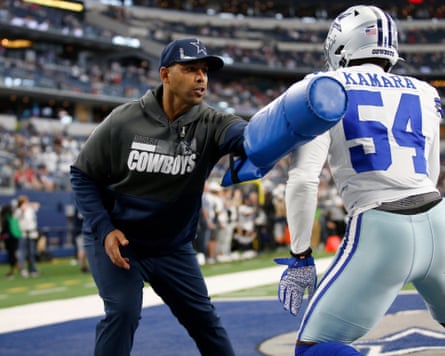
When did you realise that you either knew as much, or could know as much, as an American coach? “When I first went to Dallas [as a coaching intern in 2014]. I thought it, but you don’t know until you’ve been there. I’ve had NFL coaches coach me but I had real impostor syndrome. As a player I never thought I was ready. I just didn’t have the confidence other guys had. I was always trying to get somewhere and felt I was a little bit behind. By the time I finished playing, I probably knew enough and I was confident, but it was too late. But I learned how to be my own coach. Coaching is about teaching, holding people accountable, having answers for people, putting people in the right place and being honest. You have to do all those things just to survive in the NFL. I didn’t realise but when I was a player I was doing all those things. If I couldn’t get the answer how to do something, I would just study a guy who was really good on our team and say: ‘OK, that’s how he’s doing it.’”
What did you do after you stopped playing before you went into coaching? “I was always coaching [at London Warriors]. And then I volunteered at a pupil referral unit in my local area. My wife was becoming a midwife and we ended up starting a business together, helping kids get into education who weren’t in education or were out of work. We did that for three years.”
What did you learn from that? “A lot! It was a crazy time. That’s a whole other conversation. I’m using the same teaching and culture methods now as I used back then. I use my experiences to understand how accountability teaches people professionalism, and football taught me how to be a professional.”
Did it make you appreciate that none of us really knows what is going on in another person’s life? “Definitely. You don’t know what someone’s going through. And people can change. People in sport are so young now and they’re under the microscope of social media all the time. It’s different from when we were young – thankfully, as none of us would be doing our jobs!”
You launched the International Player Pathway with Osi Umenyiora in 2017. What will make you fully satisfied that it’s worked? “When they don’t need it. I don’t know if it will ever get there but it’s a great tool. There’ll be a time when players come from different avenues. I think the NFL Academy (at Loughborough) is doing that. You’re obviously always gonna pick up a player that you think is a good athlete from another sport, but the whole vision was to work out how to create a pipeline. My first vision was to create an academy but we needed proof of concept first, so we ended up doing the reverse.”
Follow No Helmets Required on Facebook