.png)
 1 month ago
45
1 month ago
45
Laura KuenssbergSunday with Laura Kuenssberg
 BBC
BBC
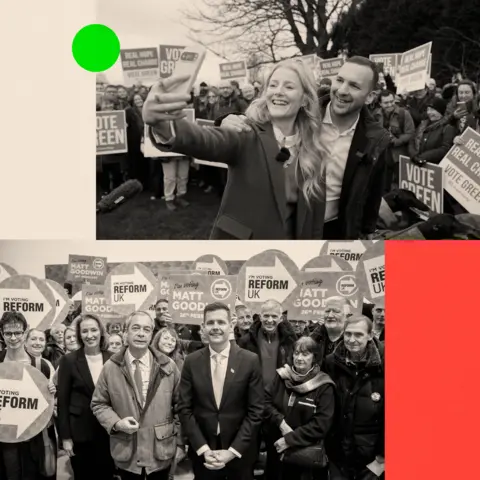
One is a former stockbroker from the south who, by his own proud admission, loves smoking, drinking and women. The other's a proud vegan, gay, northern former actor, who told me he'd never drunk a drop.
But the jubilant Zack Polanski and Nigel Farage have rather a lot in common.
Before you scream, burst out laughing, or think I have lost my marbles, of course, there are very big differences between them.
The Greens talk about a climate emergency. Reform UK calls the government green plans, "net stupid zero".
Polanski wants a "world without borders". Farage wants to deport many thousands of people from the UK. And shock horror, they aren't each other's cup of tea.
The Green leader says, he "despises" Farage's politics, accusing him of sowing hate and division.
Farage, when turning down Polanski's offer of a debate, said, "if you pick a fight with a chimney sweep, you get covered in soot", going on to say Polanski "has a fan club: all the heroin smokers".
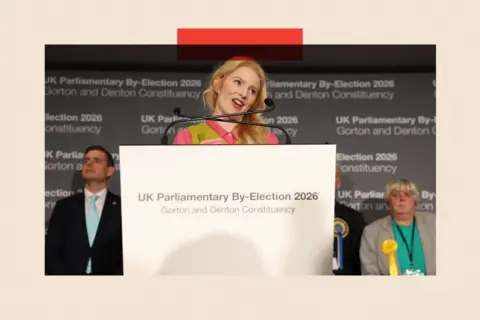
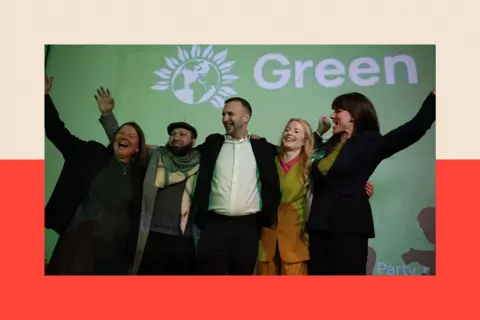
But, as Polanski and his newest MP Hannah Spencer celebrate a very impressive victory in Gorton and Denton, and Farage's party chalks up pushing Labour into third place, there are parallels between the leaders and the parties - even if it seems bonkers.
 EPA/ Shutterstock
Before he became leader, Polanski did suggest the Greens could even learn from Farage's success.
It looks like he has. In politics, truth is stranger than fiction more often than you might expect.
First off, in this by-election and elsewhere, Polanski and Farage both make politicians from the traditional parties incredibly nervous for one simple reason: they can sometimes beat them.
And just as Reform ruined Labour's night by narrowly winning the Runcorn election in May last year, the Greens have now really hit Starmer's party where it hurts, winning their first by-election, with Labour humiliated into third place.
Both parties have been growing incredibly quickly, attracting thousands upon thousands of new members.
In an era when many members of the public are sick of politicians, they are both doing something right, and pulling people in.
 EPA/ Shutterstock
Having seen them both with members of the public, not just in the TV studio or in Parliament, both men appear to enjoy campaigning. To absorb energy from small interactions with members of the public: when they cross the road to ask for a selfie, or call out "Hi Zack", or "Ooh, it's Nigel" from an upstairs window, or beep the car horn when driving past to say hello.
Conveniently for the politicians (and not true for all), they both appear to rather like the attention.
They are both nimble on social media, and their parties spend huge amounts of time and effort on making sure their feeds are pumped full of fresh content.
For both Polanski and Farage, communicating online is not an add-on, it's core to what they do.
Both Farage and Polanski like to be seen as disrupters, intent on shaking things up.
But it's worth remembering they both have histories with other political parties that go back some years.
 Reuters
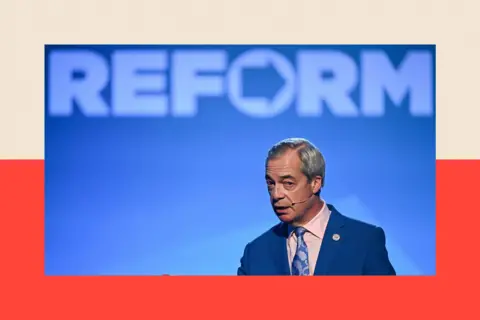
Once upon a time, Nigel Farage was a Conservative, although he disputes whether he was offered a safe Tory seat or, as others recall, went on the hunt for one.
Zack Polanski wanted to stand as a Lib Dem MP, and was cross when he wasn't put forward.
He then switched party. And while they've both been rapidly building new political forces, they've both been based on old architecture that grew out of a single cause.
Reform's tangled roots go back to the UK Independence Party (UKIP), then the Brexit Party. Those different groups all grew out of what was, back in the day, a relatively niche interest, unhappiness over the UK's place in the European Union (EU), or European Community to go even further back.
The Green Party's origins go back to the 1970s People's Party, then the Ecology Party, established as the existing Green Party of England and Wales in 1990. You guessed, it driven by concern about the environment and pollution.
Now, after years of Conservative meltdown and Labour's mistakes since moving into No 10, both parties are campaigning well beyond their founding callings.
Moving into the space that's been made available by disillusionment with the Tories and Labour, both the Green and Reform campaigns major on a broad sense of unease in the UK in the mid 2020s.
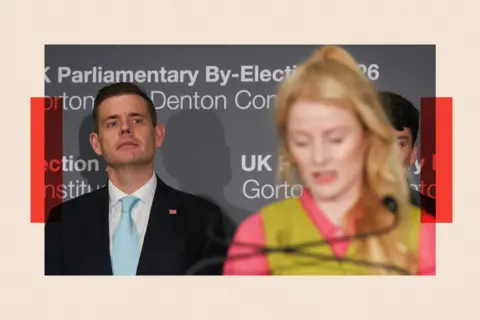 Reuters
Their views on the cause of Britain's pain vary wildly.
The Greens might point the finger at the super-rich, the "donor billionaires" they often cite. Reform often blames immigration, which they controversially characterise as an "invasion" of people arriving in the UK without permission.
But both parties feed off and stir up sentiment that's felt by lots of the public: that Britain doesn't work any more.
Whether it's the new Green MP saying "working hard used to get you something" in her victory speech, or Nigel Farage repeatedly telling us "Britain is broken", the same argument flows from both: that the country is in such a dreadful state that only new political saviours can fix it.
And both Reform and the Greens are willing to push the conventions of what traditional UK politicians would find acceptable - or what they believe would make them electable.
That's not just about their image or the unstuffy ways they court publicity - Nigel Farage willingly going into the I'm A Celebrity jungle, or Zack Polanski being seen on a dance floor in campaign videos - but how they choose to focus on sensitive issues, where others might not choose to tread.
That might be Reform talking about wanting a return to what they describe as the UK's "Judaeo Christian heritage", one of their MPs Sarah Pochin complaining about TV adverts being "full of black people, full of Asian people", or focusing on grooming gangs at the start of last year.
Pochin later apologised for her remarks saying they were "phrased poorly", but maintained that many adverts were "unrepresentative of British society".
For Polanski, it's talking about legalising and regulating hard drugs, or speaking out against Israel's military action in Gaza, and accusing Labour of being "complicit in genocide".
Accusations have been swirling that the Greens' successful by-election campaign exploited sectarian differences.
When this was put to Polanski on Friday, he told BBC Breakfast there was an "underlying racism" to the idea talking about Gaza was "just appealing to a Muslim community".
 PA Wire
Both Farage and Polanski are leading their parties into territory that has traditionally been avoided by the two main UK parties.
With voters fed up, this week's result and months of polling show voters are hungry for something new, whatever that may be.
There is another massive test of the two parties riding high just round the corner - mega May, that huge set of elections approaching around England, as well as in Scotland and Wales.
In the latter two, the SNP and Plaid Cymru are hopeful of forming governments – the SNP's goal is to retain power, while Plaid is looking to grab it themselves for the first time.
But Reform and the Greens are both eager, and determined to gobble up millions more votes, and make more progress
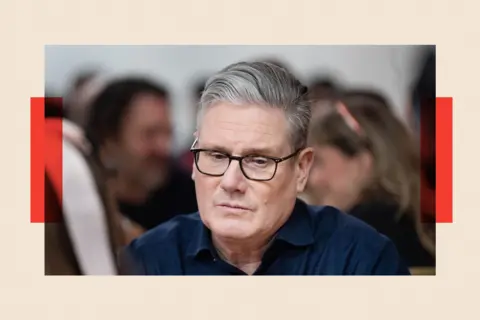
The question facing Labour is what chance Sir Keir Starmer has of turning back the tides of voters who have gone elsewhere.
The by-election made a mockery of Starmer's very public claim in recent months that politics is now a straight fight between Labour and Reform.
On Friday, he tried a new line, seemingly designed to wrap in the Greens, attacking a politics of "extremes".
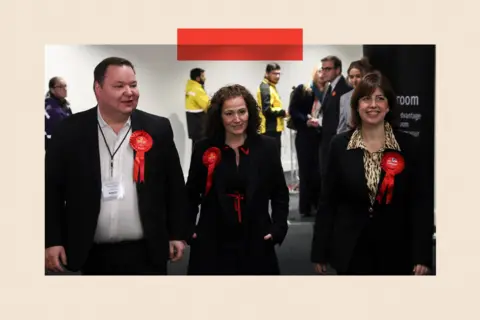
But the horrible fact for him and his MPs as they contemplate what's next this weekend is they are being painfully squeezed on the right by Reform, and almost as hard on the left by the Greens.
The question for the Conservatives might be whether they get much of a look-in at all.
And for the Lib Dems, why their successes in local council by-elections do not get repeated elsewhere.
 Reuters
In days gone by, they might have been seen as the home for discontent on the left in a by-election.
Not this time. Again, this week, the evidence is that Westminster parties who've been in power, seem to look less and less attractive to the voters who put them there.
The smiles of their opponents get wider. Both Nigel Farage and Zack Polanski believe in making politics look fun.
Nothing is permanent in politics. It is still possible, of course, that Labour manages to sort itself out and improve its fortunes, though of course the events of the last 48 hours make that harder to see.
Perhaps Kemi Badenoch's better performance in Parliament might start to have an effect on the public.
Breathless pronouncements that things have changed irredeemably and it's now multi-party politics forever have been made and proven wrong before.
And don't forget by-elections are strange beasts, where smaller parties can concentrate time and resources in ways they simply can't do in a bigger contest.
Conventional wisdom is that general elections are won by voters in the middle, not playing to the right or the left.
But Nigel Farage and Zack Polanski have one last thing in common: they are not out to just compete alongside their traditional rivals.
It might sound a stretch, but both say they intend to replace them for good.

BBC InDepth is the home on the website and app for the best analysis, with fresh perspectives that challenge assumptions and deep reporting on the biggest issues of the day. Emma Barnett and John Simpson bring their pick of the most thought-provoking deep reads and analysis, every Saturday. Sign up for the newsletter here