.png)
 5 hours ago
5
5 hours ago
5
27 minutes ago
Anthony ZurcherNorth America correspondent
Watch key moments from the King's address to US Congress
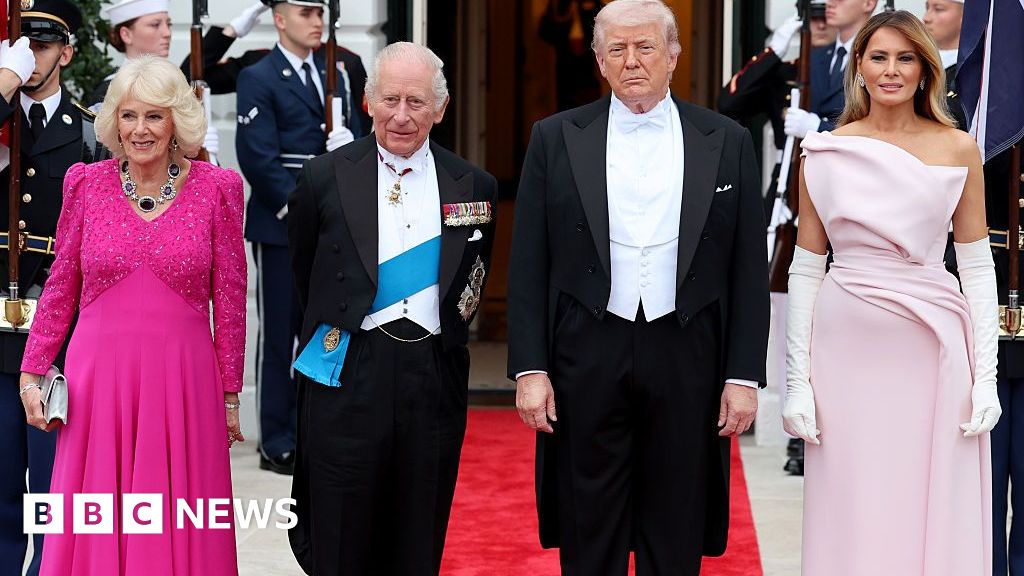
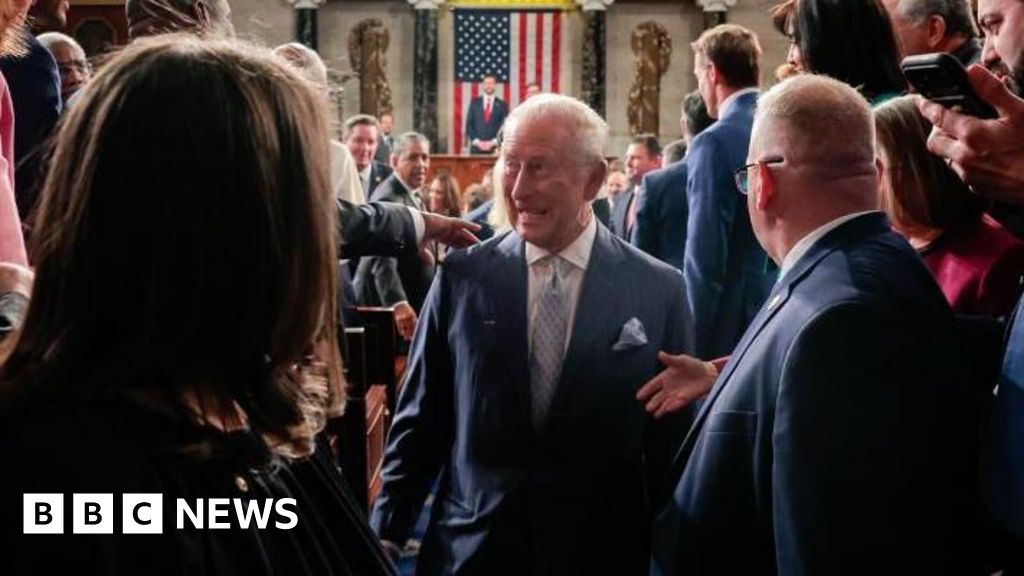
King Charles III's visit to the US was meant to be a celebration – of America's 250th anniversary, of enduring Anglo-American ties and of the "special relationship". But it has also been billed as a rescue mission.
The current state of US-UK relations is strained – a reflection of British reluctance to fully back the joint US-Israeli war against Iran. So the King's goal has been to ease those tensions with a royal charm offensive, most notably with his joint address to Congress on Tuesday afternoon.
There is some reason for hope. President Donald Trump has a notably mercurial personality. Warm relations can turn chilly in a flash. But the reverse is also true, and former antagonists can be rehabilitated, welcomed once again into the president's good graces.
A strain is not a rupture. And towards the end of his speech, the King spoke of the "reconciliation and renewal" that he said characterised the centuries of interactions between the two nations.
Whether such words in public and, in all likelihood, behind closed doors will be enough to reinforce the Anglo-American alliance remains to be seen. But, in brief remarks after an afternoon White House meeting, Trump appeared pleased.
"He's a fantastic person," the president said of the King. "They're incredible people and it's a real honour."
But there were also some lines in the King's speech, the first royal address to Congress since Queen Elizabeth II spoke at the Capitol in 1991, that may have buoyed Democrats – and raised eyebrows in the White House.
1) An acknowledgement of uncertainty
Admitting you have a problem is the first step of recovery, as the saying goes. And so King Charles started his speech by diving right into the "times of great uncertainty" that confront both the US and the UK.
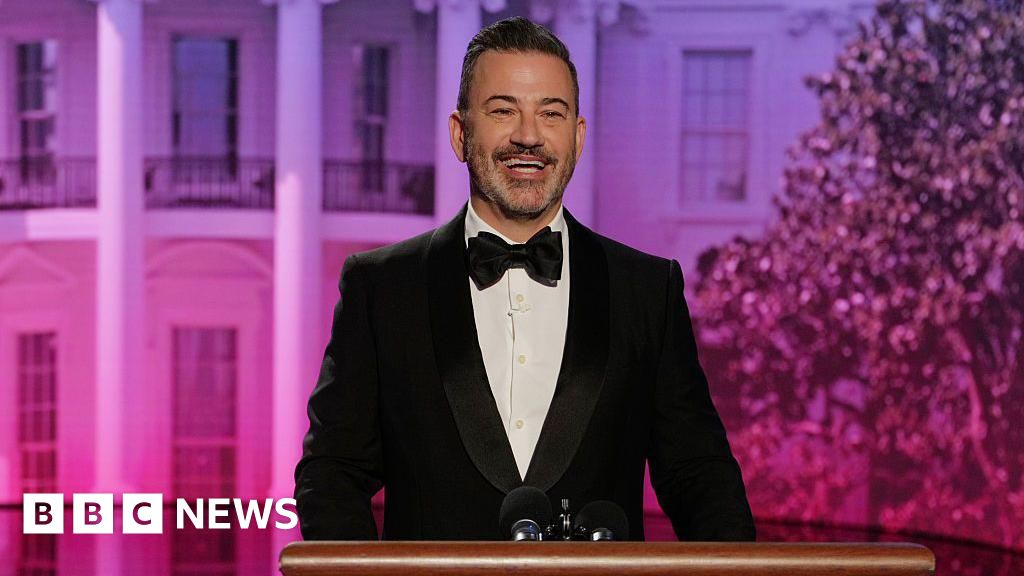
He ticked through conflicts in the Middle East and Europe – sources of recent contention between the US and the UK - while also noting the threat to democracy presented by the kind of political violence that upended Saturday night's White House Correspondents' Dinner.
From there, the King pivoted to talking about the fact that the US and the UK haven't always seen eye to eye.
"With the spirit of 1776 in our minds," he said, "we can perhaps agree that we do not always agree".
That was all a set-up, however, for his conclusion that the two nations, when in alignment, can do great things "not just for the benefit of our peoples, but of all peoples".
What the King and Queen did on their first day in the US
2) Music to the ears of Democrats
When King Charles noted the British legal tradition, enshrined in the Magna Carta, that "executive power is subject to checks and balances", he received another standing ovation – with a twist.
The cheers started on the Democratic side of the chamber, before spreading across the entire room.
Donald Trump's critics on the left have frequently denounced the president for what they see as his abuse of power.
A sense that the president should be subject to rigorous checks and balances was one of the motivating sentiments behind the "no kings" rallies that have drawn hundreds of thousands across the nation over the past year.
Later, as the King closed out his speech, one of his final lines prompted some muttering – of both agreement and concern – from the Democratic side.
"America's words carry weight and meaning, as they have since independence," the King said. "The actions of this great nation matter even more."
Democrats, of course, have frequently been critics of Trump's words, and how he delivers them, as well as his actions.
Whether intended or not, it appears liberals in the audience may have viewed the King as delivering a message of warning to the nation – while offering them a chance, once again, to express their "no kings" sentiment.
3) A nod to Nato and the transatlantic alliance
'Our two countries have always found ways to come together'
Quoting former US Secretary of State Henry Kissinger, the King spoke of an Atlantic partnership and noted – not for the first time among America's European allies – that the only time Nato mobilised in defence of one of its member-states was after the 9/11 terror attacks by al-Qaeda.
Trump has derided the British Navy, long a source of pride for the kingdom. He called their ships "toys" and said their aircraft carriers "didn't work".
King Charles, who served for five years in the Royal Navy, made a specific mention of his time in the service – using it as an entry point to remark on benefits of security and intelligence relations between the two nations – and between America and Europe.
He even found an avenue to mention climate change, an issue that has been a longtime concern of his.
"From the depths of the Atlantic to the disastrously melting ice-caps of the Arctic, the commitment and expertise of the United States Armed Forces and its allies lie at the heart of Nato, pledged to each other's defence, protecting our citizens and interests, keeping North Americans and Europeans safe from our common adversaries," he said.
4) No mention of Epstein's victims
Issues of international politics aside, one of the biggest questions surrounding King Charles's visit had been whether he would reference Jeffrey Epstein in his remarks or address the late sex offender's victims.
The closest he came, perhaps, was an oblique reference to the need to "support victims of some of the ills that, so tragically, exist in both our societies today",
That, as Americans might say, is weak tea.
Last year, over the objections of the Trump administration, Congress passed legislation mandating the release of US government-held files related to the Epstein investigation.
Those files led to new revelations about the depth of connections Epstein had to the rich and powerful, including former UK ambassador to the US Peter Mandelson and the King's brother, Andrew Mountbatten-Windsor.
For now, the Epstein saga has had greater repercussions in the UK compared to the US, where few in current positions of political power have faced adverse consequences.
Even if the subject didn't come up during the speech, the issue is not fading from the headlines – and the full story here in the US may be yet to emerge.
King and Queen Camilla receive standing ovation at Congress
5) A touch of royal humour
Given the seriousness of the King's objectives – with no less than the future of US-UK relations at stake – his speech was, at times, whimsical.
He opened with the oft-quoted – and misquoted - line from Oscar Wilde about the US and England having everything in common "except, of course, a language".
He joked about the member of British parliament who is held "hostage" when the King speaks at Westminster – and wondered whether anyone in Congress had volunteered for such a job today.
He also riffed on how US independence was "just the other day" for a nation as old as Great Britain and that he wasn't coming to the US as a "cunning rearguard action" to reestablish British rule.
There may be tensions between the US and the UK at the moment, but on Tuesday the King appears to have successfully broken the ice.


Follow the twists and turns of Trump's second term with North America correspondent Anthony Zurcher's weekly US Politics Unspun newsletter.