.png)
 1 month ago
13
1 month ago
13
In recent WSL seasons squad depth has become increasingly decisive in winning the league. Success is no longer guaranteed by the best players but by squads able to sustain performance over a long campaign.
Manchester City’s ability to rotate players has been central to their momentum at the top and contributions from players beyond the starting XI increasingly define the competition. City are nine points ahead of Chelsea going into Sunday’s game against them.
Several WSL sides are challenging for multiple trophies, meaning a crowded fixture list. Fatigue, injuries and reduced intensity are now structural challenges rather than occasional setbacks.
Managers have been explicit about how that reality shapes decision-making. The Arsenal head coach, Renée Slegers, last week stressed the complexity of selection in a congested calendar, saying: “We have to make excellent decisions game by game and there will be so many factors going into those decisions. But we want an elite competitive squad to compete in all the competitions we’re active in.”
The emphasis is no longer on a fixed core but on sustaining competitiveness in the squad and ensuring every player is ready when called upon. That sets City, Chelsea and Arsenal apart, although Manchester United have signed three players in the January transfer window and are catching up.
Using all players effectively to sustain a title-winning consistency has been key for City. Under Andrée Jeglertz, with high-intensity pressing, overloads in wide areas and sustained attacking pressure, rotation is essential to manage demands and protect core players from burnout.
The influence of that depth has been clear late in matches. In October’s home meeting with Arsenal, a tightly contested game, City turned to their bench. Iman Beney replaced Grace Clinton in the 59th minute and scored the winner in the 88th, something that encapsulated the value of depth.
Those moments reflect Jeglertz’s emphasis on contributions beyond the starting XI. Last week he said: “We have seen so many times this year the players that have been coming on have given extra gear to the team. We quite often say ‘everybody counts’, and we’ve shown that in our gameplan and in the contributions from the finishers.”
At the same time City’s use of depth has been controlled rather than constant. “We can’t just rotate, rotate, rotate,” Jeglertz said. “That’s not the idea. It’s to unload some players so they can manage three games in a week.” Too many changes could lead to a lack of cohesion and disrupt key on-pitch relationships.
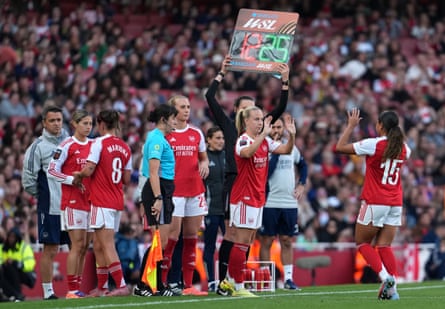
Chelsea continue to set the benchmark for squad depth and under Sonia Bompastor it has become an advantage rather than a contingency plan. “When you want to compete in all four competitions I think it’s essential to rotate players to keep a good balance between performance and physicality,” she said last week.
Chelsea’s rotation rarely alters the rhythm of their performances. Fresh legs are introduced without losing control, allowing them to sustain pressure late in games and during congested periods. “This league is the most competitive,” Bompastor said. “Every game is difficult and tough.
“When you have the depth, you can select different teams in terms of quality, but also in terms of tactical aspects.” Without it, compromise becomes unavoidable. “That’s not something I want to be thinking about.”
Against Arsenal on Saturday, Chelsea had Johanna Rytting Kaneryd, Lauren James, Sjoeke Nüsken, Aggie Beever-Jones and Keira Walsh on the bench. It was not enough as they lost 2-0 but it is a long season and Lucy Bronze pointed to the effect of rotation and late changes after the game. “It’s nice to have Keira back from injury. And bringing someone like LJ [Lauren James] on is pretty scary for any team. Just that extra bit of energy, a different style of player.”
Arsenal are known for bringing on gamechangers, such as Stina Blackstenius but this season, with injuries, they have not always had the talent on the bench to make a difference. That has turned potential wins into dropped points. It could prove the difference between them and City.
Get in touch
If you have any questions or comments about any of our newsletters please email [email protected].
-
This is an extract from our free email about women’s football, Moving the Goalposts. To get the full edition, visit this page and follow the instructions. Moving the Goalposts is delivered to your inboxes every Tuesday and Thursday.