.png)
 1 hour ago
2
1 hour ago
2
10 minutes ago
Chloe HaywardHealth reporter

 Getty Images
"It's just terrifying," Chloe says. "I get panic attacks." The 29-year-old has epilepsy and is struggling to get the drugs she needs to prevent life-threatening seizures.
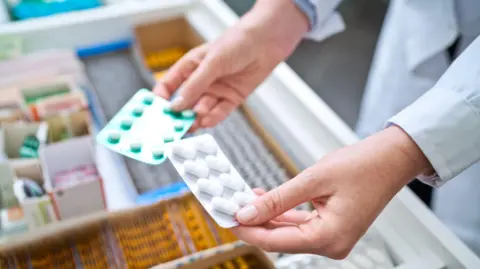
Her Lamotrigine-based medication is one of hundreds of everyday drugs that are now extremely hard to get hold of in England.
She has other medications that she can easily get, but the one that helps her to safely live her life and go to work is the one that she struggles to get access to.
"In the last few weeks I haven't been able to get the right medications and my seizures came back. I fell and hit my head and have a big scar across my back now from it," Chloe says.
Access to medicines in England is at its most fragile point in years. People living with heart conditions, stroke risks, eye infections, bipolar and ADHD - to name just a few - are among those unable to get the medications they depend on.
Supply problems mean people like Chloe are all too often leaving pharmacies up and down the country without the medication they need.
Shortages are caused in part by surging global prices. However, the problem is also being exacerbated by a complicated process of funding medicines in the UK.
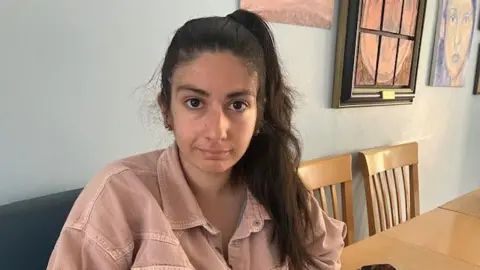
Chloe, 29, has epilepsy and is struggling to get the drugs she needs
The NHS pays pharmacies a fixed price for each medicine it dispenses. Pharmacies are then expected to source the drug for that amount, or less.
When the price of a drug rises above what the NHS pays, the medication is placed on the government's price concessions list. In April, this hit a record high with 210 named medications.
Pharmacy owners will then automatically be reimbursed for drugs on the list at the new price.
However, when market prices rise suddenly – often above the original tariff and even above the concession price offered - pharmacies end up dispensing medication at a loss.
It makes it harder for them to buy enough stock for all of their patients and increases the chance that people will face delays or sudden shortages.
'Going on patrol' for medication
For patients, it often means rounds of phone calls and anxiety. Chloe says she sometimes sits on the bus for several hours "going on patrol" hunting for the medication she needs.
The Epilepsy Society has already identified three deaths in the last two years where a lack of medication was a contributing factor.
The situation is also putting pressure on pharmacy owners.
In Shepperton High Street, in Surrey, pharmacist Akash Patel is making up a monthly prescription for another patient with epilepsy.
This month he cannot complete it as some items are not available. The pills he can provide will leave the pharmacy out of pocket by nearly £9.
Pharmacists try and stock medicines like this at lower levels to try and reduce losses, meaning more patients are likely to miss out.
Since 2017, 1,500 High Street pharmacies in England have shut, with 27 closing so far this year. The number of pharmacies in England is at its lowest level in 20 years.
"It's been getting worse in the last few years but now is the worst I've ever known it," says Patel.
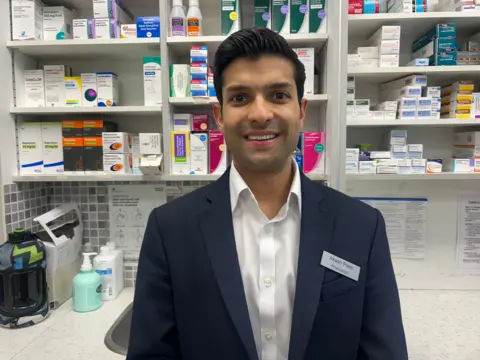
Pharmacist Akash Patel says "now is the worst I've ever known it"
Medicine prices are rising because it is becoming more expensive and more difficult for manufacturers and suppliers to get medicines into the UK. Global tensions have pushed up energy and transport costs, and many medicines rely on ingredients made from oil, which has also become pricier.
At the same time, some manufacturers say UK prices have been kept so low that distributing certain drugs in the UK is no longer viable, leading to shortages that drive up wholesale costs for pharmacies.
For people with long-term conditions, the uncertainty is terrifying. Chris Henry, 49, takes a Co Careldopa medication for his Parkinson's Disease. Like Lamotrigine, his medication has been added to the government's concessions list.
After hearing about the shortages, Chris placed his next order, and hopes the new medication will arrive before he runs out.
"This is genuinely concerning," he says. He has four children and works full time, and knows that if he doesn't take his correct medications then his body control and dyskinesia will be far less predictable, and less manageable.
"Trying to manage medication for Parkinson's Disease is a nightmare at the best of times, so thinking there is a shortage is incredibly worrying and scary. These medications make my life liveable," says Chris.
One commonly prescribed antidepressant, Venlafaxine, is also on the concessions list. The reimbursement price has been set by the government at £3.89, yet the cheapest Patel can buy it for is £5.25.
"It's a big loss-making drug so we only ever order small amounts in the hope the price will come down when we order it next," Patel says. "And even when I order it, there's no guarantee it will actually come."
'I'd stockpile if I could, but I don't have the cash flow'
The UK government spends a lower proportion of its health budget on medicine per patient than many of its neighbouring Western European countries, including France and Germany.
This means that if supplies become restricted, manufacturers are going to choose to sell their medicines elsewhere - where they will make more money.
Last year, Patel's pharmacy lost £140,000 on the NHS medicines it dispensed. His father, Gaurang, who set up the pharmacy, worries about how much longer the rest of the business can absorb these losses.
"Maybe it's time we just gave up as well, our pension has already been swallowed up in losses," he says.
The village of Shepperton has only one pharmacy now, instead of the three there used to be. After making a loss for years, the other two closed.
Some pharmacists have told the BBC they have had to remortgage their homes or dip into pensions to keep their businesses afloat while waiting for reimbursement prices to catch up with soaring costs.
Gaurang says rising global costs - especially oil - will feed through soon. "This is a long supply chain and so the war hasn't impacted supplies yet, but prices to make medicines have gone up, and so have transport costs," he says. "I'd stockpile if I could, but I don't have the cash flow."
Experts warn that without reform, shortages will continue. They argue that the reimbursement system is too slow to respond when prices spike, leaving pharmacies dispensing at a loss.
Dr Leyla Hannbeck, the chief executive at the Independent Pharmacies Association, says many of her members are "struggling to afford supply and often dispensing at a loss". The IPA has asked the government to add medicines supply to the National Risk Register but, as yet, has not had a response.
The experts also say the UK must make itself a more viable market for manufacturers - and pay more for medicines across the board - if it wants more resilient supplies.
Olivier Picard, chair of the National Pharmacy Association, who also runs a pharmacy, says the current system is broken: "I lose money on over 300 medications, and they are standard everyday items like blood thinners, blood pressure meds and painkillers - the medications that people need every day. The government wants to pay very low prices for medicines but it is backfiring now."
He added: "No one is winning here - and it's the patients who suffer most."
A spokesperson at the Department of Health and Social Care said: "The vast majority of the UK's licensed medicines are in good supply, and we are working hard to keep it that way.
"We have established processes to respond to sudden market price increases of medicines. This includes adjusting reimbursement prices based on current market conditions, which helps ensure that pharmacies can continue to obtain medicines for their patients."