.png)
 1 month ago
32
1 month ago
32

 Facebook
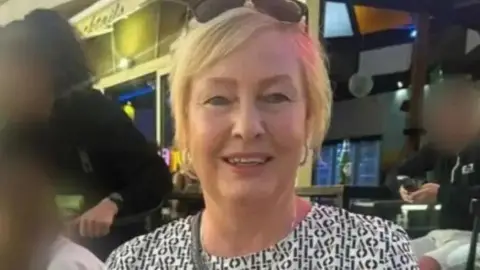
Yvonne Ford died last June after she was scratched by a stray puppy in Morocco
A grandmother who died from rabies four months after a stray dog scratched her in Morocco was only diagnosed after a psychiatrist assessed her, an inquest has heard.
Yvonne Ford, 59, did not seek treatment after being scratched on holiday in February 2025 as the injury had been so minor, a jury at Sheffield Medico-Legal Centre heard earlier.
In June, staff at Barnsley Hospital struggled to diagnose her symptoms - hallucinations, disorientation and high anxiety - and referred her to the mental health team.
Psychiatrist Dr Alexander Burns asked the family about foreign travel, suspecting Lyme disease, and was told about the dog scratch – something other staff had not been aware of, he said.
He told the jury he learned the injury had pierced her skin and became "concerned the diagnosis may be rabies".
He said he had never come across anyone with rabies before so researched the symptoms further, and it "became clear" the diagnosis would explain her condition.
Ford, who lived in Barnsley, was transferred to an infectious disease unit at Sheffield's Royal Hallamshire Hospital where she died on 11 June, the jury heard.
Infectious diseases expert Katharine Cartwright, from Sheffield Teaching Hospitals, said the virus was 100% fatal once symptoms begin to show.
The rabies vaccine was extremely effective and had eliminated the virus from the UK, she said, and administering it after exposure to the virus could help in some circumstances.
She told the jury of nine women and two men that there had only been 26 cases of rabies in the UK since 1946.
Dr Cartwright was asked by Mrs Ford's family about the treatment she received at Barnsley Hospital in the time she was in the unit.
She said it appeared Mrs Ford had begun to exhibit symptoms at the end of May, so there was nothing that could have been done at the hospital that would have saved her.
The illness was "incredibly rare" and the collection of symptoms was "challenging" for the medics, she added.
 Facebook
Ford had treated the scratch herself with a wet wipe, the inquest heard
"I think the doctors did their best," Dr Cartwright said, adding it was "not unreasonable" for rabies to not be considered in the first few days.
In 100 cases of rabies in America since 2000, half were only diagnosed post-mortem, she said.
She told the jury symptoms typically begin within four weeks of exposure but it can take up to three months and, in some cases, even years.
Hydrophobia - the fear of water - is one symptom which is specific to rabies and which Ford seemed to exhibit, with her being unwilling to drink and spitting to get rid of the saliva in her mouth, the inquest heard.
Dr Cartwright said this reaction was mild compared with many documented cases in which patients become violent when water is brought anywhere near to them.
She added that Ford showed symptoms of both types of rabies - encephalitis and flaccid - which was unusual.
Assistant coroner Marilyn Whittle said the inquest would consider Ford's visits to emergency departments in Barnsley and Wakefield and to her GP, in March and April, when she was feeling unwell and complaining about insect bites.
The inquest is due to last for four days.