.png)
 1 month ago
24
1 month ago
24

 PA Media
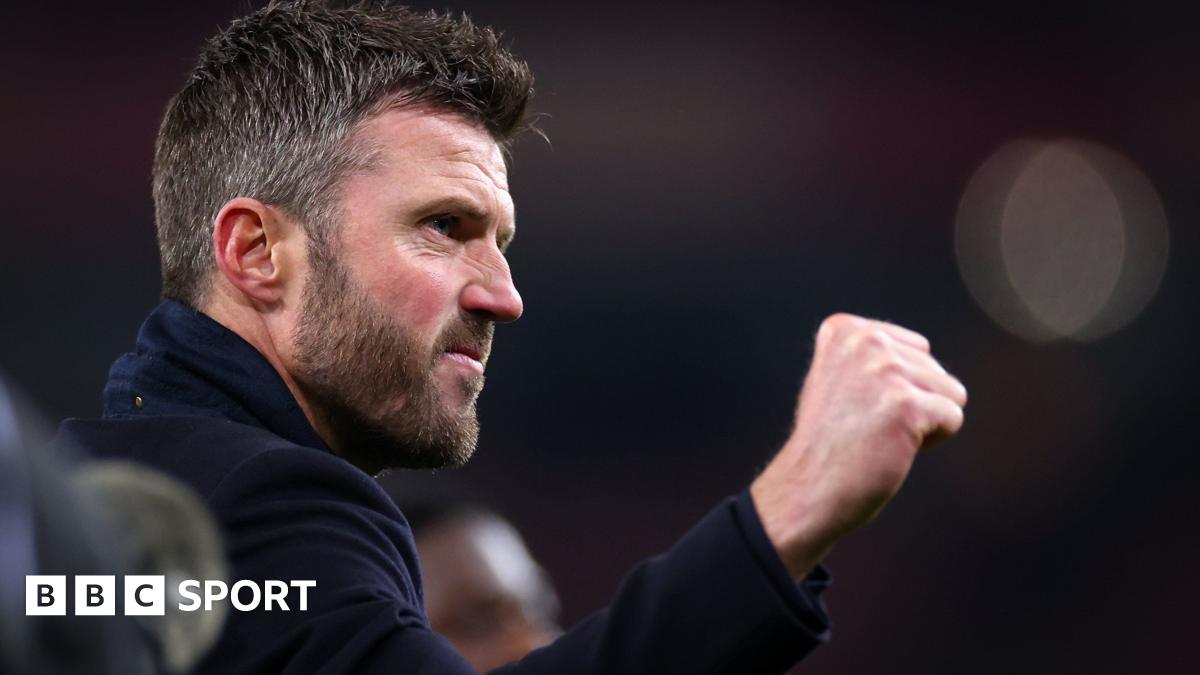
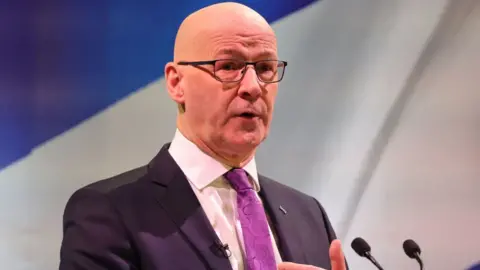
First Minister John Swinney has set the "ambitious" target of winning an SNP majority in May
The leaders of the Scottish Parliament's three largest parties have made their pitches to voters ahead of May's Holyrood election.
First Minister John Swinney said that the SNP was offering Scots "the chance to vote for independence", while Labour's Anas Sawar warned critics not to "underestimate" his party.
Scottish Conservative leader Russell Findlay vowed a "common sense" approach from his party, taking aim at both the Scottish and UK government for raising taxes.
Scots will head to the polls on May 7.
Recent polls suggest that the SNP are on track to win the election, with Labour facing a strong challenge from Reform for second place and the Conservatives further behind.
SNP's 'ambitious' election target
Making a speech in Glasgow, Swinney told party members that an SNP majority at Holyrood in 2011 led to an independence referendum in 2014. "It will work again in 2026," he said.
The UK government, which would have to approve any referendum, has repeatedly said it would reject any calls for a second referendum - even if the SNP won a majority.
Swinney insisted that fulfilling his "ambitious" target would ensure that the UK government would have to allow another vote - and that Labour ministers would have "big questions to answer" if they refused.
He said: "The best thing we can do for Scotland's health service, the biggest step we can take to bring down energy bills across the board, and the best way to make daily life more affordable for people, is for Scotland to become an independent country."
After almost 20 years in power, Swinney defended his party's record in government, pointing to falling child poverty levels in Scotland, unemployment rates and growth in the renewable energy sector.
The first minister said: "Scotland is by no means a perfect country.
"But, by goodness, given everything thrown at us in recent years, Scotland has strong foundations for the future under SNP leadership."
 PA Media
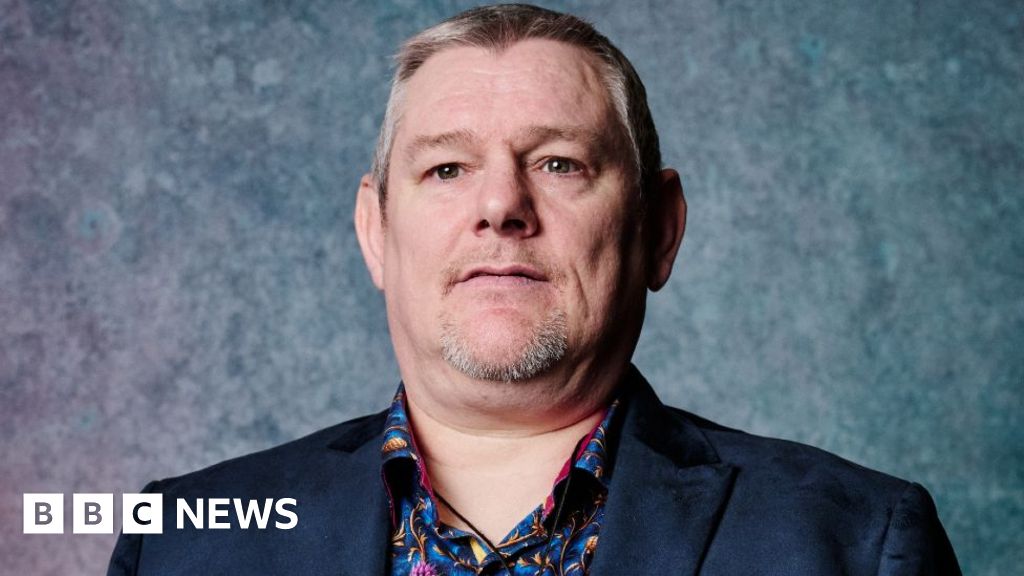
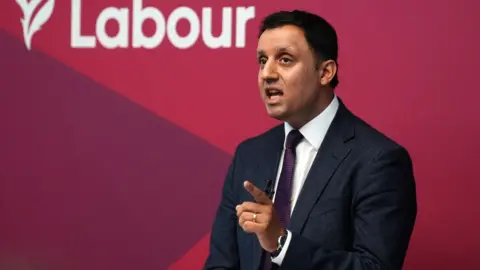
Scottish Labour leader Anas Sarwar described his party as "underdogs"
Sarwar, meanwhile, acknowledged that his party started the year as "underdogs" in the Holyrood election campaign.
But the Scottish Labour leader warned critics that they "underestimate" his party at their peril in what he described as "one of the most consequential years in Scotland's history".
Speaking at an event in Edinburgh, Sarwar challenged Swinney to a series of head-to-head debates in every region of Scotland in the run-up to the election.
The Labour MSP acknowledged that the UK government was "not popular with the public right now" but stressed that the Scottish election is about choosing a first minister, not a prime minister.
Criticising the Scottish government, he cited "failing" public services, "falling standards" in schools, NHS waiting lists, a housing emergency and economic inactivity among young Scots.
Sarwar said: "The SNP have had their chance. They have had nearly 20 years. They blew it."
He added: "I have the hunger, I have the energy, I have the ideas, I am up for the challenge. Is John Swinney?"
 PA Media
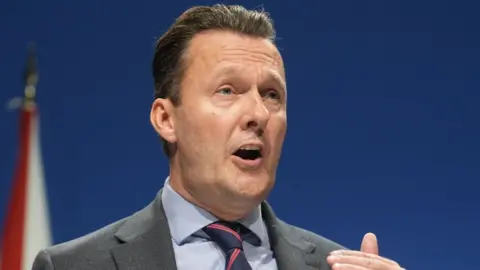
Scottish Conservative leader Russell Findlay says the welfare system "incentivises idleness"
Russell Findlay, speaking in Edinburgh, criticised Swinney for talking about independence, telling Tory supporters: "Anyone who thinks that the SNP threat to break up our country is somehow diminished is deluding themselves."
He also criticised the "disastrous" record of the UK Labour government.
The Conservative leader said that he wanted Scots to keep more of "their hard earned money" and said his party would raise the threshold at which Scots pay income tax, as well as reducing costs for higher rate taxpayers.
Findlay said he wanted to boost the economy, bring down NHS waiting lists and raise standards in schools.
He also claimed that the Scottish welfare system "incentivises idleness" and warned that social security spending was unsustainable.
"Scotland cannot afford to continue to park more people on benefits street," the Scottish Tory leader added.
It's a new year, but these are not exactly new messages. The SNP, Labour and the Conservatives are spelling out what their broad campaign platforms will be in the months ahead. And none of them should really come as a surprise.
The SNP is pivoting towards talking about independence. Polls suggest that support for that cause is higher than support for their party - so it makes political sense for John Swinney to hammer home an independence message.
It's logical for Labour to cast themselves as an alternative to an SNP government that's been in power for almost two decades. "Change" can be a powerful political message.
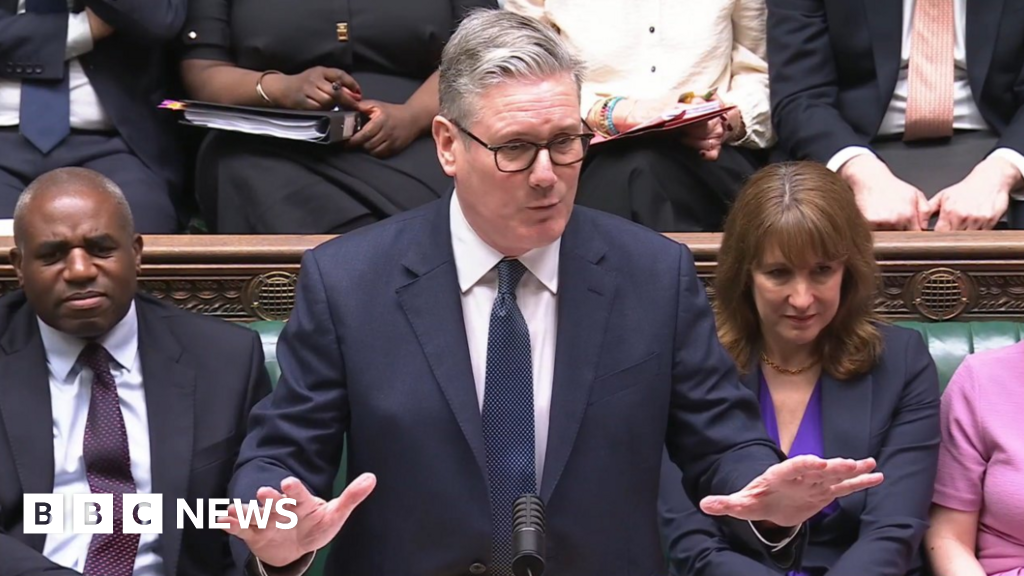
But is Labour the change that voters want? It was, after all, noteworthy how willing Anas Sarwar was to acknowledge Sir Keir Starmer's unpopularity.
And a Conservative approach of calling for lower taxes makes political sense - it's a key part of the party's platform, and may appeal to voters when times are tight.
So here we have some of the foundations of this election campaign. But there's a long way to go until May, and plenty could change in that timeframe.