.png)
 4 hours ago
2
4 hours ago
2
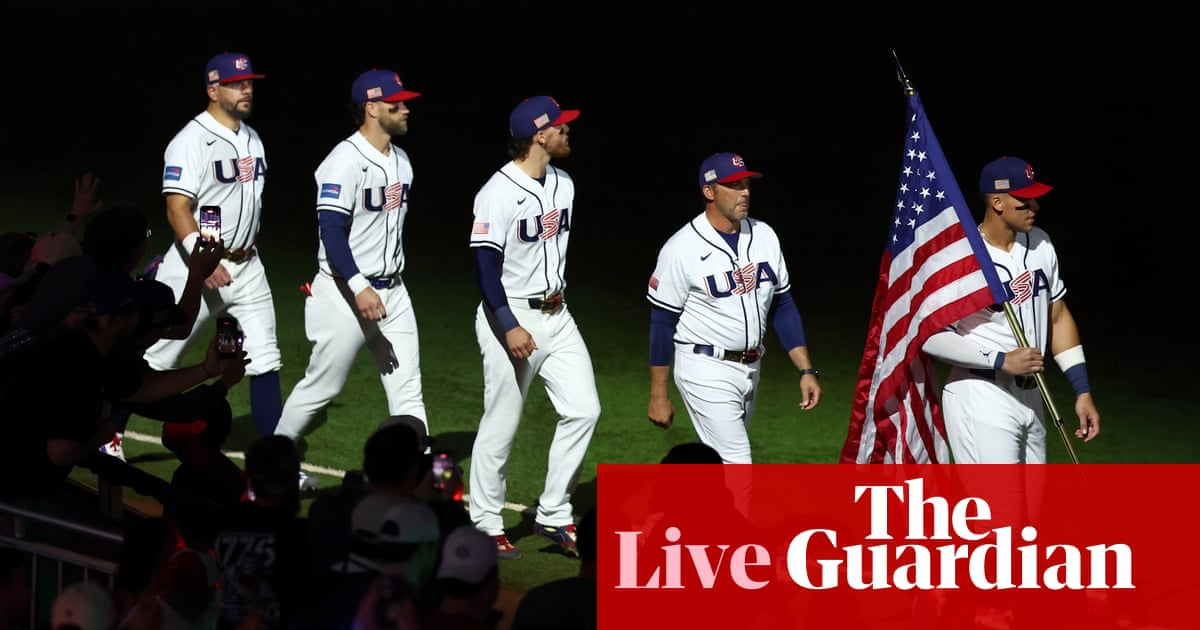
When the United States men’s national team traveled to France for the 1998 World Cup, they did so with 16 Major League Soccer players on their 22-man roster. This was very much by design. MLS had kicked off in 1996 as a fulfilled promise made to Fifa by US Soccer for the right to host the 1994 World Cup. The new league then set about hoarding as many national team players as it could.
In a winless and mirthless tournament in 1998, fraught by a fractious camp, the Americans started an MLS player 21 times in their three group-stage matches, for an average of seven per starting lineup. That number has trended down ever since. In the 2002 run to the World Cup quarter-finals, setting the program’s modern high-water mark, an average of 5.4 MLS players made a start in the USA’s five matches. In 2006, it was 3.33. By 2010, that number had sunk to two; and in 2022, it was only one. In Qatar, the USMNT’s final group stage match against Iran was, in fact, the first time the team had started no MLS players at all at a World Cup since the league’s founding.
The outlier in this trend was the 2014 World Cup, when, on average, 4.75 MLS players made a start for the US in their four matches in Brazil. But then that was the residue of a concerted effort by MLS to lure several high-profile national teamers with enormous contracts – an effort that extricated Clint Dempsey from Tottenham and Michael Bradley from Roma and delivered them to the Seattle Sounders and Toronto FC, respectively.
This summer, it’s entirely plausible that just two MLS players will make starts at the World Cup on home soil: either Matt Freese (NYC FC) or, less likely, Matt Turner (New England Revolution) in goal; and 38-year-old defender Tim Ream (Charlotte FC). Every other domestically based player seems to be an understudy, if they are in the mix to play at all. That’s even true of head coach Mauricio Pochettino’s beloved spitfire Diego Luna (Real Salt Lake). For as much as Pochettino adores Luna’s intensity and grittiness, it’s hard to imagine him starting overany two of Christian Pulisic, Weston McKennie or Malik Tillman – assuming the Yanks even line up in a system that puts a pair of attacking midfielders underneath the lone striker.
What are we to make of this gradual shrinking of MLS’s footprint? There is a temptation to treat the World Cup as a referendum. That’s natural, as the mega-event’s quadrennial cadence is what the sport keeps time by. But is there meaning to be found in this?
In a sense, yes. With a World Cup played across the two nations that comprise MLS, the United States and Canada, it will be glaringly obviously how few of the league’s players will be in the lineup for the USMNT.
But that hardly means MLS fingerprints won’t be all over this team. The league’s influence lies elsewhere now; namely, in the number of World Cup players who will have passed through MLS academies and, in a lot of cases, gotten their professional start in its first teams.
To keep things simple, let’s consult the exceedingly handy USMNT World Cup roster predictions compiled by your very own Guardian US soccer desk. Of the 27 players we deemed either “on the squad” or “up for debate” – to be whittled down to 26 for the tournament by dropping a lone goalkeeper – 19 were developed by MLS academies. Twenty, if you count the single season Tim Weah spent with a New York Red Bulls youth team, which we probably shouldn’t and won’t. That’s a few more than on the 2022 roster, when the number of MLS academy products stood at 16.
In fact, it’s only the dual nationals on the likely final list of players who grew up in other countries who weren’t developed by MLS. That is, with one very notable exception: Christian Pulisic, who moved to Germany as a teenager and came up through Borussia Dortmund’s academy.
Unlike in 2014, MLS has brought home no established national teamers in the runup to the big dance (Aside from Toronto FC striker Josh Sargent, who probably won’t make the World Cup team anyway). So there will probably be no chance to go and see the US stars of the World Cup – should any emerge or cement themselves in the mainstream consciousness – at your local MLS stadium.
That may make it harder to attract new fans. But it’s a strategy, whether entirely wittingly or not, that conforms to the league’s broadly followed, long-term policy of investing in incubating both domestic youth players and young talent from the rest of the hemisphere, rather than chasing after the priciest players.
Besides, this incarnation of the US World Cup team may not be a team with a very big MLS imprint, but it will nevertheless have MLS DNA running through most of it.
-
Leander Schaerlaeckens’ book on the United States men’s national soccer team, The Long Game, is out on 12 May. You can preorder it here. He teaches at Marist University.