.png)
 1 month ago
29
1 month ago
29
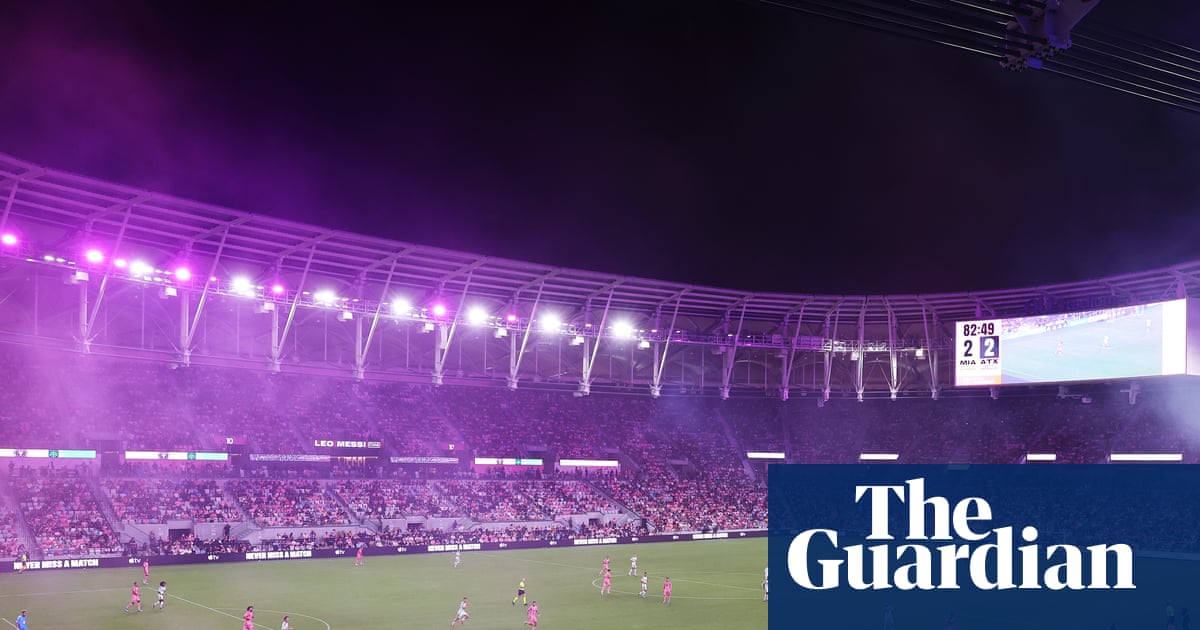
Four years ago, MLS Next Pro implemented a pair of rules geared towards eliminating time-wasting. Now, just months ahead of the 2026 World Cup, MLS’s experimentation is set to be adopted globally. The International Football Association Board (Ifab), the sport’s rule-making body, is set to meet this weekend and is widely expected to adopt both changes.
The first of the two, commonly referred to as the timed substitution rule, forces a team to play a man down for a minute if a player takes longer than 10 seconds to leave the pitch. The second of the guidelines, dubbed the off-field treatment rule, removes a player from the match for a minute if they spend more than 15 seconds on the ground after an injury.
There are exceptions written into both rules – injured players and goalkeepers are not subject to the timed sub rule, for example. There are a host of exceptions for the treatment rule as well, including carve-outs for serious foul play, cards and head injuries.
The effects of both rules after their 2022 implementation on the speed of play in MLS Next Pro, which serves as MLS’s developmental league, were immediate and the rules were quickly incorporated into MLS in 2024. The league added the changes to Leagues Cup, its annual competition against Mexico’s Liga MX, a year later.
“The impact was overnight,” said Ali Curtis, the president of MLS Next Pro who also serves as MLS’s executive vice-president of sporting development. “We saw it in Next Pro early on, when it was implemented in 2022 and we saw it very quickly in MLS two years later. These rules have been working and we believe they are good for the game. We are really excited about [both rules].”
The rule changes were staggeringly effective in both leagues. In MLS, injury-related stoppages decreased by 72%, from an average of between five and six stoppages every match down to 1.50 stoppages. The timed sub rule also made waves: in a total of 4,346 substitutions over 510 matches in 2025, there were only 12 violations of the rule.
Curtis likes to show two separate clips of Inter Miami forward Luis Suárez when demonstrating the timed substitution rule. In the first clip, Miami are up a goal late in the match and Suárez – notorious for his gamesmanship – lollygags off the field, resulting in a timed substitute violation that forced Miami to play down a man for 60 seconds. Just four days later, Suárez is again subbed out of the match and is seen in almost a full sprint as he attempts to leave the field of play. The effect of the rule on Suárez was immediate.
Suárez’s teammate, Lionel Messi, was involved in the most high-profile implementation of either rule. In a 2024 match against CF Montréal, Messi went down injured, clutching his knee. After he remained down for an extended period, Messi – possibly unaware of the rule – was removed from the match for two minutes. During his stay on the sideline, the Argentine was seen jawing at the fourth official, with fieldside microphones picking up his commentary: “With these types of rules, we’re going nowhere.”
“In every season there are difficult moments,” said Curtis. “This sport is about emotion and everything else that happens throughout the game. These guys want to win, and we love that. What I would say is that we are very thoughtful about implementing new rules. The north star was really, ‘How can you find a way to evolve the game while still maintaining the integrity of the sport.’ And that’s a fine balance. Change is difficult for folks, and especially difficult in the moment.”
The US has a long history of rules experimentation, with some ideas working better than others. The American Soccer League of the 1920s was the first league globally to implement the use of substitutes, doing so a full 30 years before they were adopted into the rules of the game and a half decade before they were implemented at the 1970 World Cup.
A version of the backpass rule, possibly the most fundamental modern change to the game of soccer, originated not in European soccer but in the North American Soccer League, which tinkered with the idea just before folding in 1984. That same league was also issuing red cards for denial of a clear goal-scoring opportunity – what we now call “Dogso” – eight years before Ifab adopted the rule in 1990. The NASL also pioneered the use of names on the back of jerseys and numbers on the front of them long before it was the global standard.
With the blessing of both Ifab and Fifa, the United States Interregional Soccer League (USISL) in 1995 became an international test bed of sorts, trialing all sorts of bizarre rule changes. Some of those rules were good (allowing the use of kick-ins and punishing teams harshly for persistent infringement), others were bad (settling games by counting corner kicks), and others were borderline ridiculous: the USISL employed a so-called “stampede kick”, a version of the 35-yard shootout that featured one lone player streaking in on goal while being chased by every other outfield player on the pitch.
The USISL also tried wider goals, sometimes by as much as four feet. MLS retained a few of those quirks when it debuted in 1996 – most notably the 35-yard shootout and a countdown clock that stopped running during breaks in play – but even those rules were lambasted internationally and were cast aside a few years later in favor of the global norm.
America’s sometimes aggressive tweaks to the internationally recognized rules of the game have frequently – and sometimes rightfully – rankled traditionalists and made many US ideas about the sport as a whole dead on arrival internationally. Curtis, however, feels that narrative has shifted.
“We didn’t invent the game but we love it and we’re passionate about it,” said Curtis. “Whether or not there is a stigma regarding Americans shifting rules, I think now we’re into our 31st season. We are connected to the global football community. We have thoughtful and meaningful conversations not just within our building and domestically but with our global partners. The conversations that we’ve had have been great. We try and not focus on how we’re viewed, we just try and improve and move forward.”
The two MLS-led initiatives are not the only topic up for debate by Ifab this weekend. The board is also considering adjustments to address time-wasting surrounding goal kicks and throw-ins, awarding a corner kick or reversing possession on a throw-in to penalize teams that take over a predetermined amount of time to put the ball in play. There also are potential changes coming to VAR, which may now be used to reverse an incorrectly awarded corner kick or second yellow card.