.png)
 1 month ago
39
1 month ago
39
On 15 February 2023, Jennifer Shahade took a deep breath and wrote “Time’s up” above a long message about allegations of sexual abuse in the cloistered world of professional chess. Shahade knew her words would have an impact but she didn’t expect the social media post to go viral and change her life.
A two-time US women’s chess champion, Shahade chose her words carefully as she made serious allegations against Alejandro Ramirez, a then 34-year-old grandmaster from Costa Rica who was based in America and coached the St Louis University chess team: “Currently there are multiple investigations [into] Alejandro Ramirez and sexual misconduct, including a series of alleged incidents involving a minor. I was assaulted by him twice, nine and 10 years ago. I’d moved on until the past couple of years when multiple women, independent of each other, and with no knowledge of my own experience, approached me with their own stories of alleged abuse. These accounts were from much younger alleged victims.”
Ramirez, who also worked alongside Shahade as a chess commentator, issued his own statement in response : “Although I cannot comment on the specifics of Ms Shahade’s assertions due to pending investigations by the US Chess Federation and the St Louis Chess Club, I understand the concern raised by the allegations. I am fully cooperating with both inquiries and look forward to the opportunity to respond to these charges and share my side of the story.”
Shadade tells me that eight women then contacted her to share their own allegations of distressing experiences with Ramirez. She adds: “If you count the women who talked to me about other men the number is much, much higher. Some men reached out to me as well.”
To talk about sexual abuse? “Yes, by different chess players, coaches and grandmasters. I was not only proud of what I did, but also proud that people had so much trust in me.”
Three weeks later, on 7 March 2023, the Wall Street Journal published a detailed investigation headlined How Sexual Assault Allegations Against a US Chess Grandmaster Went Unaddressed for Years. The newspaper highlighted allegations made against Ramirez by eight other women, including three who were under 18 at the time of the alleged abuse. In the aftermath Ramirez resigned from his coaching post and US Chess. Ramirez’s lawyer told the Wall Street Journal: “Superimposing today’s mores on erroneous recitals of acts of yesteryear is a recipe for disaster for both the accused and the accuser … in this era of introspection and sensitivity to all matters ‘Me Too’ related, Mr Ramirez remains very supportive of those who seek to raise issues of concern about anyone.”
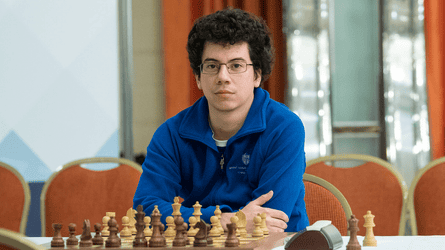
Shahade had become the unofficial leader of chess’s #MeToo movement. Ellen Carlsen, whose brother Magnus is the world’s best chess player, was “shocked and saddened” by Shahade’s post – but she finally felt able to report an allegation of harassment against her when she was a young chess player.
In August 2023, more than 100 women in chess added their signatures of support to an open letter written by 14 female chess players in France who stressed that “we have remained silent too long” about sexual abuse and sexism.
That same month the British chess player Sabrina Chevannes, who had quit the professional game in 2017, addressed misogyny and predatory behaviour in the sport. She also alleged that she had been raped by a fellow player.
Shahade cannot comment on specifics relating to allegations made against Ramirez, but when considering wider issues in the sport she says: “It’s upsetting to see how there’s still lots of abuse against women. But I’m tremendously proud of bringing this to light in chess. It’s my biggest achievement because, as in so many other cultures, there’s a long and embedded history of abuse.”
When contacted last week by the Guardian for comment on all the allegations outlined in this article, Ramirez’s legal representative said: “Mr Ramirez continues to be fully supportive of investigations any time allegations of misconduct are made by anyone anywhere.”
The 45-year-old Shahade has always stood out. “I got opportunities and was celebrated by people who wanted to see more women in the game,” she says. “But there’re definitely negatives as well. My brother and my dad were much stronger at chess than me but they were very supportive because they saw I had a different learning curve and different interests. But from the outside there was a sense that ‘Oh, she’s female so she’s not as intelligent.’”
Shahade is fiercely intelligent and determined. “I always wanted to win a mixed gender US Junior Open title because I was already successful on the women’s circuit,” she says of a landmark victory in 1998. “I took a Greyhound bus for six hours to get to the tournament in upstate New York. I won and became the first female US junior champion.”
What was the reaction? “People were pretty excited. When you do well you often get celebrated as a woman. It’s more when you do poorly that people are like: ‘Oh, she’s just a woman.’”
Only one woman, Judit Polgár, has cracked the world top 10 in chess. Shahade is a great admirer of Polgár who often played Garry Kasparov when he was a dominant world champion. Kasparov said in 1989 that women are not equipped to excel at chess because it’s “a mixture of sport, psychological warfare, science and art. Every single component of chess belongs to areas of male domination.”
Shahade raises an eyebrow when I read her that antiquated quote: “Now he says the exact opposite so it’s nice to see growth in that respect from him.”
In 2002, after he lost to Polgár, Kasparov conceded: “I was wrong about women playing chess. I gave an opinion a long time ago that I no longer believe.”
Women are still not thriving in elite chess even though they have the required intellect and resilience. I tell Shahade I saw a statistic which suggested that just 11% of classical-rated players and 2% of grandmasters are women. “That might be right. Definitely girls are less encouraged than boys to get into chess by schools, society and internet algorithms. I’m starting to make chess videos with my son. As a vocal feminist with a very mixed crowd of followers, I thought that when these videos reach the algorithmic space the breakdown of men to women seeing them would be something like 85 to 15. But the reality is that between 95% and 99% of the videos are shown to men.
“It’s crazy. Algorithms are profiling each user and saying: ‘What are the percentage chances this person will be interested in a chess video?’ This is a very pernicious effect of social media in deciding for you what you’re interested in. It’s very sobering and concerning because the rise of algorithmic social media coincided with the The Queen’s Gambit [the hit Netflix series which starred Anya Taylor-Joy as a complex young woman who dreamed of becoming the world’s best chess player]. The algo is just deciding your interests.”
Female chess players also endure “relentless questions. How do I become more confident? How do I overcome imposter syndrome? How do I get over a loss? I get these difficult questions again and again from women as they’re not as practised in the affirmations you need to compete.”

Shahade no longer plays competitive chess as she concentrates on writing and professional poker. Her intriguing new book, Thinking Sideways, about the lessons she gleaned from chess and poker, does not explore allegations of sexual abuse. Instead, she says her goal for the book “is to inspire readers and to allow it to make them smarter and more successful. It certainly did that for me as, after writing the book, I had my biggest success in poker. I won third place in this massive tournament in Vegas and used some of the book’s techniques.
“A poker tournament is gruelling and it’s important not to be on your phone too much during breaks. After writing my book I was strict and wrote down notes about my opponents. I never looked at the notes again but writing them down made me remember things better.”
How much did she win? “$290,000.”
Asked to compare chess and poker, Shahade says: “I love both games. I see them as similar in many ways but the history and art of chess is unparalleled. You can’t compare any game to it.”
In 2024, Shahade wrote a compelling Substack article about her allegations of sexual abuse and stressed that: “A lot of people want to move on without Alejandro in chess, but without me too. I am compelled to fight for accountability, not just for me, but for anyone who is afraid to report because they worry that, even if proven correct, the endgame won’t be vindication. It will be becoming collateral damage.”
Shahade says she warned US Chess about her allegations against Ramirez “multiple times” between 2020 and 2022 and urged that he should not be allowed to coach the US Women’s Olympic team. But she felt ignored and “humiliated.”
After Shahade’s public allegations, Ramirez stopped working with women and girls. However, she alleges that a US Chess lawyer warned Shahade that talking to others about the case could compromise their investigation. It was just the start of another battle.
In September 2023 she again used social media to say: “US Chess sent me a cease & desist demanding that ‘on behalf of its members’ I refrain from contact with scholastic/teen members. This would stop me from replying to girls who reach out about my books and work, who see me as a role model who prioritizes their success and safety.”
Shahade left US Chess and felt discredited by its president, Randy Bauer, who later apologised for including her in an outburst against critics of the federation. Bauer said: “I again thank Shahade for coming forward in the Ramirez case which led to the US Executive Board banning him for life from US Chess membership.”
She concluded in her Substack piece that “the price” of whistleblowing “included job loss, violent threats, severed relationships, legal costs and both covert and direct attacks on my credibility. The cost is too high.”
US Chess did not respond to the Guardian’s request for comment on Shahade’s allegations.
It’s striking to consider Shahade’s story against the backdrop of the Epstein scandal and Donald’s Trump’s presidency. Shahade was moved by the commercial screened during last month’s Super Bowl when some Epstein survivors demanded the release of all the files: “It was very powerful and so important to have accountability from the men implicated in this criminal scheme [and] cover-up. I also feel not enough attention is paid to the women. It sometimes feels like they’re being treated as a means to an end, which is an important end, but maybe when Trump is no longer in power there could be major movement.”
Shahade sighs when I ask how it feels to live in a country ruled by Trump? “It was a horrible day when he got elected again. It’s really hard to stomach.”
The last few years have been testing but, in shining a light on a subject as dark as sexual abuse, Shahade says: “It’s given me a tremendous sense of purpose and clarity. The truth elixir is so important. The scariest thing about Trump is that, in this post-truth world, he can confuse people and make so many lies that you don’t know which one to attack first. It’s very destabilising and the attack on journalism is really concerning.
“But the fight for truth is so important. There’s a famous quote that lies and hypocrisy don’t last on the chess board because if you lie you are going to lose. And losing to your opponent will prove your lies.”
-
Thinking Sideways by Jennifer Shahade (Hodder & Stoughton, £22). To support the Guardian, order your copy at guardianbookshop.com. Delivery charges may apply