.png)
 1 month ago
44
1 month ago
44
The path to top-level Australian rugby league can take myriad forms. Clubs may win promotion from a second division (Cronulla and Penrith in 1967), command franchises with huge heartland support (Brisbane and Newcastle in 1988), get shoe-horned into an ill-fated rebel competition (Adelaide Rams and Hunter Marinas in 1997) or arrive fully formed to satiate a growing local demand (the Dolphins in 2023).
The NRL’s 18th and 19th teams are taking different routes. Perth Bears enter in 2027 as a revamped foundation club (North Sydney) sent west to conquer an AFL territory. The PNG Chiefs land in 2028 as a $600m Trojan horse from Australian taxpayers to curb China’s influence in the South Pacific – a ploy Papua New Guinea prime minister James Marape calls “a unification strategy deployed under the flag of rugby league.”
However you get there, true NRL success depends on visionary leaders and great players, strong club culture and junior pathways, loyal fans … and tons of cash to splash.
Foundation built on funding
Australia prime minister Anthony Albanese is a famously passionate Rabbitohs fan and NRL devotee but the size of the PNG deal, the haste of its delivery and a lack of consultation with other Australian sports bodies and the smaller South Pacific nations has irked plenty. Despite decades of diplomacy in the region, rugby union receives just $12.5m every five years for development in Fiji, Tonga and Samoa via the PacificAus Sports scheme.
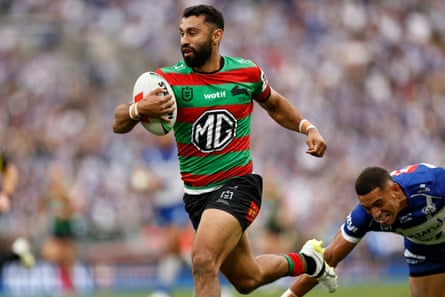
The fact the $600m saw the existing 17 NRL clubs handed $3.5m each to off-set fears players would jump to the Chiefs for its tax-free contracts and sponsor deals also drew ire. No such sweeteners are on offer to wannabe Bears and it’s a forced migration too, which had the West Australian growling: “Bad news Bears: Rugby mad Roger Cook forces WA taxpayers to pay Sydney NRL rejects $65m to play in Perth”.
Visionary leadership
“Building a rugby league team starts with good people,” says Michael Chammas, who was hand-picked by NRL chair Peter V’landys to be the PNG Chiefs’ general manager of football. The former journalist joined a savvy local chief executive. “Lorna McPherson has lived in PNG for 16 years,” Chammas says. “She knows how important the Chiefs will be to locals.” Coach Willie Peters signed next, having led Hull Kingston Rovers to glory in the UK Super League.
How do I sign up for sport breaking news alerts?
ShowDownload the Guardian app from the iOS App Store on iPhone or the Google Play store on Android by searching for 'The Guardian'.
If you already have the Guardian app, make sure you’re on the most recent version.
In the Guardian app, tap the Profile settings button at the top right, then select Notifications.
Turn on sport notifications.
Taking their cue from the Dolphins who installed acclaimed mentor Wayne Bennett as their inaugural coach and player-magnet, the Bears installed Mal Meninga, absent from the NRL since 2001 but national coach since 2015. Despite CEO Anthony De Ceglie’s media executive past, the Bears have been conspicuously quiet in the press and disquiet ramped up when general manager of football, David Sharpe, quit last month.
Marquee player power
The Chiefs made headlines this past week by signing four-time premiership playmaker Jarome Luai on a three-year deal worth $1.2m a season. “Jarome is a family man who brings culture and standards,” says Chammas. “His profile transcends the game and will lift a nation.” No wonder Marape feted Luai with private planes and tours of golf courses and private islands. Luai will be an active recruiter too, says Chammas. McPherson “was in tears when Jarome signed”, he adds. “She knows the dream is becoming a reality.”
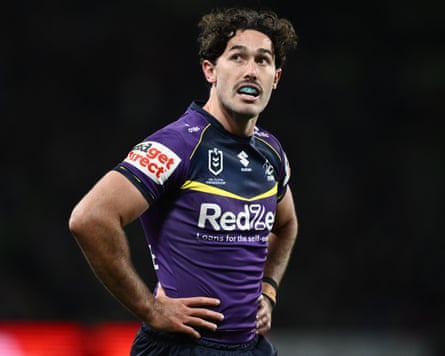
The Bears’ reality is quickly becoming a nightmare. They are yet to sign a marquee star to lead the five-hour flight west, failing to woo Cam Munster and Tino Fa’asuamaleaui, and recruiting a worryingly motley crew of 19 utilities and rookies, of which only Storm centre Nick Meaney is a regular starter at his current club.
Productive pathways
Unlike the Dolphins who had 75 years of proven player development in south-east Queensland, the Bears are stymied by two AFL sides fed by strong WAFL pathways. It means they must ship in depth from feeder-founders North Sydney 4,000km away.
Meanwhile, of PNG’s 11-17m citizens (there hasn’t been a census in 24 years), “85 per cent play league and 95 per cent support it,” says The National’s sports writer Michael Philip. Chammas wants the Chiefs to have “a strong Pasifika flavour” (Luai is Samoan) and the startup club has up to $240m of their $600m to recruit from traditional union nations Fiji, Tonga and Samoa. “Rugby sits at the heart of village life, tradition, and national pride in the Pacific,” warns Rugby Australia CEO Phil Waugh. Yet the NRL war chest “seems designed to set up a talent pathway for league”, says senator David Pocock.
Fan connection as currency
Bears diehards have stayed loyal to the red-and-black since their 1999 exile from the NRL. But the Perth Bears presence was notable by its absence at North Sydney Oval for the club’s first home game in April, and there are still no 2027 memberships on sale for the inaugural NRL season, whereas the Dolphins had 15,000 members secured before their 2023 debut. The Bears have a $6m jersey sponsor (Cash Converters) but fans are the true currency.
Albanese wants the $600m outlay to bolster “people-to-people ties” in the South Pacific and build infrastructure in a country where 40% of people live on less than $2.15 per day. But how will Chiefs fans feel about their team living large in a new $66m resort? Even if they ever set foot on Port Moresby’s most notorious streets “safety won’t be a concern,” says Philip. “Those NRL players will be kings and heroes on the streets.”