.png)
 1 month ago
33
1 month ago
33
Kevin PeacheyCost of living correspondent

 Getty Images
Typical household energy bills will fall by 7% in April, regulator Ofgem has announced, following a shake-up in charges by the government.
Nearly everyone in England, Wales and Scotland will benefit from a cut irrespective of their tariff, although the amounts will vary between households.
For millions of households on variable tariffs governed by the price cap, the drop will be about £10 a month for those using a typical amount of gas and electricity.
However, prices are still about a third higher than before the war in Ukraine, debts have ballooned, and billpayers are being urged to shop around for further savings.
The 7% fall in the price cap is the biggest drop since last summer. While the government promised a £150 a year drop in April for a household using a typical amount of energy, the cost of running the energy network is up, leading to a lesser saving for billpayers.
Domestic gas and electricity bills are a complicated mix of charges for energy policy, costs to run the network, as well as the price of gas and electricity to run a home.
In November's Budget, Chancellor Rachel Reeves announced changes to the first of these - policy costs.
She said the typical annual household energy bill would fall by £150, by scrapping the Energy Company Obligation (Eco) scheme introduced by the Conservatives in government, and also moving some charges onto general taxation.
That dilutes the saving for households this April.
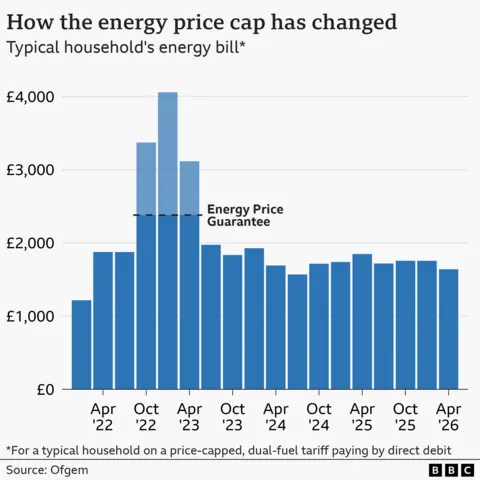
For a household governed by Ofgem's price cap, and using a typical amount of energy, the annual bill will fall by £117 to £1,641.
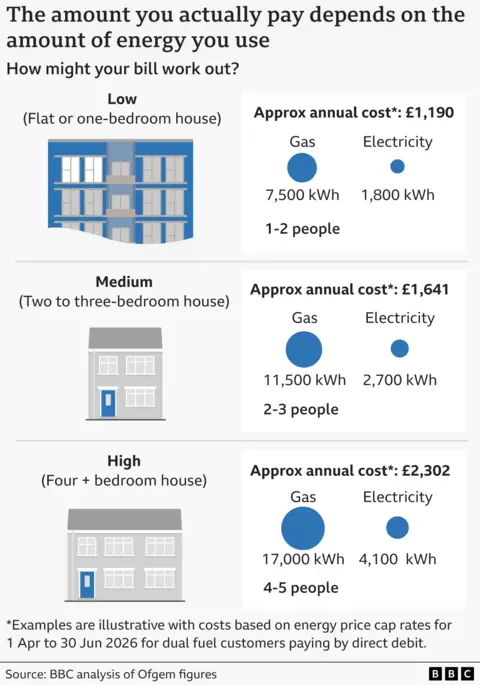
The Ofgem cap is based on a "typical household" using 11,500 kWh of gas and 2,700 kWh of electricity a year with a single bill for gas and electricity, settled by direct debit.
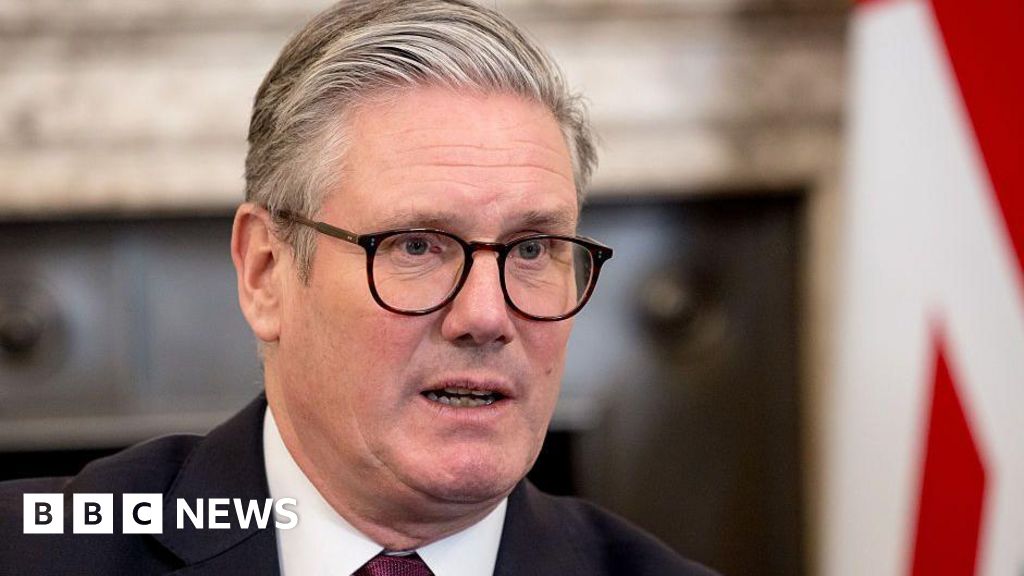
Prime Minister Sir Keir Starmer said: "Energy bills are at the front of everybody's mind, and I know they've been too high for too long. I promised to bring bills down and I meant it.
"I know there is more to do and my government is pulling every lever to bear down on the cost of living and protect the pound in the pockets of working people."
Crucially, the discount on each household's individual energy bill will depend on the size and type of household and how much energy it uses.
The reduction will be primarily applied through a lower price per unit of electricity used. This means high electricity users, which may include vulnerable households with medical equipment, are likely to see the biggest benefit. Those who use little electricity and a lot of gas will benefit the least.
However, the changes to policy costs will also mean a reduction in bills for those on fixed deals. They will be contacted by their supplier with details in the coming weeks on the specific change to their tariff.
Tim Jarvis, director general of markets at Ofgem, described the drop as "welcome news for many households".
"We're also seeing encouraging signs of greater engagement and competition, with switching increasing by almost 20% year on year," he said.
The wholesale cost of gas, which spiked after Russia's invasion of Ukraine four years ago and led to soaring household bills, remains relatively volatile and difficult to predict.
This makes it tricky to say what will happen to domestic energy bills later in the year, but energy consultancy Cornwall Insight is forecasting relatively little further change as the year goes on.
"This reduction in the cap will bring real relief to households after a prolonged period of pressure on their energy bills. However, our early view for July suggests that this is where the big falls stop," said its principal consultant Dr Craig Lowrey.

Eileen Jordan says she has made savings
Experts have urged people to continue to monitor their energy use to keep costs down.
Eileen Jordan, from Ripon in North Yorkshire, said she and her husband had worked hard to keep costs down.
Having contacted the BBC's Your Voice, she explained that they do not heat two bedrooms in their home, but said their finances were in good shape.
"How some people manage is beyond my comprehension," she said. "We are fortunate but only because we have been frugal."
Energy bills will fall in April, but other bills will increase - meaning most people will continue to face a squeeze in the cost of living.
Water bills will rise sharply in some areas, council tax will go up, and various other household costs will increase. Some larger families will receive more in universal credit when the two child benefit cap is scrapped.
Households struggling to make ends meet have fallen behind on energy payments, leading to a collective debt to suppliers of well over £4bn.
Dhara Vyas, chief executive of Energy UK, which represents suppliers, said companies can help.
"They are giving them different tariffs, extra help and support, offer white goods such as efficient fridges, but they can only do this if they know who is in your household and what your circumstances are," she said.