.png)
 3 weeks ago
26
3 weeks ago
26

 EPA
EPA
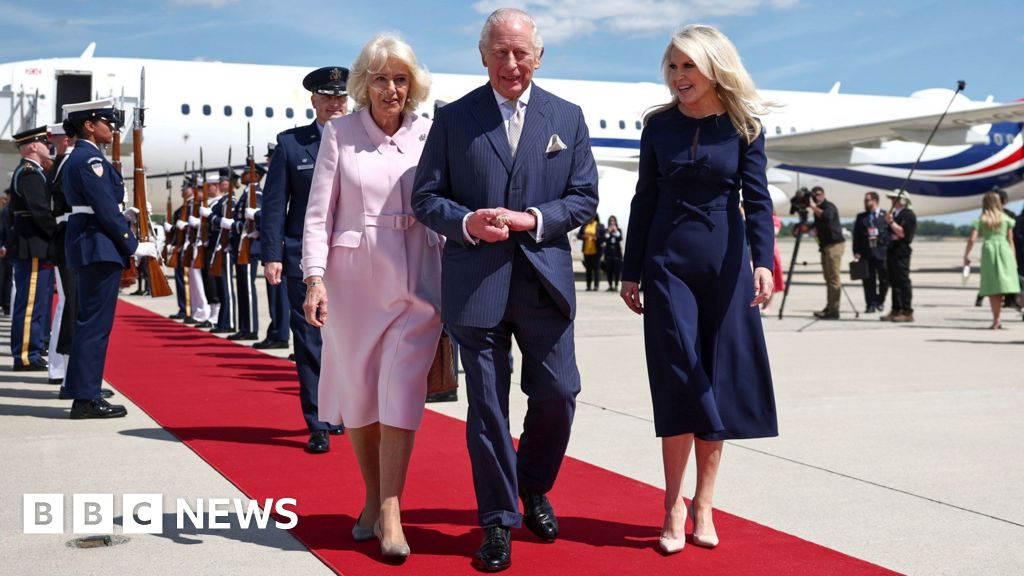
Compulsory military service in Germany was ended in 2011
German males aged between 17 and 45 may need to seek approval for lengthy stays abroad, under changes introduced as part of a new law which introduced voluntary military service.
The Military Service Modernisation Act, which came into force on 1 January, aims to boost defences following threats from Russian in the aftermath of its full-scale invasion of Ukraine.
In a statement sent to the BBC, a defence ministry spokesman confirmed that males aged 17 and older were required to obtain prior approval for stays abroad lasting longer than three months.
Under the current law, travel approvals must generally be granted and it remains unclear how the rule would be enforced if breached.
The requirement to obtain permission had gone largely unnoticed until it was reported by the Frankfurter Rundschau newspaper on Friday.
The defence ministry spokesman said that the regulation was intended to "ensure a reliable and meaningful military registration system", adding: "In the event of an emergency, we must know who may be staying abroad for an extended period."
The statement acknowledged that consequences for young people could be "far-reaching" and said that regulations on exemptions were being developed "in part to avoid unnecessary bureaucracy".
The legal basis for the requirement lies in Germany's 1956 Conscription Act, which has been amended several times, most recently last December.
Prior to the latest amendment, the obligation to report extended stays abroad applied only if Germany was in a state of national defence or mobilisation.
The defence ministry official said that a similar provision was "in effect during the Cold War and had no practical relevance".
The Military Service Modernisation Act sets out plans to expand the number of active personnel from around 180,000 to 260,000 by 2035.
In December, the German parliament voted to introduce voluntary military service, meaning that from January all 18-year-olds would be sent a questionnaire asking if they were interested in joining the armed forces.
From July 2027, they must also undergo a fitness assessment to determine whether they would be eligible for service should war break out.
Women may volunteer for military service but cannot be compelled to serve under Germany's constitution.
While the plan is for voluntary service, if the security situation worsens or if too few volunteers came forward, a form of compulsory military service could be considered.
When the law was approved by parliament, many young people joined protests against the change.
"We don't want to spend half a year of our lives locked up in barracks, being trained in drill and obedience and learning to kill," one organiser wrote on social media.
Like other European countries, Germany ran down its armed forces during the peacetime years of the 1990s. During the Cold War it had an army of almost half a million.
Compulsory military service in Germany was ended in 2011 under then-chancellor Angela Merkel.
Chancellor Friedrich Merz has pledged to rebuild the Bundeswehr into Europe's strongest conventional army in response to what his government describes as a more dangerous security environment in Europe.