.png)
 1 month ago
59
1 month ago
59
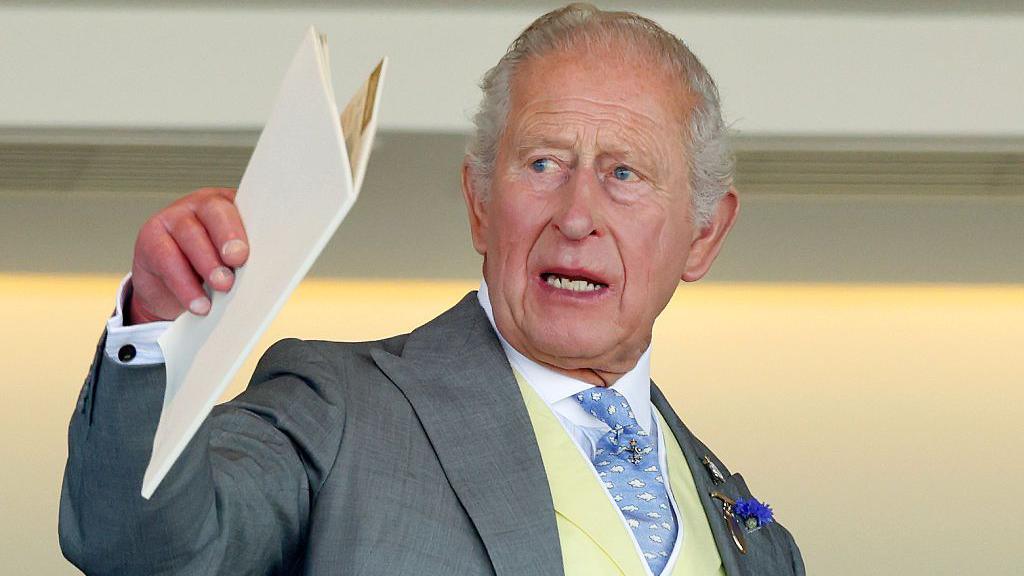 Image source, Getty Images
ByMitchell Labiak
Business reporter
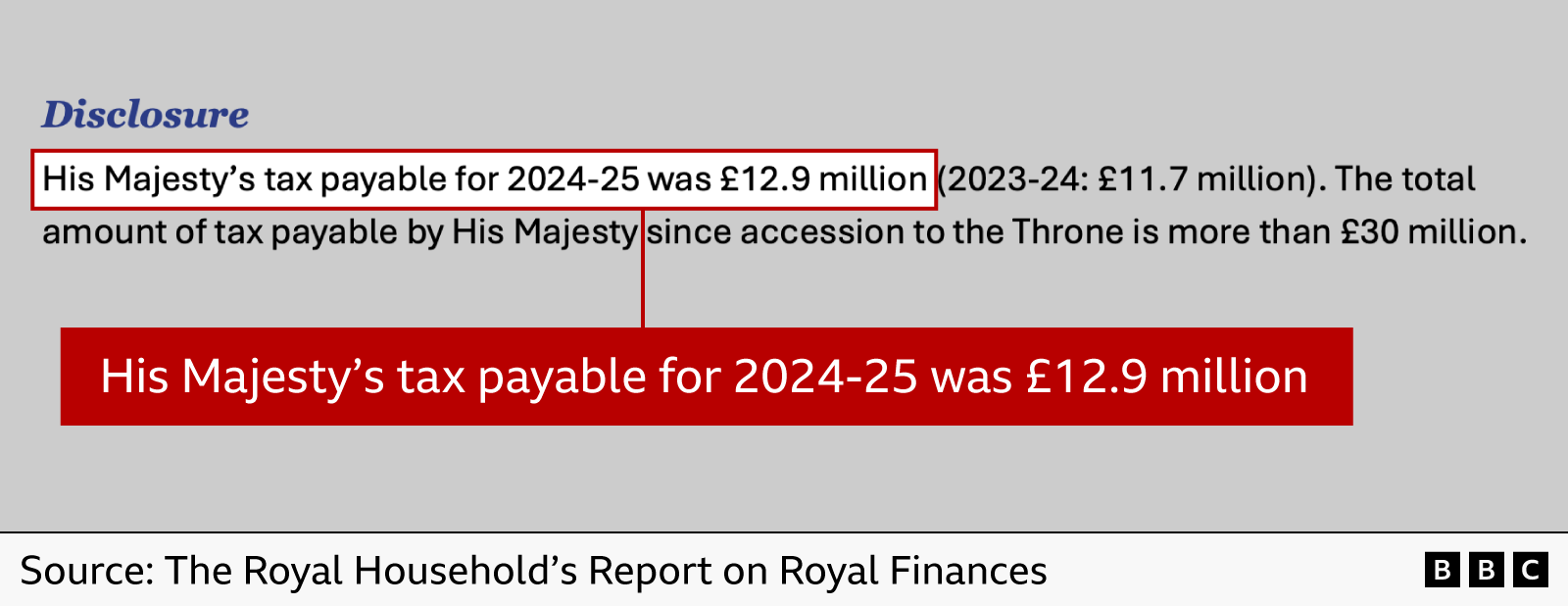
King Charles has made history by revealing his £12.9m tax bill, but the payment is far from ordinary.
The announcement comes alongside the Royal Household publishing its annual financial report.
Here's what the document tells us – and doesn't tell us – about the King's unique tax situation.
The King pays some taxes voluntarily
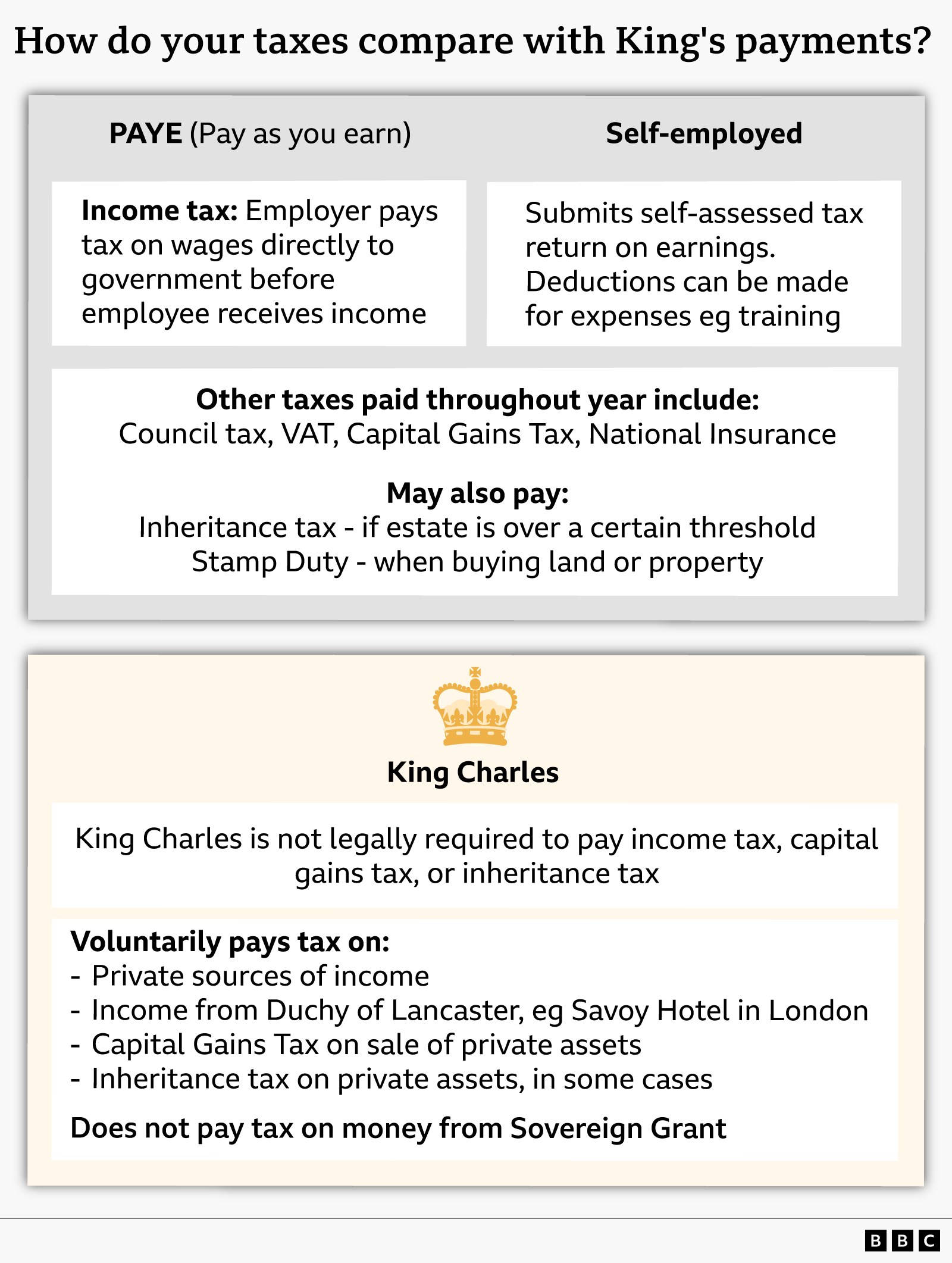
King Charles is not legally required to pay income tax, capital gains tax, or inheritance tax.
Instead, he voluntarily pays some income tax, capital gains tax, and inheritance tax according to an agreement with the government called the Memorandum of Understanding (MoU)
The MoU came about in 1993 following public pressure over the cost of running the Royal Family and is occasionally updated, most recently in 2023 to reflect the change of monarch following Queen Elizabeth II's death.
The fact that some of the King's taxes are voluntary is not the case for regular taxpayers, and some argue this means that it is not a tax at all.
HMRC defines tax as "money that individual people and businesses are legally required to pay to the government".
Dan Neidle, founder of Tax Policy Associates, told the BBC: "If it's voluntary, it's not tax."
Meanwhile, the report says King Charles pays VAT, employer taxes, and local rates "in line with requirements".
We don't know how his tax bill was calculated
While the Royal Household describes releasing the King's tax bill as part of its "commitment to transparency", it's not clear how it has been figured out.
So although we know that the King has agreed to pay tax on personal income, income from the Privy Purse not spent on official duties, and capital gains tax on private property sales, we don't know what proportion of those taxes make up the £12.9m paid.
The Privy Purse is a source of private income for the ruling monarch.
It mostly comprises income from the Duchy of Lancaster, an estate that belongs to whoever is the ruling monarch and owns – among other things – the Savoy Hotel in London.
The report does say that the Privy Purse received £25.2m from the Duchy of Lancaster for the year to 31 March, but that is not all of the King's income.
He also has personal earnings which the Royal Household says may include "investment income and trading profits". The report does not put a figure on this.
Buckingham Palace described the move to publish the King's tax bill – as well as Prince William's – as increasing transparency which it said aimed to "encourage wider understanding of our accountability".
Historian Anna Whitelock said the King revealing his tax bill puts him "front and centre as a very rich man".
"I do think this is very much a sign of the times, and it's an attempt by the monarchy to try and get on the front foot and before they were absolutely pushed to try and show they are responsive and not reactive."
However, Shaun Moore, tax and financial planning expert at wealth manager Quilter, said there's ultimately not much detail to look at in report.
"The headline figure is a large sum of tax and there's also a large sum of income quoted as well, but there's not any breakdown of about how that was arrived at."
He can deduct official royal business from the bill
Another thing not detailed in the report is what proportion of the Privy Purse income has been spent by the King personally and what proportion of it has been spent for official royal duties.
This matters because the King only voluntarily pays tax on income spent personally, meaning the King can effectively deduct royal business from his tax bill.
The King also does not pay tax on the Sovereign Grant, which is money paid from the Treasury to the Royal Household to pay for official duties.
This system is a bit like how a self-employed person can file expenses on their self-assessment tax return for things like uniform or training.
Except that the King has two tax-free ways in which he can he can fund official duties.
Also, what counts as official duties is very different from what a regular self-employed taxpayer can expense.
For example, the untaxed Sovereign Grant can be used to fund the staff costs and running expenses of the King's official household while untaxed official duties that can be paid by Privy Purse include the personal income of working members of the Royal Family.
The Keeper of the Privy Purse, James Chalmers, said: "While Royal finances can sometimes appear complex, the underlying system is clear in principle, structured in law and refined over time to ensure the Monarch can serve with independence, accountability and in the long-term interests of the nation."