.png)
 1 month ago
68
1 month ago
68
It is easy to poke fun at the prissy traditions of the Masters. Golfers, never mind spectators, enter a state of panic over what horrible fate may befall them should they break the rules inside Augusta National. It is preposterous in so many ways; adults consumed by fear over missteps at a golf tournament. People do not typically feel this way inside the Sistine Chapel.
This year, there are reasons to be grateful for Augusta’s unapologetic approach. The Masters provides a welcome break from the ear-bashing noise of the modern world. The United States is an especially fractious place. This major also offers a timely escape from the racket within golf itself. Brief serenity should be appreciated.
The Ryder Cup last year was an unruly, disgusting disgrace when it came to spectator behaviour. There were ejections at the Players Championship last month after Rory McIlroy was heckled on separate occasions. Matt Fitzpatrick admirably shrugged off the abuse he received when seeking to win the same event but the scene was still a grim one. The Phoenix Open is bizarrely celebrated as an annual rabble. As if to prove this is not solely the culture in the United States, cries of “Get in the water” followed by the cheers that met precisely that result formed a dispiriting backdrop as the underdog Joakim Lagergren jousted with McIlroy at the Irish Open. A boorish, mob mentality is far more common at golf tournaments than is acknowledged.
Those attending the 90th Masters are given a lesson on manners immediately on arrival. A pamphlet given to attenders carries a 1967 quote from Bobby Jones, the course’s founder. “In golf, customs and etiquette and decorum are just as important as rules governing play,” it reads. “It is appropriate for spectators to applaud successful strokes in proportion to difficulty but excessive demonstrations by a player or his partisans are not proper because of the possible effect upon other competitors.

“Most distressing to those who love the game of golf is the applauding or cheering of misplays or misfortunes of a player. Such occurrences have been rare at the Masters but we must eliminate them entirely if our patrons are to continue to merit their reputation as the most knowledgable and considerate in the world.”
Ian Woosnam will raise a smile at this. In 1991, he encountered a hostile Augusta audience as he pipped Tom Watson to the Green Jacket. “I was shocked by the number of spectators who made it clear that they didn’t want me to win the Masters,” the Welshman said. “Like they personally blamed me for Tom Watson not winning.” Yet this was newsworthy as an exception. As a 1992 Los Angeles Times column remarked: “What is uncommon is for traditionally reserved spectators to be indulging in the active harassment of players.”
Golf has no problem remaining relevant as a participation sport – the numbers have never been so good – but in a cluttered market has a challenge in commanding eyeballs at professional level. LIV’s arrival, meaning a split within the elite ranks, undoubtedly had a negative impact on the paying punter who wants to watch best versus best all the time. Others have simply been put off by the outrageous amounts of money bestowed on golfers. It therefore becomes good for business to appeal to sports as opposed to distinctly golf fans. With that comes tribalism and screaming as the lager flows. Golf’s attempts to monetise relationships with gambling firms is similarly problematic; one shout on a backswing can alter the outcome of a tournament.
Augusta has no such worries. No mobile phones, no litter dropping, no outward celebration of balls whacked into Rae’s Creek, no entitled children demanding autographs. Or else. This remains one of the most atmospheric venues in all of sport. On Sunday evening as shadows lengthen, roars reverberate around the course as heads turn to check updates on manual scoreboards. Remaining in a bygone age and proudly so has done the tournament no harm whatsoever.
There are famous tales of journalists, coaches or caddies stepping out of line – even accidentally – and suffering the consequences. One tutor was kicked off the premises in 2025 for wearing shorts on the practice range. Perhaps spectators encounter the same long arms of the Masters law, it is just that one never hears about that. Security personnel are barely visible. The only logical conclusion to draw is that Augusta galleries display attitudes and/or restraint that set them increasingly apart.
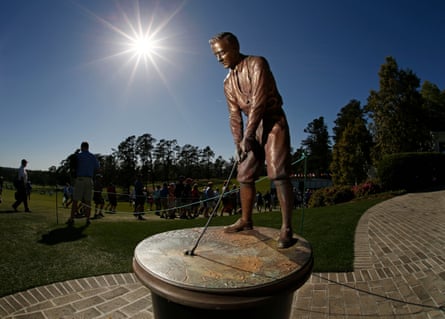
“Although cheering and positive patron responses to great play are encouraged, unsolicited or consistent calls from the gallery are prohibited,” says the tournament information sheet. Four days when sporting excellence will be the focus should be no matter for ridicule. What a refreshing departure from golf’s new normal. Breathe it in.