.png)
 1 month ago
79
1 month ago
79
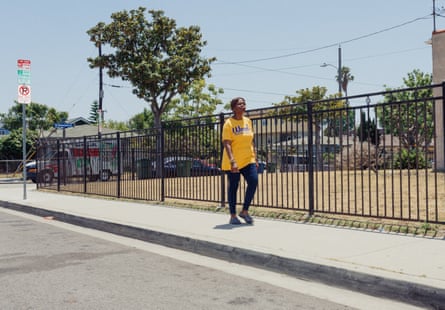
Melisa Arnold’s morning walks around the neighborhood are orchestrated by the staccato beat of jackhammers and the roar of airplanes pointed to and from Los Angeles international airport. This is Inglewood, she says, and its soundscape.
After retiring from her human resources and payroll job last year, Arnold, 66, walks for miles around the city she has called home since 1985. Her route takes her past the sports and entertainment hub, which includes the remodeled Kia Forum and the new Intuit Dome. She walks by SoFi Stadium, which will soon host World Cup games. Next year, the Super Bowl is scheduled to return. And in 2028, Olympic events will arrive.
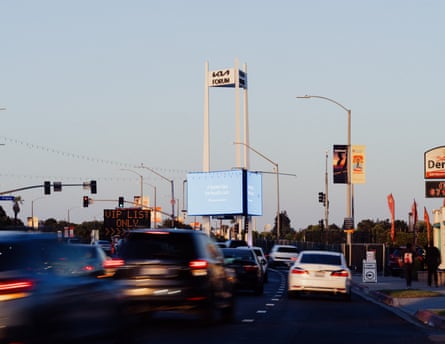
To ready itself for hosting duties, Inglewood is remaking itself in real time. Over the past years, billions of dollars have flowed into the stadiums, infrastructure, and entertainment development as the city of nearly 103,000 markets itself as Los Angeles’s sports hub. Major streets are freshly paved and lined with new digital billboards that remind Arnold of the contours of the World Cup trophy.
“This is the city of the future,” says Arnold, pointing to a bulldozer leveling dirt on a lot across from the Kia Forum where a former strip mall is being converted into additional parking. Redevelopment is welcomed, Arnold says, if the revenues from these businesses are equitably distributed to the community. It’s the question on everyone’s minds: who benefits from a city hosting world-class events?
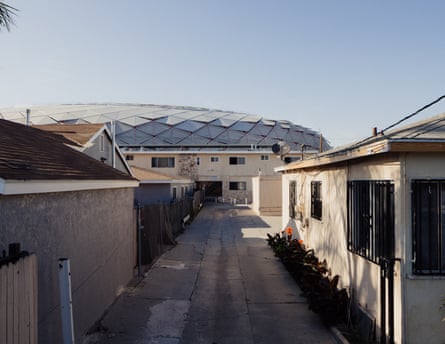
City leaders and developers describe Inglewood’s transformation as a renaissance. The city, which has always been at the heart of southern California sports, has felt the booms and busts as franchises rose and tanked. When the Los Angeles Lakers and the Kings left in 1999, Inglewood struggled mightily. Talk of a rebirth began with the arrival of the NFL’s Rams and Chargers in 2020, and has intensified as the city once again prepares to step into the spotlight.
On streets beyond the stadiums, residents describe a more complicated reality. Vacant storefronts still punctuate its commercial corridors. On Kelso Street, a closed Inglewood public school stands empty behind locked gates. Its climbing structure fossilized in the playground.
When construction started on SoFi Stadium, the air was tinged with the promise of progress, said Tyler Fister, an Inglewood resident since 2013.
“There’s no way I’m affording the Olympics tickets, right? World Cup tickets? That’s not happening in a working-class city,” says Fister, 42, in a phone call. “We’re getting flown over, and we’re getting walked over.”
Some businesses are thriving while others stagnate. Some residents love the transformation, while others feel left behind. But a new community fabric is being woven in Inglewood, and residents and business owners are fighting to be included.
“There’s an old Inglewood, and there’s a New Inglewood.”
To describe Inglewood’s renaissance, Mayor James T Butts Jr likes to say, “The only thing that has changed in Inglewood is everything.” Since the stadiums opened, many residents have been forced to adapt to a new existence – one with endless construction projects, street closures and lines of cars that take up all the parking spaces.
It’s part of the growing pains of a city reinventing itself, says Christian Martin, an Inglewood resident and business owner.
“At the end of the day, there’s an old Inglewood, and there’s a New Inglewood,” says Martin, 38. “I much rather pick this new Inglewood.”
Founded by his parents, Gloria and Esaul Martin, the original Fiesta Martin Mexican Grill opened in Inglewood in 2009 with the goal of introducing more Mexican cuisine to the area. Over time, the business expanded across the city. To date, the Martin family owns eight restaurants, a banquet hall and a forthcoming Hollywood Park restaurant.
“Yes, we are very much invested in Inglewood. We’re certainly building, and we want to continue to build,” says Martin. “This is home.”
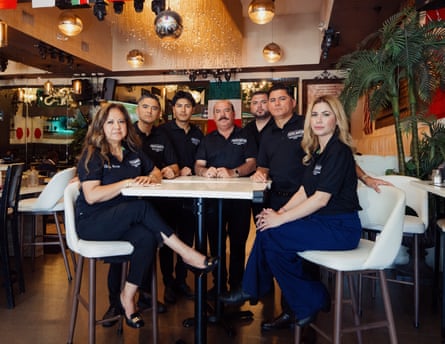
One of the restaurants in the Martin family’s holdings, Bruno’s Burgers, is a neighborhood restaurant that has been slinging burgers since 1969. One family handed Bruno’s down to the next until the Martin family took over this year. The restaurant’s name and menu were kept the same, says Martin, because the community needs places like these where parents who took their first burger bite here can recreate the memory with their kids.
When the World Cup comes to town, Martin plans to fly international flags and experiment with translating menus into different languages to accommodate visitors arriving from around the globe.
“It’s an opportunity to showcase our brand on an international stage,” says Martin.
But the same redevelopment inspiring optimism in some residents creates unease in others. Fister lives in an Inglewood duplex with his in-laws nextdoor. At times, living in a city anchored by sports and entertainment can feel transactional, he says. Home values are on the rise, but so are property taxes and rent.
“I don’t think it’s a true renaissance,” says Fister. “I think it’s a facade of one that is somewhat empty for the neighborhood.”
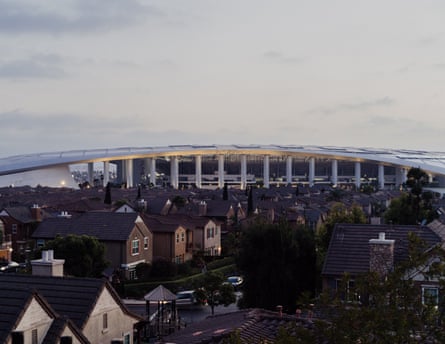
In car rides with his daughters by the entertainment district, Fister often marvels at SoFi’s interlocking metal architecture and the cascading lake, and he repeats the same cautionary tale.
“You know, baby, this isn’t necessarily for us, right?” he says. “This place may be your neighborhood, but it’s not for you.”
‘We’re going to be a part of helping to co-create the neighborhood’
In the shadows of gleaming stadiums, the needs of the community can slip quietly into the background if left unchecked. This kind of tension also surfaced in Atlanta, where residents near the Mercedes-Benz Stadium pushed city leaders for stronger community protection and clearer public benefits. Over the years, a growing body of research has found that the benefits of stadium-led redevelopment tend to remain concentrated around entertainment hubs, while broader neighborhood improvements are less guaranteed.
But it’s motivated some residents in Inglewood to fight for the ability to shape the city’s future without being written out of it. The re-emergence of Inglewood as a sports and entertainment capital should not just be about welcoming the world, says Victor Cyrus-Franklin, lead pastor of Holman United Methodist church in Los Angeles. “It is about building the world that we need for those who are living here long term.”
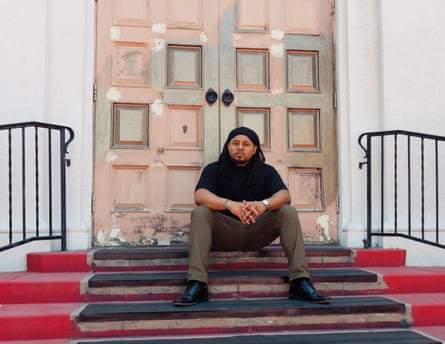
Even before the stadiums were completed, residents were making clear what Inglewood needed most: affordable housing.
“It became our rallying cry,” says Arnold.
For years, rent in Inglewood has climbed sharply around stadium developments in a city where roughly 64% of housing units are renter-occupied, according to US census data. The pressure is visible in the city’s rapidly changing housing market. New luxury apartments next to the Hollywood Park Casino advertise studio units starting at over $2,500 a month.
In the community, stories of displacement are commonplace. An octogenarian resident who has lived in a one-bedroom apartment since 1989 saw her rent balloon past her fixed income with just one month’s notice. A school board member resigned because a rent hike forced a move from the city.
“You can’t resurrect the city just by relocating everyone,” says Cyrus-Franklin, 47, a pastor at Inglewood First United Methodist church, a 121-year-old multi-ethnic congregation located about one mile from SoFi Stadium. “How can houses of worship stand when members can’t afford to live in the neighborhood any more, especially in a working-class community?”
Cyrus-Franklin and the church have the beginning of an answer: build affordable housing on church property.
In February, the congregation of 60 broke ground on a $49m, 60-unit affordable housing project, says the pastor. When complete in 2028, housing will be available for some employees in the entertainment hub, allowing them to walk to work. With construction humming now at the church campus, congregants are worshipping at a temporary location.
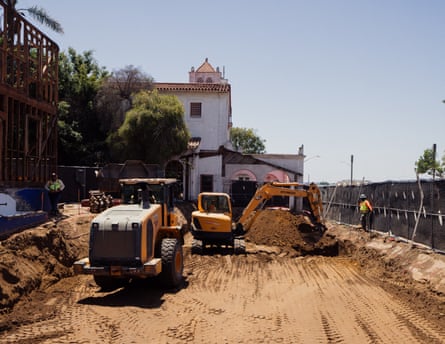
Inglewood First is also exploring the possibility of redeveloping its parking lot across the street into multi-family housing.
“We’re going to be a part of helping to co-create the neighborhood,” says Cyrus-Franklin. “To reweave a social fabric that fosters a sense of belonging for all people as we share the community together.”
The church’s resolve comes from memory as much as policy. Inglewood has already seen one cycle of rise and decline when longtime sports franchises moved away and the Hollywood Park Racetrack, which drew crowds for decades, closed in 2013. The city already knows the weight of the world’s gaze as host to the 1984 Olympics. It’s also why residents and historians say housing will determine whether this latest renaissance reaches the broader community.
“If you don’t have housing that people can afford in Inglewood, what good does this all serve?” says Alison Rose Jefferson, a historian, author and heritage conservation consultant. “If there’s not enough housing, there are not enough people in the area who are walking to support the businesses.”
Inglewood residents are looking for long-term plans to remain sustainable when the cycle of divestment happens again. Because the day will come, says Cyrus-Franklin, when SoFi Stadium will not be good enough for the NFL any more.
Meanwhile, not every institution in Inglewood is trying to reinvent itself.
Inside The Serving Spoon, a community stalwart since 1983, time stands still. The food here anchors the city – catfish, grits, waffles and breakfasts that draw families back across generations.
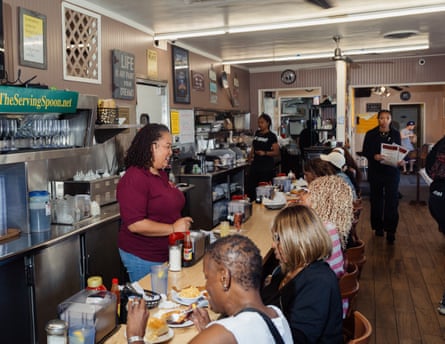
For decades, the restaurant’s bulletin board has been a hub of resources and information for customers affectionately called “spooners”. It is layered with flyers for legal aid, financial services and college announcements. Customers linger over eggs and potatoes in wooden booths and red banquettes, talking about the neighborhood news and family struggles.
During NFL home games, The Serving Spoon bustles, says Jessica Bane, a third-generation co-owner. Tourists stop by, lured by the chance to eat at a James Beard-winning restaurant that the community has known about all along.
“We are definitely in the Inglewood of the future,” says Bane, 38. “The aesthetics of the neighborhood have changed, but the people are still the same.”
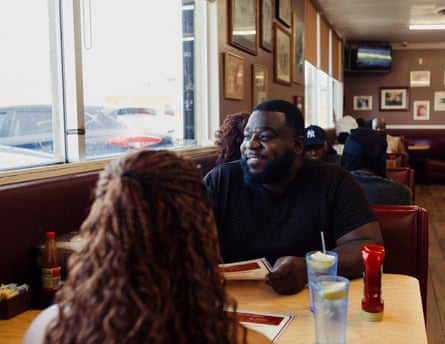
The restaurant’s original sign, which had stood since it opened, recently fell. A temporary banner now hangs in its place.
To Bane, this is a literal sign of change in Inglewood. Old structures that beckoned customers for years eventually fall, and new ones rise to replace them. The new Serving Spoon sign will be similar, but it won’t be the same.
“There’s a goodness about Inglewood,” says Bane. “It was initially a small town that turned into a big city with the hearts of good people in it.”