.png)
 1 month ago
71
1 month ago
71
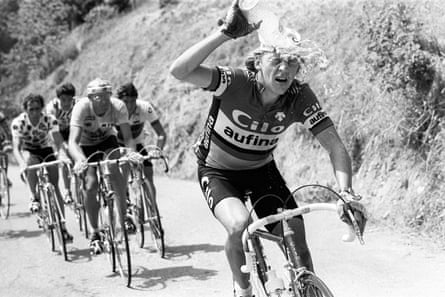
When you write about the Tour de France for the best part of (deep breath) 40 years, the same themes recur, constantly evolving and mutating. The contorted fortunes of France’s finest cyclists have been a constant narrative since 4 July 1990, when the late Laurent Fignon put foot to tarmac in the feed zone somewhere in the bocage between Avranches and Rouen. It was cold, dank and wet, which given the canicule concerns gripping France at the moment seems like a bit of history in itself.
Fignon had started as one of the favourites, but that was the beginning of the end for “the Professor”. The search for a successor to the five-time winner Bernard Hinault had begun in 1986, the Badger’s retirement year when the ephemeral heir apparent was Jean-François Bernard; 1990 was when the doubts gained pace, intensifying with each passing year and with each potential champion who emerged, went under the spotlight, and eventually crumbled: Richard Virenque, Luc Leblanc, Laurent Jalabert, Romain Bardet, Warren Barguil, Thibaut Pinot.
By 2014, the crisis was so acute that the French Cycling Federation was reduced to an attempt to launch its own professional cycling team along the lines of Great Britain’s Team Sky, in the hope that this would focus minds and uncover the next champion. That overlooked the mantra of the sport’s French guru Cyrille Guimard, the man who had nurtured Hinault, Fignon and Greg LeMond, and maintained that Tour winners “are born, not made”. Hinault concurred when we met in 1993. “Super champions are difficult entities, you don’t get many of them, perhaps 10 a century. You don’t just build them.” The project went nowhere, but the croissants at the launch were more than decent.
In the 40 years since Hinault retired, the only Tour when a Frenchman has raced like a potential winner was 2019, when Pinot was in effervescent climbing form. No one knows whether Pinot would have managed to dominate the opposition in the final few days, because he abandoned with a torn muscle in his left thigh when lying fifth. But the vignette perfectly summed up the post-Hinault years: high hopes, high drama, floods of tears.
This year, the narrative of heroic also-rans has changed abruptly, and cycling fans are entitled to argue about precisely when. Was it 7 March in the Strade Bianche classic when Paul Seixas managed to cling on to Tadej Pogacar’s wheel, albeit briefly? Or 22 April, in the 20-odd seconds when Seixas dislodged the field in the final metres of the Flèche Wallonne classic, becoming the race’s youngest ever winner? Or 12 June when he spent hours fighting his way back to the front of the Tour Auvergne Rhône Alpes after a heavy crash left him trailing by minutes?
My personal favourite Seixas moment came in the Tour of the Basque Country’s stage four, where convention and caution dictated that he should watch and wait on the final climb, conserving a healthy overall lead. Instead he attacked on the descent, and gained 20 seconds on his rivals, a completely gratuitous piece of attacking, racing for fun, because he could, that was right out of the Hinault playbook. “Young and carefree,” as Fignon would have put it. What sets the 19-year-old apart are two things: the drama that seems to ensue every time he pins a number on, and the fact he clearly has the power to back up the panache. Guimard, now 79, says he has never seen the likes of Bardet, Virenque or Pinot shred the field up a mountain climb in the way that Seixas can.
The excitement and hype around Seixas is immense, and fully justified. Nothing has been seen like this in French cycling since the late 1970s, when Hinault was doing Badger-y things like steering his bike into a ravine (Dauphiné, 1977) and getting right out again and winning classics, or perhaps Fignon’s electric first season in 1982. If there is a parallel, it is Fignon, who made an impact immediately after he turned professional; Hinault’s development was more of a slow burn, with Guimard rigidly programming his progression.
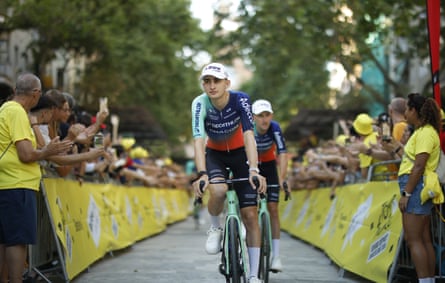
The cautionary note for Seixas came with that chute at the Tour Auvergne Rhône Alpes when his youthful insouciance was close to his undoing. The next three weeks will see him pivot on a razor’s edge, where if he curbs his youthful exuberance it will be an anticlimax, but if he lets his emotions run free he could be undone. All that, and the fact he faces the 21st century’s two consummate Tour champions in Pogacar and Jonas Vingegaard.
“The dramatic, tragic story of a Frenchman who has captivated the home crowd and is forced out by ill fortune and great physical suffering is a plot-line the Tour has written many times.” That was Pinot in 2019. This July, the ending could be different, but the warnings from recent history are there for all to see.