.png)
 1 month ago
70
1 month ago
70
The Socceroos arrived in the lone star state of Texas eyeing a historic win, a chance to secure a World Cup knockout victory for the first time. Against a resolute Egypt, however, they found in their pistol mostly blanks.
The shootout in Dallas will become Australian football’s most debated topics after the substitution of goalkeeper Patrick Beach and selection in the high-pressure fourth slot of 18-year-old Lucas Herrington, but the successes or failures of Australia’s World Cup campaign cannot be distilled into a few spot kicks.
The Socceroos progressed out of their World Cup group for the third time, matching their efforts from 2006 and 2022. Yet in the expanded tournament, they failed to replicate the mathematical progress of those two earlier tournaments: the round of 16 trumps the last 32.
Defender Aziz Behich said after the match his feelings were mixed, and there was “a lot to be proud of” as well as a bit of “what if”. Winger Awer Mabil was more positive. “Once we sit down and just reflect a bit, we should all be proud,” he said.
This campaign will be deeply analysed in coming days, weeks and years. Was Australia’s forward mix a result of planning or necessity? Was the late Cristian Volpato call-up a reflection of the Socceroos’ desperation? Is Nestory Irankunda really a central striker?
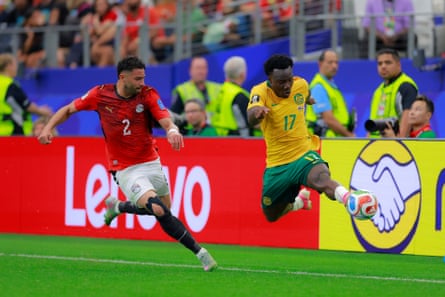
Coach Tony Popovic was in no doubt the team had delivered across the four matches. “The performance tonight was outstanding, I thought it was wonderful against Turkey, fantastic against Paraguay – a game that had we lost, we’d be going home,” he said. “I thought we were very good in the second half against the US, so overall I can only compliment the entire group and staff.”
Popovic knows that’s not the whole story. The Socceroos finished with three goals scored from 390 minutes of football, and just one win in four. Yes, they might have kept two clean sheets and were solid against Egypt despite conceding, but their attack came only in flashes.
Under Popovic’s precautionary principles, Australia were tough to break down at the expense of attacking vitality. From their three group matches they recorded an expected goals value of 2.08 according to Opta – a measure of how many goals they would be expected to score based on the location of chances. That places them in the bottom quarter of the competition, but their expected goals conceded was 2.68, leaving them in the top quarter.
Tactical mastery is getting the former to rise at the same time as the latter falls. The next task for Popovic – or whoever replaces him after next year’s Asian Cup – is to do just that, even if it is akin to finding the sport’s secret recipe.
“Football’s hard, it’s a tough game and watching it looks a lot easier than it actually is,” said midfielder Connor Metcalfe. “I think we should be happy with what we’ve achieved and with the goals we’ve scored.”
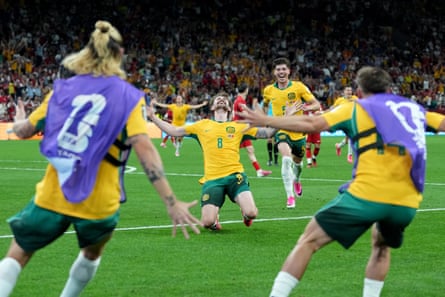
To assess the campaign as a whole, the first instinct is to follow the sentiments of the players after the Paraguay match. They were clearly elated at progressing out of the group stage from an easybeat-free Group D.
after newsletter promotion
On the other hand, there is the nature of the result in Dallas. This Egypt side are seven-time African champions, and have in their XI Mo Salah, one of Africa’s greatest footballers. The Socceroos were not expected to win this match, especially given they are two places below Egypt at 26 on Fifa’s rankings, but the two teams were broadly of the same quality.
That makes this defeat an opportunity lost. Navigate what was a winnable fixture and the Socceroos would be looking at a rematch of their last-16 tussle with holders Argentina, and a chance to avenge that 2-1 defeat in Qatar. The buildup over the next few days, following Argentina’s struggles against Cape Verde and Lionel Messi’s growing legacy, would have landed the Socceroos in the footballing spotlight and handed them a chance to make a statement on the world stage. Now, Australia’s players are going their separate ways, disappearing over the horizon in a meek conclusion to their North American adventure.
To assess Australia’s tournament in terms of merely results and statistics neglects the deeper impact of five or more weeks together for this group of players. Volpato came in late and still became a crucial contributor in the final two matches. Irankunda graduated from a must watch to a must start. The experience for Alessandro Circati and Herrington will be invaluable, securing the heart of the Socceroos defence for the next decade. Popovic said after the match “the future is bright”, and on that occasion he was not gaslighting.
Then there is the broader Australian cultural impact of four matches at the tournament. The joy in Vancouver after that win against Turkey feels long ago now, but the nature of that unlikely result grabbed broader Australia by the scruff of the neck. What football really needed was a follow-up – in daylight hours preferably – to consolidate this fresh group of Socceroos in the front of the national consciousness. Now, unfortunately, it’s back to late night World Cups for 2030 and 2034, at least.
In the end, sparkling potential and nation-stopping broadcasts does not make up for the shock of a sudden elimination, the brain clunking through the near-misses and their implications. Of Popovic’s shootout calls. Of Jordy Bos’s knee injury. Of a missing striker. Was the 2026 World Cup a success for the Socceroos? Ask again in 2030.