.png)
 1 month ago
56
1 month ago
56
Nick TriggleHealth correspondent

 Getty Images
The long-awaited report into the impact the Covid pandemic had on the NHS has been published.
It has found that the NHS in England came close to collapse during the height of the pandemic, only narrowly avoiding it due to the efforts of healthcare staff.
Among the 400 pages of text, the inquiry questions the government's "stay at home" messaging, highlights how patients were failed and finds that hospital visiting rules were too tough.
Here's a look at all the key findings:
Austerity left NHS in 'precarious position'
In the decade leading up to the pandemic, the NHS had seen its budget squeezed on a historic level.
Spending rose, but only just, despite fast-rising demand because of the ageing population and an increase in people with long-term health conditions.
The inquiry's report says this meant the NHS entered the pandemic with not enough beds or staff - a "precarious position" to be in.
The situation meant that the NHS struggled to cope with the surge in Covid patients, particularly in the first wave, with supplies of oxygen almost running out in places.
As the pandemic progressed, the NHS reached a state of overwhelm and patients did not get the level of care they needed. The pressure was, at times, intolerable and this continued through wave after wave of Covid.
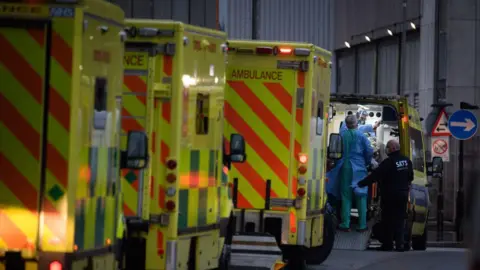
Waiting times for ambulances, even the most life-threatening calls, grew with some services turning to the military to help.
Intensive care staffing ratios were diluted, going from one nurse to one patient to one to four at times.
A collapse of the NHS was only narrowly avoided, the report says, because of the extraordinary efforts of its staff.
Long delays and lack of capacity
The report says that both Covid patients and those needing care for other conditions were failed during the course of the pandemic.
There were long delays for Covid patients using the NHS and waiting for ambulances, it says, while some patients could not be admitted to intensive care despite their serious condition because of a lack of capacity.
There was also disruption to cancer screening and a drop in people coming forward with signs of the disease which led to missed and delayed diagnoses, costing lives.
The report also finds that the cancellation of non-urgent care, such as knee and hip replacements, had a "debilitating effect" on patients' lives and mobility.
Stay at home slogan gave impression NHS was closed
The report also questions the "Stay at Home" messaging issued by the government.
The Stay Home, Protect the NHS, Save Lives slogan was designed to protect the healthcare system from becoming overwhelmed.
But it came at a cost, the report suggests, by inadvertently sending the message that healthcare spaces were closed.
It points to a decline in A&E attendances and other settings for non-Covid emergencies, including heart attacks.
People, the report says, were deterred from accessing health care because they did not want to overburden the NHS.
Lack of support and rules too tough
The report also talks about one of the most controversial policies of the pandemic - hospital visiting restrictions in lockdown.
It says those rules meant some people died without being surrounded by their loved ones. Bereaved family members were left feeling heartbroken, guilty and angry that they could not be at their bedside.
Vulnerable patients, including women given birth and people with disabilities, were left without vital support, with the report finding that such tough rules needed to be avoided if possible.
The report finds that these visiting restrictions had a "devastating impact" on bereaved family members, as well as mothers who had to receive difficult news about pregnancy complications alone.
It also finds that the visiting rules were sometimes applied inconsistently, leaving many loved ones feeling that they had been unfairly treated when visits were refused.
Shielding vulnerable patients resulted in many people become lonely and socially-isolated – highlighting the need for better planning to avoid some of these adverse effects in a future pandemic.
It says that inappropriate do not resuscitate orders were imposed on groups of people, including those with learning disabilities and older people.
Shortages meant staff worked in 'inadequate' conditions
The report also looks at the experience of NHS staff, highlighting shortages of protective equipment and the mental health impacts the pandemic had.
It says that shortages of masks, gloves and gowns meant that doctors and nurses had to work in "inadequate" conditions that put them at risk.
Supply levels of PPE got "dangerously low" - the inquiry was told at one point the NHS was just days away from running out of key items.
There was a lack of specialist masks for NHS staff that needed to fit to the face tightly for certain face shapes, including ethnic minority and female staff.
Elsewhere, the report finds that the infection control guidance was "flawed" at the start, failing to recognise the virus could also be spread in the air in tiny particles known as aerosols that can stay suspended.
Some health workers were diagnosed with post-traumatic stress disorder after working in what some described as "war zones", while burnout was common.