.png)
 1 month ago
49
1 month ago
49
As the scorched grass turns lemon-spiky in the summer heat, and our days shrink down into the cool of early morning and late evening, winter feels a long way away. Even for Matt Weston, Britain’s most successful male Winter Olympian.
You probably remember him from Milano Cortina in February, screaming down the skeleton track in his all-in-one super suit, and breaking the track record at the Cortina Sliding Centre four times to win Britain’s first medal of the games. Two days later he became the first GB athlete to win multiple golds at one Winter Olympics, when he took home the mixed team event with Tabitha Stoecker.
Since then, life has changed in surprising ways. “Skeleton is very small,” he says, “you don’t get media attention normally. So coming away from the Olympics and getting recognised on the tube, and people leaving messages on Instagram has been absolutely amazing.”
In early July, he spent a day in the royal box at Wimbledon with other sporting legends, “a pinch-me moment,” followed by a day at Silverstone. A little after that, he got married. The past six months have also marked a decision. After seeing the winter landscape change in front of his eyes, Weston decided to use his raised profile to speak out and become an athlete advocate for the organisation Protect our Winters (POW).
POW was set up by professional snowboarder Jeremy Jones in 2007 when he realised the resorts he had loved to ride in were starting to disappear. His aim was to mobilise the entire outdoor community – skiers, climbers, hillwalkers, mountain bikers, paddleboarders, surfers, skiers, snowboarders and more – to make a difference on climate. “We might be dirtbags,” says the website, “but we’re dirtbags making a difference.”
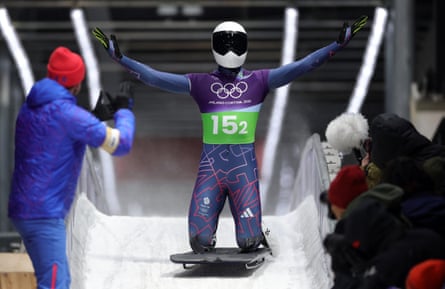
Weston, now 29, was born near Tunbridge Wells in Kent, a peachy, but mountainless, county of marshes, chalkland and beaches. “I’m very fortunate. There’s so much natural beauty around there. I think growing up, walking the dog, playing sports and generally being outside in nature massively impacted me.”
A sporty kid, he threw himself into football, rugby and taekwondo, before developing a stress fracture in his back. When he recovered, he went along to a talent ID day, and was recruited for the high-speed, high-stakes sport of skeleton. “They must have looked at my results and said: ‘This guy’s obviously got a couple of screws loose, let’s get him.’”
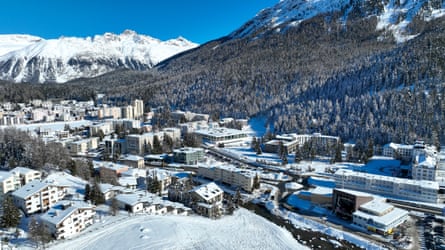
Now, after 10 years of throwing himself down an ice track and spending half the year in the coldest and most beautiful parts of the world, he’s had time to reflect. “I remember when I first started skeleton training in St Mortiz, it was -27C – that was a cold year – but we haven’t been near those temperatures in quite a long time.
“There’s such historical meaning behind the whole place [it’s the last natural ice track in the world] and now they’re having conversations about whether they need to be getting refrigeration – that’s a pretty decent red flag.”
Away from St Moritz, artificial tracks rely on refrigeration topping up the natural coldness outside. “But when the temperature is getting close to the teens they can’t warrant having the refrigeration on – you’re basically fighting a losing battle. So, we’ve missed days of pre-season training.”
“Our sport is won and lost by hundredths of a second. And when instead of being on a completely flat shiny surface, these little bits of frost come up that act like a break as you’re going down – it’s as if you left the door open on your freezer. I love the fast tracks, that’s the adrenaline junkie side of me. I want to be able to watch future guys go and race. If the changing environment is the thing that’s stopping them, that is pretty sad.”
It is not only at the track where things are changing. Snow, once guaranteed in mountainous areas of Europe, is disappearing. The Alps are warming at twice the global average. “A lot of the time that beautiful whiteout scenery is becoming a rarity. It’s sad because you go to some of these places and it is almost like a British winter, raining and horrible.”
The existential threat to winter sports and, it sometimes feels, to winter itself, can be overwhelming. For Weston, the best way of dealing with that has been to join up with POW. “Sometimes the more you think about it, the more depressing it can be – oh God, is this really the situation we’re in? But on the flip side, there are things we can do and a lot of Protect Our Winters’ messages are solution based.”
POW UK concentrates on mobilising the UK’s outdoor community. Their Clean Miles campaign, conscious that much of the carbon footprint of the outdoor sports industry comes from travel, campaigns for more affordable, better connected, more reliable public transport, with space for equipment to be carried.
“At the moment, the way things are, I have to drive across Europe with my kit because the sleds themselves are about 30-40 kilos,” says Weston. “When I’m in the UK, training is more accessible by public transport. I live in London, I use public transport all the time. It is a great example of a way that we can have a society where public transport is really great and efficient.”
In November, it will be back to the World Cup circuit, though this time as a double Olympic champion, and an advocate for the winters melting under his feet.
What else we’ve been enjoying
More sport
Days of salted codfish and cabbage leaves are over: William Fotheringham on the Tour de France’s future as the heat rises.
Calum Jacobs on how Jude Bellingham has defied hostility to become a defining national figure.
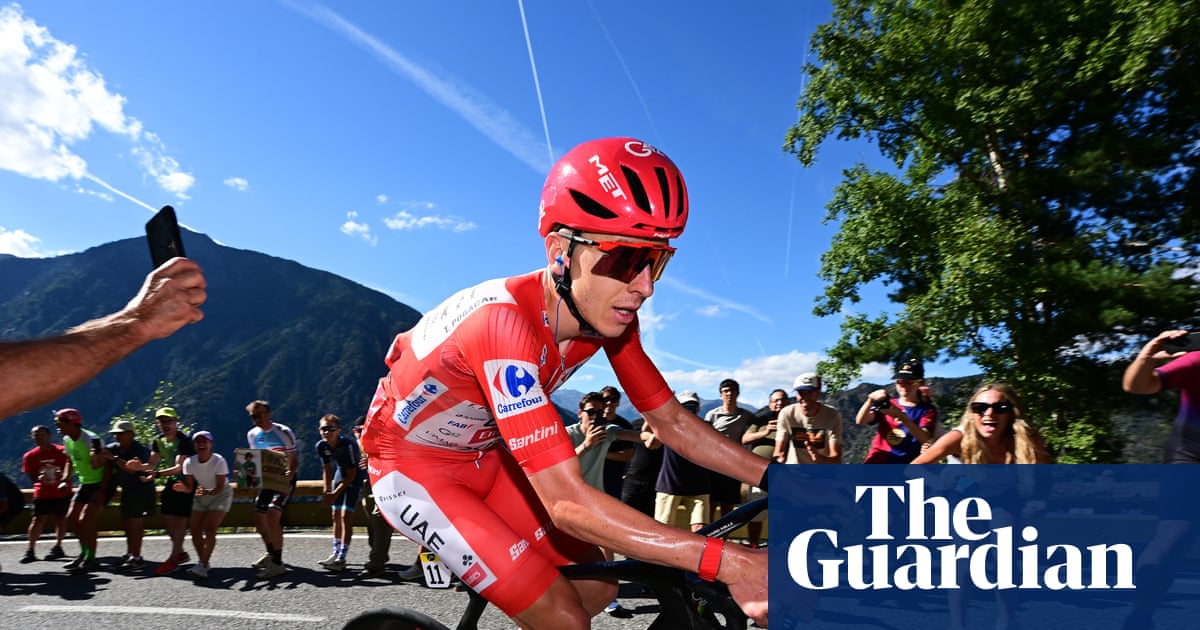
Tadej Pogacar urges the Tour de France to move to a cooler time of year.
More environment
Sadiq Khan backs call for UK maximum workplace temperature.
How birds are coping in the heatwave.
We are waiting with bated breath: El Niño locks in to threaten Australia and the Pacific with “mind blowing” heat.
And finally …
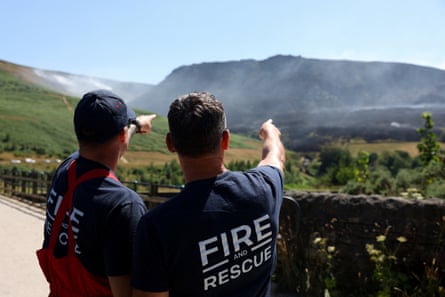
You can smell the fumes as you pull into Manchester Piccadilly, sticking to the throat and stinging the eyes. The fires up on Saddleworth Moor have been burning for over a week, the wind carrying the smoke past Stalybridge, Stockport and almost as far as Liverpool.
Micklehurst Cricket Club in Mossley has become a warehouse and feeding station for volunteer fire fighters, including six members of the club, who are up at Dovestones helping the fire brigade. The volunteer-run club has been open 8am-8pm, providing drinks and three meals a day as well as fundraising for masks. The extreme heat of the past six weeks and the lack of rain have created a tinderbox underfoot.
“Unfortunately, fires are becoming more common,” says treasurer Jenny Ross, “with the heat and people being more careless. I never thought I’d be praying for it to pour down in midsummer, but here I am. The conditions up there are horrendous. But we’ve been blown away by the support of the community.”