.png)
 3 weeks ago
50
3 weeks ago
50
I once played with a young cricketer who would physically harm himself when he didn’t score enough runs. I won’t go into the detail of how because that isn’t really the point. The point is that a young professional cricketer had reached a place where getting out in a game of cricket meant he deserved to be hurt. The strange thing is that I understood it. Not the act itself, which was obviously extreme, but the feeling behind it. Cricket meant that much to him. It meant that much to all of us.
Nobody had ever told him that his value as a person depended on how many runs he scored. Cricket had been telling him, in more subtle ways, for years. I thought about him again when I read about Brydon Carse.
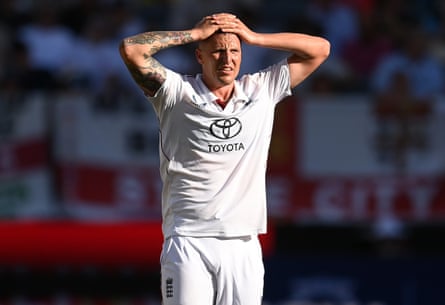
I don’t know Carse and I don’t know what happened beyond what has been reported, so this isn’t really about that particular incident. It just felt familiar. Another cricketer, another night out and another conversation about why professional sportsmen can’t just behave themselves.
I didn’t drink when I played. At all. It wasn’t a moral position, I just didn’t drink, and if anything that made me unusual. Drinking was completely normal in professional cricket. I watched players who were incredibly serious about their cricket train hard, practise for hours, worry about their weight and obsess about their performances and then drink extraordinary amounts of alcohol. I could never really get my head around the contradiction. I think I understand it a little better now, because the longer I have spent around cricket the more I have wondered whether some of the things we regard as character, toughness or simply part of being a cricketer are actually ways of coping with being one.
Playing professional cricket hurts. There is the obvious physical pain. Fast bowlers spend large parts of their careers with something hurting. Batters get hit, fingers break, backs ache and knees deteriorate. Sport gives you quite a strange relationship with pain because it isn’t necessarily something that tells you to stop. Quite often it is just something you have to deal with so you can keep playing.
The mental side is probably more interesting though. Cricket is a brutal game. You can practise brilliantly all week, feel in great form and nick your first ball. You can bowl well and get smashed everywhere. You can be playing well and get left out, or playing badly and know everyone can see it. Then there are contracts, injuries, younger players coming through and coaches deciding somebody else is better. You are basically being judged all the time.
That judgment starts really young. The pathway finds the children who are better at batting and bowling and moves them on. Then it judges them again. County age group, academy, second team, professional contract, first team and eventually, for a very small number, international cricket. The level changes but the question doesn’t really: are you good enough? We talk a lot about developing people in cricket and I’m not completely convinced we do. We develop cricketers. We get better and better at teaching them to bat and bowl, preparing them physically and finding little things that might make them perform better. But ultimately the system has always had a straightforward measure of whether you are any good. Runs and wickets.
What does that do to somebody after 10 or 15 years? If you have spent most of your childhood being told that the thing that makes you different is that you are good at cricket, it seems fairly obvious that eventually some of your sense of worth gets wrapped up in being good at cricket. You get selected and you feel good. You score runs and people tell you how good you are. Then you get nought, or you get dropped, or your body breaks.
I played with some incredibly confident cricketers who were also incredibly insecure people. I used to think that was strange. I’m not sure I do any more. Maybe cricket actually creates some of that insecurity. The approval is always conditional and, however good you are, you are never that far away from someone deciding somebody else is better.
People find ways of dealing with that. Some drank. Some took drugs. Some disappeared into themselves. Some practised obsessively after failure because doing more was the only response they knew. Players played injured and pretended they weren’t. Humour covered a lot. So did bravado.
These are obviously very different behaviours with very different consequences, but I wonder whether they can sometimes perform a similar function. Something has happened that I can’t deal with, or I feel something I don’t want to feel, so I find something that changes the feeling. For one person that might mean going back into the nets. For another it might mean getting drunk. For the young player I knew it became something much darker.
Dressing rooms are incredibly funny places, but I sometimes wonder how much of that humour is also a way of making sure nobody gets too close to anything real. Looking at some aspects of dressing-room culture is a bit like switching on an episode of Little Britain now. You don’t necessarily remember being shocked by it at the time. That is almost the disturbing bit. Things become normal because everyone around you treats them as normal.
after newsletter promotion
From what I have seen in a number of cricket environments more recently, I’m not convinced the dressing room has evolved anything like as much as we like to think. The language might change and some of the more obvious excesses disappear, but the instinct to hide vulnerability is still there.
I have always been interested in the Army as a comparison. Clearly playing cricket is nothing like going to war, but there are things about the environments that I think are similar. You put groups of predominantly young people together in a fairly enclosed world. The group becomes incredibly important because often they are the only people who really understand the experience. There has been lots written about alcohol in the military and its relationship with stress, pain, belonging and coming down from intense experiences, and I wonder whether cricket has always had its own version of this.
I used to watch it happen after games. Players could spend six or seven hours completely consumed by cricket. Someone might have got nought. Someone else might have taken five wickets. Someone might have spent the day wondering whether they were ever getting back in the side. Then the day finished and they drank. Because I didn’t, perhaps I noticed the change more. People relaxed. Something that had felt disastrous two hours earlier became quite funny. The group came back together and cricket gradually disappeared.
Maybe alcohol wasn’t simply something cricketers liked doing. Maybe it actually worked. Not in a good way necessarily, but as a coping mechanism. It dulled things. Physical pain, emotional pain, anxiety, insecurity and boredom. For a few hours whatever had been bothering you bothered you a bit less. If that is part of it, I’m not sure telling players that alcohol is bad for them achieves very much. They know. An international cricketer doesn’t need another presentation explaining what alcohol does to sleep and recovery. The interesting thing is that, knowing all of that, some still choose it.
I’m just not sure we put enough effort into the person who has to live with being a cricketer. Where does identity sit in the pathway? Where do values sit? Where do we teach someone how to deal with failure when failure in cricket happens all the time? These aren’t soft things. People find ways of coping whether we help them to or not, and if we don’t give them good ones, we shouldn’t be particularly surprised when they find bad ones.
The Secret Cricket Coach is a former professional cricketer, now an elite-level coach.