.png)
 1 month ago
49
1 month ago
49
35 minutes ago
Sarah RainsfordEastern Europe correspondent in Kyiv

 Reuters
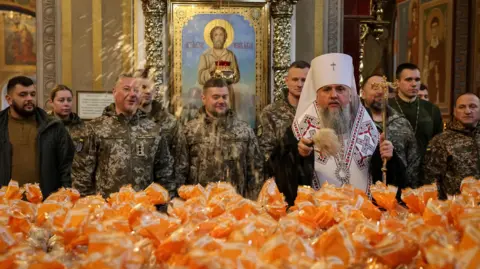
Metropolitan Epiphanius I, head of the Orthodox Church of Ukraine, sprinkled holy water to bless Easter cakes being transferred to Ukrainian servicemen on the front line this week
Russia and Ukraine have agreed to a truce for Orthodox Easter, with Vladimir Putin saying he's ordered troops to cease fire "in all directions" this weekend.
His declaration came after Volodymyr Zelensky issued repeated calls for a ceasefire, all ignored by the Kremlin.
Putin said the Russian truce would run from 16:00 local time (13:00 GMT) on Saturday, 11 April through Easter Sunday, adding that he expected Ukraine to "follow the example" of Russia. He ordered his forces to be ready to intercept "possible enemy provocations" and any "aggressive actions".
Russia's tone, and the attempt to steal the initiative, will make Ukrainians bristle.
But Zelensky soon posted on X that Ukraine was "ready for symmetrical steps".
"People need an Easter free from threats and real movement toward peace," he wrote. "Russia has a chance not to return to strikes after Easter as well."
But Putin's spokesman, Dmitry Peskov, has already ruled that out insisting the ceasefire was only temporary, and of an "exclusively humanitarian nature".
Earlier this week, Zelensky said he had asked the United States to pass on a proposal for a holiday weekend truce to Moscow, as a first step.
Any respite from the fighting would be welcome for the soldiers along the long front line in eastern Ukraine, where they're hounded relentlessly by attack drones.
It would also allow people to relax across the country, where air raid sirens are part of the everyday and Russian missiles and drones continue to kill and injure civilians.
Just recently, several people were killed when a drone targeted their bus in Nikopol in the south-east. In Zhytomyr, just west of Kyiv, a woman died when a missile landed next to her home in the middle of the morning.
The sirens went off again in Kyiv shortly after the weekend truce was announced, very late on Thursday night.
Overnight, two people were killed in the Dnipropetrovsk region, just east of Dnipro city and two others were killed in the Kharkiv region in the north. Civilians were injured in both Kherson and Zaporizhzhia regions.
In the Odesa region in the south, the military governor reported drone attacks "almost the entire night" with damage to energy and port infrastructure.
Ukraine has also increased its drone attacks on Russia, targeting its energy exports in particular in a series of intense strikes. Russia says residential houses were also hit.
If this truce does come into effect on Saturday, Ukrainians will be sceptical that it can hold.
Earlier this year, Russia claimed it had called an "energy truce" – halting its devastating strikes on Ukraine's power plants in the depths of winter – but the pause lasted just long enough to prepare the missiles for the next major attack.
Last May, Russia declared a unilateral halt to the fighting to mark the 80th anniversary of the Soviet victory over Nazi Germany. That time, Ukraine recorded hundreds of ceasefire violations.
Soldiers who have spoken to the BBC from the front line have low expectations.
Ivan, who is currently recovering in hospital from an injury, said no agreement with Russia was "worth even the paper it was written on" and called the truce nonsense.
Another soldier thought the decision to agree to a ceasefire was "appropriate", but that it wouldn't be observed by the Russian side.
"They have repeatedly proven to us and to the whole world that they are not human," he wrote from a village formerly occupied by Russian forces.
What Kyiv really wants – and has proposed, repeatedly – is a full and stable ceasefire as a first step towards negotiating a lasting end to Russia's invasion.
But Moscow insists on agreeing the peace deal first, prompting accusations from Kyiv that Russia is not serious about ending the fighting.
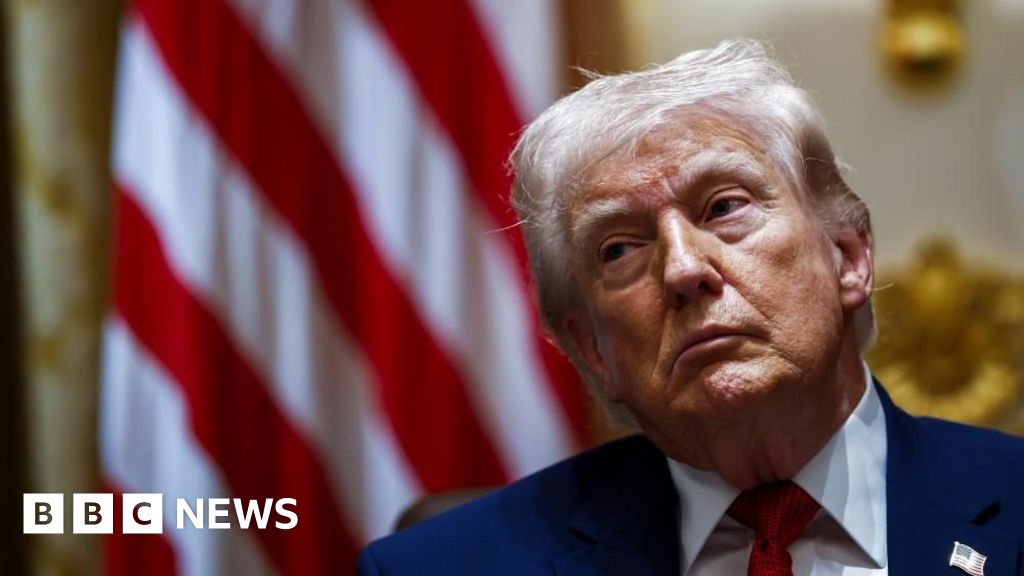
There have been several rounds of talks, with the US acting as a mediator, but the process has been on hold since Donald Trump shifted his focus to the Middle East.
Russian envoy Kirill Dmitriev is currently in the US, but the Kremlin says he is there to talk about "economic issues", not about Ukraine.
The visit comes just before the US decides whether to continue a waiver of some sanctions on Russian oil which was implemented after the Iran war.

Get our flagship newsletter with all the headlines you need to start the day. Sign up here.