.png)
 1 month ago
87
1 month ago
87
One of Régis Le Bris’s first acts as Sunderland head coach was to preside over a pre-season training camp near Alicante. It was July 2024 and, according to those present, the Breton sometimes cut a slightly isolated figure.
“I arrived alone, without any collaborators,” Le Bris said, reflecting on his leap of faith that involved exchanging the familiarity of Lorient for a job that, initially, meant working with Sunderland’s existing backroom team rather than bringing hand-picked assistants.
The coach who ended last season with a Championship playoff final victory and, a year later to the day, led Sunderland into the Europa League was playing a longer game.
“Step by step I started to express my ideas and my concepts,” he said. Slowly but surely he also began to establish a power base.
Le Bris went unrecognised when, shortly before taking charge at the Stadium of Light, he slipped into the back of a lecture room where the club historian, Rob Mason, was recounting the team’s sometimes illustrious past. But within six months Le Bris would be serving as a magnet, his unshowy pulling power attracting some of football’s brightest emerging talents.
Everything changed in January 2025. Sunderland’s inexperienced side were pushing for automatic promotion and, unusually, the owner, Kyril Louis-Dreyfus, allowed Le Bris rather than the then sporting director, Kristjaan Speakman, to take the lead on pursuing a statement signing.
Le Bris had first coached Enzo Le Fée as a 12-year-old in Lorient’s academy and knew the playmaker’s recent transfer, to Roma, was not working out. With Le Fée receptive to a loan, Louis-Dreyfus and Speakman began talking to Florent Ghisolfi, then Roma’s sporting director.
Ghisolfi was gaining a reputation as a shrewd, well-connected recruitment specialist, with his work at Lens and Nice seen as highly impressive. What went under the radar was that Ghisolfi had worked with Le Bris at Lorient and had tried to lure him to Nice.
Louis-Dreyfus and Ghisolfi bonded and the idea of the latter moving to Sunderland as football director no longer seemed ridiculous. Sure enough he arrived last July, partnering with Speakman to sign 15 players, including Le Fée, whose assists would help to clinch promotion.
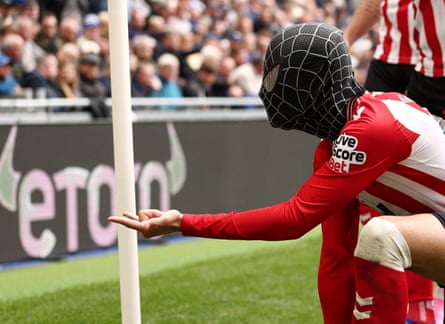
The presence of Le Fée and Ghisolfi ensured that when Louis-Dreyfus called Granit Xhaka out of the blue last summer, as the Switzerland captain was preparing for bed, the midfielder did not immediately cut the call.
It helped that Louis-Dreyfus is Swiss-French and knew Xhaka slightly through mutual acquaintances in Basel, but Xhaka needed a little more convincing. Not that it took long for him to decide that swapping Bayer Leverkusen for a club managed by a coach who reminded him of his old Arsenal boss, Arsène Wenger, and serious enough to have acquired Le Fée and Ghisolfi, was an exchange worth making.
Sunderland’s long-serving club captain, Luke O’Nien – who joined in the League One days and now helps Xhaka run the dressing room, takes up the story. “I always say Enzo was the catalyst for all this. He was the first top player to trust us as a club and he’s made a big contribution to where we are today.
“Enzo works so hard, he’s unbelievably humble and, as good a player as he is, he’s an even better person.”
The same could be said of Xhaka. In a recent interview with the Guardian Le Fée said: “Granit’s arrival changed everything.”
Significantly, Xhaka played a key role in persuading one of Sunderland’s most influential players of this season, the former Paris Saint-Germain defender Nordi Mukiele, to join. The pair had played together at Leverkusen and Mukiele said: “When Granit speaks you have to hear with both ears.”
With last summer’s £155m investment in, among others, Robin Roefs, Noah Sadiki, Habib Diarra, Omar Alderete, Reinildo, Chemsdine Talbi and Brian Brobbey paying rich dividends, Sunderland reached Le Bris’s pre-season target of 40 points with a win at Leeds in early March and finished seventh.
In February, Speakman left, amicably if not exactly willingly, as it became clear Ghisolfi’s arrival had made a large part of his role redundant.
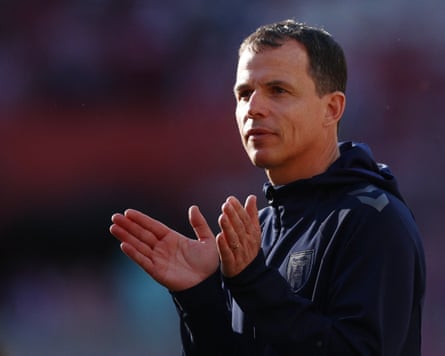
Other high-profile executive exits followed, prompting erroneous suggestions Le Bris could be next. In reality the coach who arrived “without collaborators” had built an on- and off-field support network the envy of many Premier League peers.
Now, a man whose natural courtesy and gentle humour are said to conceal a capacity to be ruthless when necessary, faces twin tasks. He must nurture his power base and a tightly bonded dressing room with the demands of playing European football on Thursday nights.
Xhaka, though, harbours few fears. “As Sunderland’s captain I can promise you this is the just the beginning,” he said. “We want more.”
Le Bris, sensibly, talks of the need to “stay humble” and remember the essential “fragility” of footballing success, but he is also justifiably proud. “This club is a special place in English football and our journey is really special because we feel the connection, the alignment with our fans,” he says. “It’s a really nice feeling.”
The polite, unassuming Frenchman who spent his first two weeks in charge of Sunderland unnoticed by fellow guests at a County Durham hotel no longer walks alone on Wearside.