.png)
 2 weeks ago
40
2 weeks ago
40
1 hour ago
Mark SavageMusic correspondent

 Getty Images
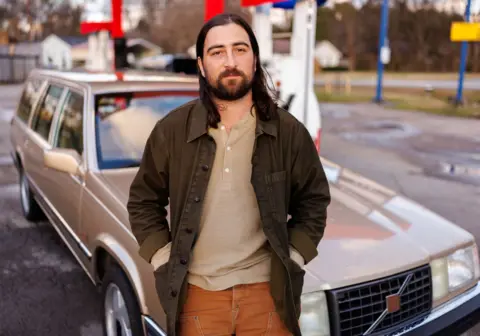
With heartfelt songs and relatable lyrics, Noah Kahan has been called "Gen Z's older brother" and "Folk Malone"
A couple of hours before we meet Noah Kahan in a vacant suite of his fancy West End hotel, he posts a video of a new song, called Porchlight.
So it's with a little trepidation that we greet him a couple of hours later. Is there a safe exit route if he's caught short? Should we ensure a plentiful supply of bananas?
Luckily, it turns out Kahan was just teasing his fans.
"The bathroom has really good acoustics," he laughs, "and I always think it's funny to be sitting on the toilet playing music. My fans seem to like it when I talk about poop and stuff, so it's a good way to mix music and bathroom humour."
But if there's a better first introduction to Kahan, I can't imagine one.
He's an unlikely music sensation, whose rootsy songs of restlessness and belonging captured TikTok's Gen Z romantics.
Exploring themes like heartache, alienation and the uncertainty of early adulthood, his lyrics are both funny and profound.
"Time moves so damn slow I swear I feel my organs failing," he sings on 2022's Homesick, perfectly capturing the tedium of small-town America.
 EPA
EPA
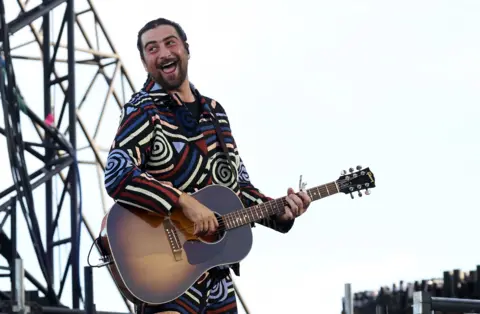
Kahan donned a colourful jumpsuit to play the Pyramid Stage at last year's Glastonbury Festival, where he was joined by country star Brandi Carlile and jazz singer Laufey
Behind the music was a man whose musical talent was matched by a devilish sense of self-deprecating humour – referring to himself as "Hairy Styles" and clapping back at his critics.
"Oh no, a guy holding a fish in his profile picture just called me 'cringe'," he wrote in one sarcasm-laden post. "But I wanted to be his friend so bad."
Kahan's success didn't come overnight – he signed his record deal in 2017 – but it was sudden and disorientating. On tour last year, he couldn't escape the feeling that it might all disappear.
"I was always on stage thinking 'When is this going to end? How am I going to do this again?' instead of the thousands of people that were there - and that was really sad and lonely."
It didn't help that he was struggling to write new music.
"Usually when things are hard, I can write a song to navigate out of it, but every time I sat down to write, I would think, 'What's this going to sound like when it's released? Are people going to like this?'"
Dozens of songs were started, only to be abandoned as his confidence faltered.
"It was hard, because my biggest song, Stick Season, was written so quickly. I felt like I was failing because the process wasn't the same," he recalls.
In an effort to jump-start his muse last March, he took a trip to California's Joshua Tree National Park.
"It was so clichéd," he laughs. "I was like, 'The desert will help me understand myself'. Then I got out there and I felt even worse than before.
"It wasn't working at home in comfort, and it wasn't working out there in this new place. I felt like I had run out of options."
Returning home, he was diagnosed with OCD, and quit writing for a month – a decision he calls "horrifying".
"I got too attached to this idea that my value came from what I created. So when you're not creating, it feels like you have no value.
"And, along with the diagnosis of OCD, this obsession of being successful and talented and having everything be perfect became really, really impossible for me to contend with."
 Patrick McCormack
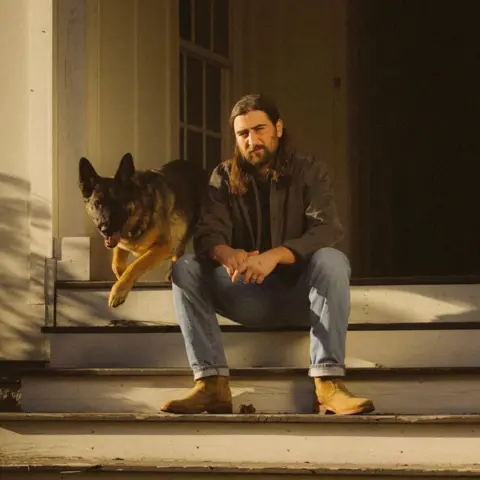
Kahan's songs are rooted in the autumnal scenery of his hometown, Strafford, Vermont, where he grew up on a tree farm
It was undoubtedly a dark time. Kahan calls it "an ego death". But it also persuaded the musician, who'd previously written a song about the effects of quitting Prozac, to go back on medication – in this case, the antidepressant Lexapro.
"I tortured myself for years not going on medication because I didn't know if I could make music if I'm happier, if I don't have that darkness within me," he says.
"But the medication gives you a break from those obsessive feelings and lets you live in reality for a second. It helped me realise I don't need to be in pain to make music."
With his mind settled, Kahan was able to re-evaluate the demos he'd accumulated. To his surprise, the writer's block was an illusion. There were, he estimates, 35 to 40 songs to choose from.
Many were on what he calls the "poppier" side, eschewing the foot-stomping, banjo-forward sound of Stick Season. Others ventured into the sort of heartland rock that'll earn him a hearty man-hug from Bruce Springsteen.
In a neat bit of circularity - and proof that fans weren't misled by that hotel video - many of them were finished in the bathroom.
"I get really stuck in my head when I'm making music – but if I sit in a chair and look in the mirror, it almost feels like I'm writing with someone else in the room. It's kind of weird."
Red carpets and hometown resentment
Lyrically, Kahan is reckoning with his newfound fame – without recycling hoary old clichés where "every hotel room looks the same" and "nobody understands the real me".
Instead, he's interested in what happens when someone returns from the city and tries to fit back into their old life.
On Porchlight, he imagines the resentful reaction of a relative who thinks he's grown too big for his boots.
"You act like we just sit up here and wait for you to reappear/But, baby, there are bills to pay and your dad's road needs salt."
"I come from this place that's so special to me and I felt like I'd sullied that somehow by singing about it and by making merch with my town on it," he says.
"I felt like I no longer had that place as a refuge… so the song is all of my biggest fears said back to me.
 Netflix
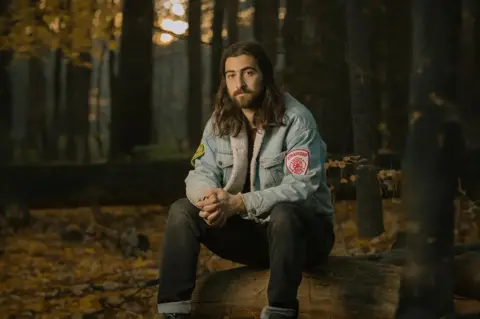
The musician credits his hometown with keeping him grounded
Several songs, including Dan and the title track The Great Divide, address the emotional distance between old friends who don't see each other often enough, but want to try harder.
American Cars, meanwhile, tells an achingly familiar story for anyone who's had to dash across the country to attend a family emergency.
Kahan says he's grateful that fame allowed him to reassess his relationships.
"Success fundamentally changed everything about my life, but it's also opened the door to conversations I never would have had without it," he says.
"It forced me to reflect on whether I took care of my relationships. Have I been a good friend, or a good son? A lot of these songs are reflecting on those things."
When he does return to his hometown of Strafford, Vermont (population 4,200), Kahan gets a refreshing dose of reality.
"The people there have their own stuff to be getting on with," he laughs. "Like, 'I've got to go chop wood, I don't have time to worry about your feelings'.
"Some people do recognise me, but a lot of times it's because I played soccer with their kid, or I worked at the valet stop in town. So I'm able to go home and feel like I did when I was 17."
His depiction of home sounds idyllic. When he's not entertaining stadiums, he spends endless summer days camping at Bow Lake, fishing and swigging beers with his buddies.
It makes you wonder whether he'd be better off if his new album didn't do so well.
"It's a really good question," he says. "You obviously want it to go well, but on another level, I don't think that's the healthiest thing, you know?
"But I think I have a better perspective on success now, and I think it's going to allow me to enjoy these moments more."
You may also be interested in