.png)
 1 month ago
54
1 month ago
54
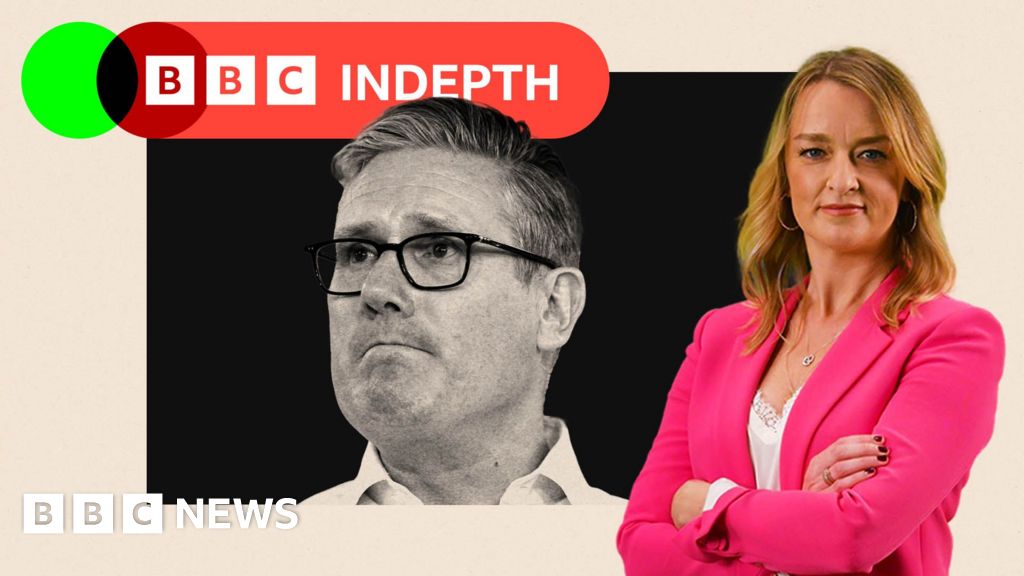
Katie RazzallCulture and Media Editor

 Getty Images
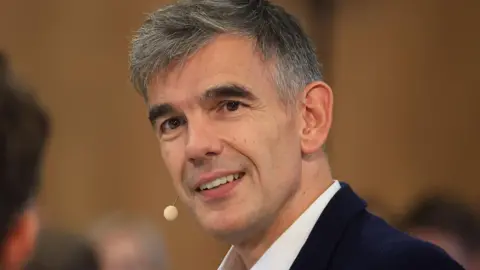
Matt Brittin takes over the BBC at one of the most challenging times in its history
On his LinkedIn page, the man widely expected to be the BBC's new Director General describes himself as a "gap year student, part time athlete".
Matt Brittin has been enjoying what he described as a "mini gap year" since the end of 2024 when he left his role as President of Google in Europe, the Middle East and Africa after nearly 20 years at the big tech company.
At the time, the former Great Britain World Rowing champion who worked briefly for Trinity Mirror (now the newsbrand Reach) and joined the board of the Guardian Media Group in 2025 wrote "I've already grown a beard, bought a single sculling boat and plan to learn scuba diving".
When he is confirmed as director general in the coming days, he'll have arguably the most scrutinised job in British media and, if the experience of most of his predecessors is anything to go by, he'll need more than a tankful of air to survive what's to come.
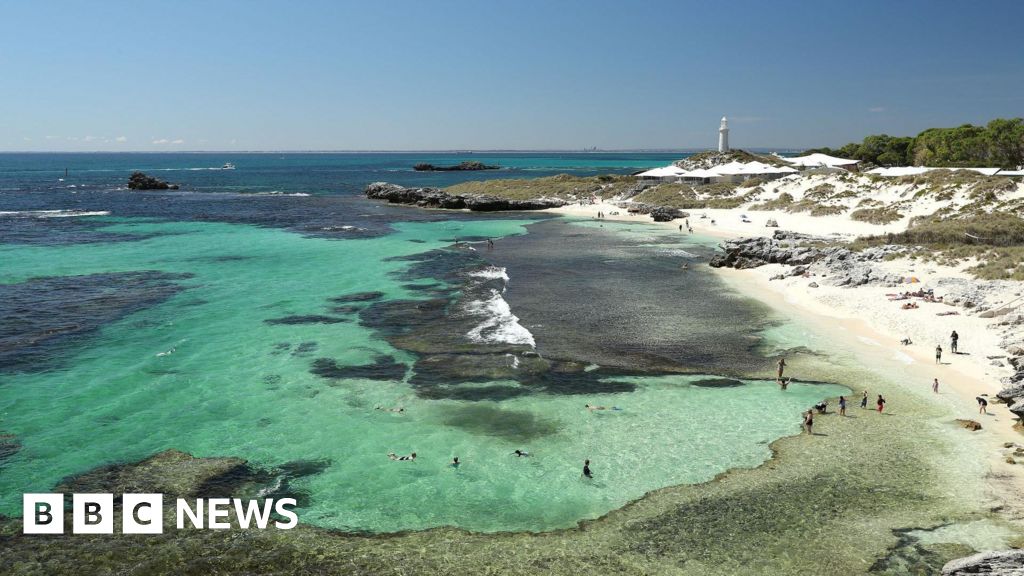
Sometimes he'll probably wish he was still off swimming with sharks.
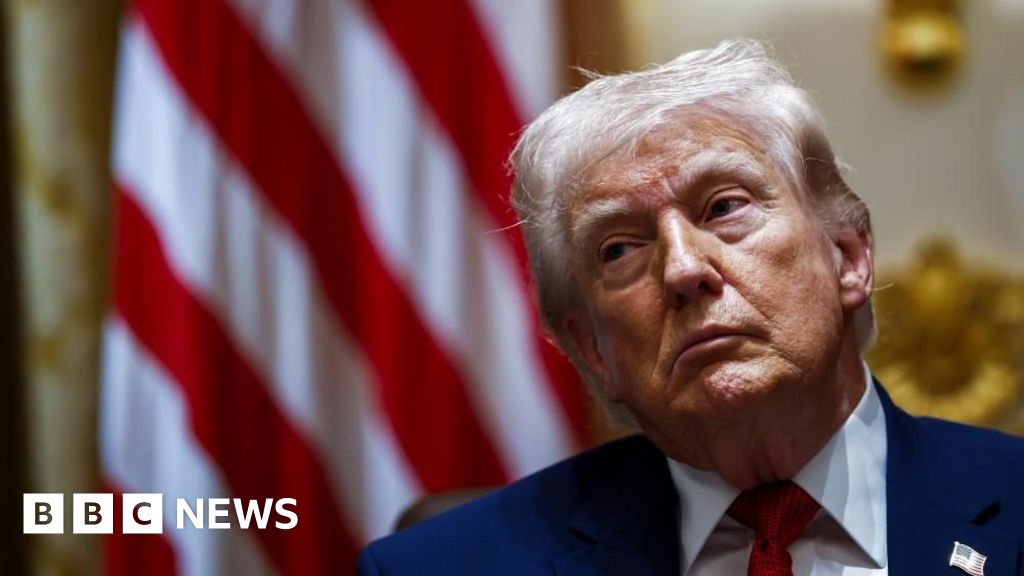
But he'll also have the biggest job in British media with a workforce looking for dynamic leadership after some bruising mistakes, top level resignations and a defamation case launched by President Trump.
I've spoken to people inside Google who have only good things to say about Brittin, as an inspirational leader and a great team player. One called him as "highly intelligent" and "very good at quickly getting to grips with a problem".
Another person who worked with him outside the tech firm was also full of praise.
"He's good at making everyone feel good. Everyone feels listened to. People are loyal to him".
"Superficially, he's easy going and diplomatic, but he has a precise, analytical, efficient mind. He's good at seeing the big picture in any situation and how to get things done".
They had no concerns about his lack of public service or traditional editorial experience. Once the appointment is confirmed, "you've got one of the best CEOs in the world, who understands where things are going, now running the BBC. He'll be very pragmatic about delegating the things he doesn't know to good people. He always has good people around him".
Another person told me Brittin's experience in the commercial world means he will deliver the necessary "hard choices", to make cuts and deliver for audiences, and to bring in a truly performance-based culture.
In January 2023, during his tenure at Google, the company cut 12,000 jobs or 6% of its global workforce in a post-Covid restructuring. One critique of the BBC is that people who aren't good enough at their jobs remain in post.
 Shutterstock
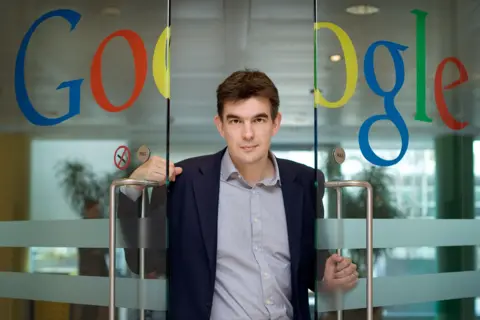
Brittin became managing director of Google UK in 2009
There's lots to celebrate at the corporation. It's a highly respected global brand, which makes creative decisions and has huge reach.
But being director general is not a job for the faint-hearted. There's a level of scrutiny - from Parliament, the media and even the BBC's own 21,000+ employees - that brings intense pressure. By the end of Tim Davie's tenure, after mistake after editorial mistake on his watch, the outgoing director general did appear ground down by the job.
Brittin has faced scrutiny in the past, particularly over Google's tax affairs in 2016 when he was berated by members of the Public Accounts Committee. Google had agreed to pay £130m in back taxes after years of criticism that it was making vast profits in the UK, but avoiding paying tax.
MPs also asked him how much he earned personally. "I don't have the figure but I'll provide the figure privately," he said looking a little uncomfortable. His Google salary was never publicly disclosed. The encounter led to some forthright headlines.
But that level of public scrutiny - even opprobrium - is likely to pale in comparison with what's to come. So how will the former Google executive, with no experience of public service broadcasting, respond to the challenges?
 Reuters
I interviewed him on Radio 4's Media Show in 2022 when he still worked at Google. He told me: "The best thing I can do, as somebody who runs a business, is to make it as successful as possible so it generates profits and jobs and growth. So that's what I focus on."
Some might see that statement as platitudinous - obvious - but he's viewed by those I spoke to as having been a success at the big tech firm. One insider told me, although initially key decisions were made from Silicon Valley, Brittin, as president of EMEA, increasingly took a lead too, particularly as Europe became the area pushing for big tech regulation.
A Google insider told me Brittin shaped the response: "He swiftly apologised and was instrumental in getting it sorted".
The BBC isn't Google (although apologies do seem to have become part of the director general's job in recent years).
But the BBC isn't really like a normal business.
It's a public service media company trying to find its way in a globalised media world, up against American organisations that dwarf it in size and financial might.
It's a company with a remit for universality, existing to serve everyone in the UK. But a company that needs to shrink and cut jobs. Its funding - mainly from the licence fee - means it doesn't rely on advertising and isn't driven to make a profit (although its commercial arm BBC Studios does aim to make money to put back into BBC coffers and it's likely Brittin will continue the push for more of that).
Even the immediate in-tray is dauntingly full.
He'll need to appoint a new director of news. The previous news boss, Deborah Turness, resigned in the wake of the Panorama Trump controversy. The BBC board chair Samir Shah has also suggested a new deputy director general role. This could be someone with the editorial experience Brittin lacks that is needed to grip the BBC, after the recent errors.
It's unclear to me how that relationship will work, if - when - there is another mistake. Is the Deputy the person set up to take the wrap? For me, what's become clear is that the BBC is too slow to act once mistakes are made. Look at how long it took to get the Bafta ceremony off the iPlayer, after an offensive term had been broadcast. Or how long it took to get the documentary about children in Gaza down, once it became apparent the child narrator was the son of a Hamas official.
Naysayers ask why you would put the BBC in the hands of somebody who comes from big tech which has displayed such different values and has also had a role in decimating traditional media businesses? Is this a fox in the henhouse scenario, they ask?
Only last week, the culture secretary, Lisa Nandy, was talking about news deserts and how nearly 300 local newspapers have closed in the last 20 years. Much of that - goes the critique - is down to Google, which has taken their advertising.
The BBC is also a champion of artists, writers, composers - the creators of its content. Google - like other tech firms - has built its AI Gemini by scraping all their work for free.
Those are just two examples of many that critics say demonstrates the culture clash.
Brittin's backers say it is a good mindset shift for the BBC to have a leader who doesn't see big tech as an enemy. The corporation's recent deal to put content on Youtube shows the direction of travel. They argue that Brittin will forge partnerships to benefit the BBC.
In a recent post, when Brittin was awarded a CBE for services to technology and digital skills, he wrote: "Technology can be a huge force for good if we understand it, shape it - manage it well. To do that it needs to be built by everyone and shaped by everyone - everywhere, not least in Britain".
He's been picked by the BBC Board for his insider knowledge of big tech. There's an expectation he will drive the acceleration to digital, for example in news. He'll also likely focus on transforming and innovating BBC iPlayer. For some time there has been debate about whether all the public service media companies will need to put their content on to one platform, to survive and retain prominence in the digital age - and whether that platform should be iPlayer.
So more long term, there's working out what public service media will look like in 2035 and how to ensure the BBC remains at the heart of national life. There's a lot to keep him busy.
We live in a world where BBC content - all content - is under an unprecedented level of scrutiny. Programmes can be attacked, clipped up into decontextualised snippets and broadcast around the world fast. The BBC's response to the errors seems to have been more checks and more bureaucracy - and potentially more managers.
In the end, Brittin will still be editor-in-chief, the face of the organisation and the man responsible for what goes out in the BBC's name.
There had been suggestions that for the first time in the corporation's history, a woman would lead the BBC, but the 18th director general will, in one way at least, be like every other director general who has gone before. A white male.
Unlike at Google, at the BBC, Brittin's salary will be published every year in the annual report. Tim Davie's was nearly £550,000.
It's likely a fraction of Brittin's big tech remuneration. He won't be taking the new job for the money though. He'll have already earned enough to retire if he wanted to.
Instead, I'm told he wants it because he's excited about what he can bring. That could buoy those who fear the BBC is in managed decline, buffetted by forces mainly outside its control. If he can bring some optimism and the sense for staff that they are working in a forward-facing organisation, it will mean a lot.
In his post about his gap year and his scuba diving plans, Brittin also wrote that he loves to "learn and try new things".
He'll certainly be doing that when he starts at the BBC.