.png)
 1 month ago
57
1 month ago
57
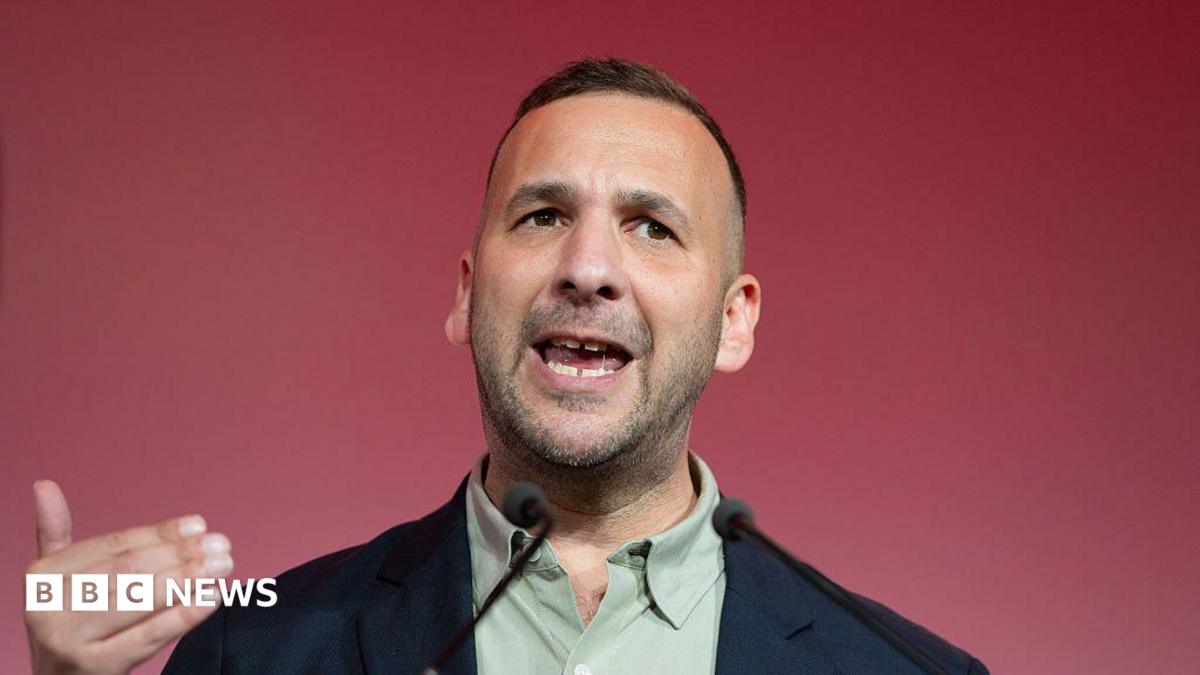
"Affable", "warm", and a close ally says he's a "really nice person – politics is a contact sport and it's not contrived".
One MP calls him a "good bloke", adding that "sound would be the Manchester word". They describe his "social dexterity": an ability to communicate with colleagues and the public in real life and on social media.
But there is a niggling question among many of his colleagues and, in fact, expressed neatly on his Facebook page, where a member of the public wrote: "I have no doubt I'd enjoy a beer with you and we could talk about Joy Division and other important cultural things. But when did that become the thing that determined whether someone becomes the prime minister or not?"
There are nerves in Labour circles about what Burnham would actually do with power. One old friend of his told me: "Andy has huge skills but there have been questions about the extent to which [his] thinking on some of the really tricky stuff has been properly developed".
Another wondered: "Can he shake off the perception that he is a bit of a lightweight?"
Not everyone is convinced he is up to it.
One senior party figure told me: "The eyelashes will deliver for a day, maybe a week. But the scrutiny is brutal. Won't last three months, never mind three years."
Ouch.
Multiple sources believe Burnham appointing his old flatmate and fellow cabinet minister from the New Labour days, James Purnell, as chief of staff is a positive sign. Not just because of Purnell's experience, but also because it has inevitably raised hackles on the left (Purnell has recently worked with big business and is perceived as a Blairite).
The choice was cited to me as evidence that Burnham was willing to make decisions that would upset people. This has been reassuring to some in the party. A prime minister's job is to make choices bound to infuriate one group or another and frankly, there is concern that Burnham might find that hard.
One government source told me: "The thing is he loves to be loved and likes to be liked. He has to be ready to be unpopular – and he will have to face the trade-offs – mayors don't face trade-offs".
One of his old colleagues says: "He is quite emotional, he has feelings." They question "how you balance that with the need for tough skin, the need to see things through and to take very exposed positions".
But you don't spend more than two decades in politics worrying only about pleasing people. Burnham gladly irritated the Labour leadership on a regular basis when Keir Starmer was in charge.
And one ally who worked closely with him in government in the late noughties said his talent was not just being nice: "He never takes no for an answer".
They recall battles between the government and "hostile permanent secretaries" towards the end of Labour's time in power, who they say were "hoarding money for the incoming Tory government".
"He went to war with them and won," Burnham's ally recalls. "It was astonishing".
Some of the doubt stems from a perceived lack of clarity over what Burnham wants to do, beyond get into No 10. And we know he really wants to do that.
This will be third time lucky after running for the leadership and failing in 2010 and 2015. We're used to hearing his rhetoric about change, about making the country more equal, about looking after communities that have been left behind like Makerfield, his new constituency. "Vote Andy - For Us'" goes the tagline.
But when it comes to specifics, it can feel like a bit of a blur.
That's why there is a hot political frenzy around who'll be his chancellor. All the talk in Westminster is of whether he'll pick Ed Miliband, on the soft left, or Wes Streeting, from Labour's right, or Home Secretary Shabana Mahmood. Whoever he picks in the end (and perhaps it will be someone else altogether like Welfare Secretary Pat McFadden, less eager to see himself in a political story), the argument has become a proxy for Burnham's overall sense of direction.