.png)
 3 weeks ago
35
3 weeks ago
35
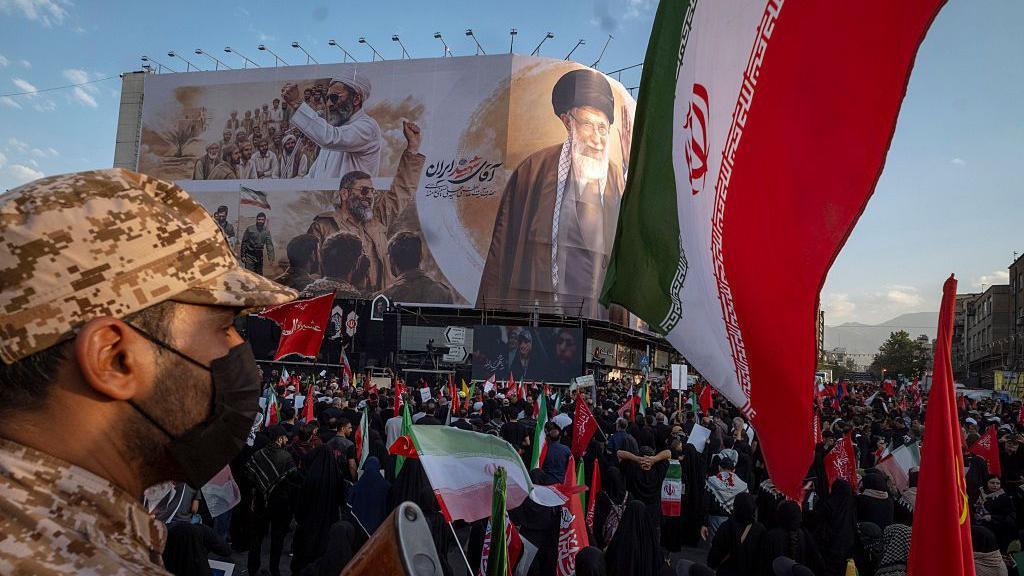 Image source, Getty Images
Iran's state-run broadcaster reported that the country's army had carried out separate attacks on US targets
Iran has threatened to block further trading routes in the region, as the US launched a new strikes on military targets.
Iran's Islamic Revolutionary Guard Corps (IRGC) said the Strait of Hormuz would remain shut until the US ended its "acts of aggression". It also threatened to close off other regional oil and gas export channels.
It came as the US military's Central Command (Centcom) said it had struck Iran on Wednesday morning, following another operation overnight. It also said its forces had redirected two vessels attempting to pass its newly-reinstated blockade of Iranian ports.
Ongoing US-Iran hostilities have underscored the strategic importance of the Strait to the global economy.
The renewed attacks have also triggered a sharp rise in oil prices, as tanker traffic through the vital shipping route has virtually stalled.
Wednesday morning's strikes "further degraded Iran's ability to attack commercial shipping in the Strait of Hormuz", Centcom said in a statement.
A 90-minute wave was used to target Iran's coastal defences and cruise missile storage and launch sites on Greater Tunb Island, the Centcom officials added.
On Tuesday, US President Donald Trump vowed to strike Iran's bridges and power plants next week if the country did not return to talks.
"I'll save the energy targets for last, but ultimately we'll hit energy targets," Trump said in an interview on Special Report with Bret Baier that aired on Tuesday night.
The escalation in rhetoric came after Trump said a 20% toll he had threatened to impose in the Strait of Hormuz would be replaced by "massive" trade and investment deals with Gulf states.
A previous threat by Trump to bomb Iran's civilian infrastructure, which was made in April, drew condemnation at the time from UN human rights chief Volker Türk, who said: "Under international law, deliberately attacking civilians and civilian infrastructure is a war crime."
Meanwhile, Iran's top negotiator in talks with the US, Mohammed Bager Qalibaf, said on Wednesday that the country's national security depended on Tehran maintaining "Iranian arrangements" in the Strait of Hormuz.
He added that negotiation - along with war - was part of Iran's strategy of resistance as it engaged an "existential" conflict with the US.
Watch: Footage verified by the BBC appears to show a strike on the port city of Chabahar in southern Iran on Wednesday
The renewed US blockade on Iranian ports was imposed on Tuesday evening, which stops vessels from transiting to and from Iranian ports and coastal areas.
The blockade had previously been lifted as part of a deal that was struck by the two countries last month - known as a memorandum of understanding - that aimed to end the months-conflict.
However, a dispute over the strait has become a key point of contention.
In response to the renewal of the US blockade, Iran's Revolutionary Guard Corps (IRGC) warned the US that it should "expect the closure of other oil and gas export routes that serve the interests of the United States and its allies". It did not elaborate on which routes could be affected.
Meanwhile, Iran's state-run broadcaster reported that the country's army had carried out separate attacks on US targets in Jordan, Kuwait and Bahrain.
The US allies also said they intercepted drones and missiles launched from Iran.