.png)
 1 month ago
70
1 month ago
70
3 hours ago
Louise CullenAgriculture and environment correspondent, BBC News NI

 BBC
BBC
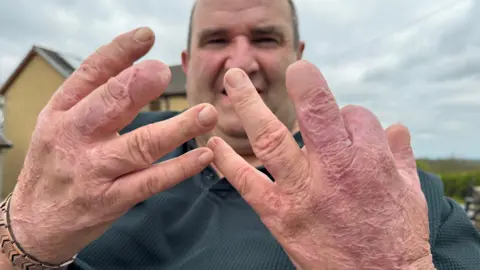
Marshall lost fingers and part of his legs but is keen to spread awareness
Farmer Marshall Wylie thought nothing of it when he cut his arm, sorting wood in August 2023.
And he thought even less of it when he felt ill over the next 48 hours.
But the following week, he said he clinically died due to sepsis, and eventually his legs had to be amputated.
Farmers are at particular risk of developing sepsis due to incidents on the farm, but can also be reluctant to seek healthcare.
Warning: This article contains some graphic images of hands and feet with sepsis.
The County Tyrone man's doctor branded him a "complete and utter miracle".
Wylie told BBC NI he had "never, ever heard of sepsis", but it left him with a choice: keeping his legs, or his life.
Cut was 'last thing I thought about'
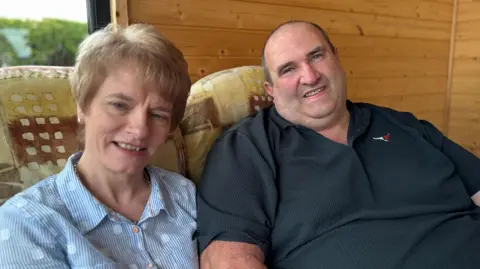
What seemed like a minor injury sustained sorting wood led Marshall Wylie to the brink of life and death
Like many farmers, Marshall had other jobs that helped pay the bills.
And in August 2023, at one of them, he cut his arm while moving dumped wood.
He thoroughly washed the "wee scratch", put plenty of iodine on it and covered it with a dressing.
"And I never thought anything more of it."
The next day, as part of his agricultural contracting work, he gathered 500 bales of silage for two neighbours.
Warning: This article contains extremely graphic images of the effects of sepsis which some readers may find distressing.
'My mother and my old dogs were there'
By that evening, he began to feel that something was "brewing".
"And being a typical farmer, you know, it's a flu, heck, well, nothing to worry about."
But he was in the early stages of sepsis, something he had never heard of or thought about.
"The amount of times you get a cut when you're in the farming business - I've opened myself and the blood ran out of me and you never think about it."
However as a nurse, his wife Karen suspected sepsis as soon as she saw him.
But that was days later - she had been staying in Belfast on overnight shifts and Marshall had not mentioned the cut or feeling unwell.
At 5:25 on the Friday after he was admitted to hospital, Marshall was declared clinically dead.
But he came back - with an incredible memory of his mother, who died in 2017.
"I can remember this lovely bright light.
"And my mother come to me and she says to me: 'You're going to be all right'.
"My old dogs were there. She says, 'you're going to be all right, you're going to be okay'.
"A few weeks later, I came out of the coma."
'After-life experience where my mother and dogs were there'
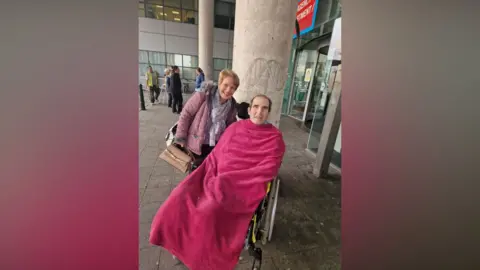 Marshall Wylie
Marshall has had to get used to life without legs, after sepsis resulted in him having them amputated
He said the doctor told him he was a miracle.
By then, sepsis had left his skin mottled and peeling as if it had been "burned from the inside".
Parts of his fingers on both hands had turned black.
His ears and his lips had blackened too, but his lower legs shocked him.
It was a "traumatic" time.
"When I looked at my legs, my legs were black. You'd have thought they were barbecued."
"The disease was coming on up into my system, and if it had gone up any further, they would have had to take above the knee, but the surgeons were great.
"We had a long road of recovery, but at the same time, we had a lot of prayers being said."
More than 30,000 people around the world joined a page online, offering prayers for Marshall.
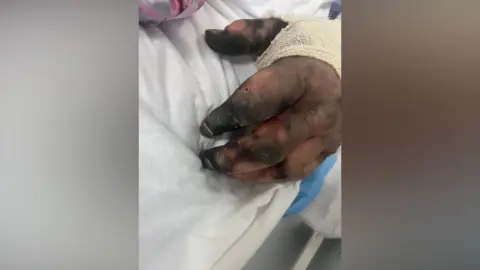 Marshall Wylie
Lying in his hospital bed, Marshall had a classic near-death religious experience
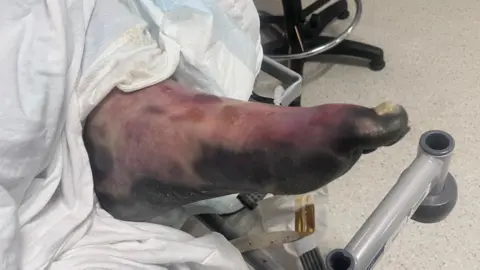 Marshall Wylie
Despite having been through such a gruelling, almost fatal experience, Marshall looks towards the future with hope
Sepsis is a life-threatening reaction to infection anywhere in the body.
Instead of fighting the bacteria or virus that is making you ill, the immune system turns on itself, damaging internal organs and potentially causing death.
Early medical intervention is vital.
Dr Ron Daniels, who heads up the charity UK Sepsis Trust, said it was a "huge problem" that should not be underplayed.
"Across the UK, sepsis is estimated to affect 245,000 people every year, which is more people than suffer heart attacks in a year.
"Of those 245,000, about 48,000 people die."
Sepsis can affect people of any age and symptoms can be similar to flu or a chest infection.
That can make it difficult for even the most experienced health professional to spot.
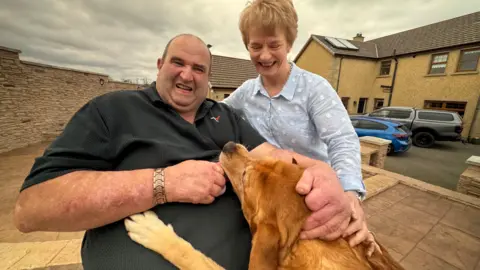
Marshall's story was able to save the life of another farmer in New Zealand
Marshall spent more than nine months in several hospitals and was eventually fitted with prosthetic limbs.
Within three weeks, he was up and walking, in defiance of medical predictions.
But not all his scars are visible.
When he thinks of what his wife and son went through, the tears are never far away.
"I remember Aaron one day broke down in front of me, and I said: 'What's wrong, son?' He says, 'you were always out on the yard working, you're always out doing things, Mum and I never saw you'.
"He says, ''we very nearly lost you', and I was in tears.
"At the end of the day, it's an impact on the whole family and friends."
A second chance to help others
Marshall has told his story to anyone who will listen, including a farmer friend from New Zealand who came to visit while he was adapting to life without his legs.
After returning home, his friend became ill after getting a scratch.
His wife immediately thought of Marshall and they went to hospital.
The man was transferred to Christchurch and his life was saved.
Marshall was stunned when he heard.
"I thought, holy smoke. I've got a second chance to go out and help people."
And his advice to anyone feeling unwell after a minor cut?
"If in doubt, check it out."
Dr Daniels said farmers' innate "resilience" can often mean they arrive at hospital in a more advanced condition that would otherwise be the case.
"The first thing is to trust your instinct - you cannot sleep off sepsis.
"So if you're worried someone is deteriorating with an infection, then it's access healthcare in the best way you can, and just ask, could it be sepsis?"
Dr Daniels said every hour in delay seeking treatment reduces a sepsis patient's chance of survival by 1-2%.
"A majority of people do survive sepsis, but about half of sepsis survivors suffer life-altering consequence for as long as a year or more after their original illness.
"And this might mean that they can't return to work, can't look after the children, or the grandchildren. This can be life-changing."
Getting the timing right, he said, will improve outcomes.
Sepsis has been identified as a 10-year priority for the NHS in England, but it is up to each of the devolved administrations to decide their own approach.