.png)
 1 month ago
57
1 month ago
57
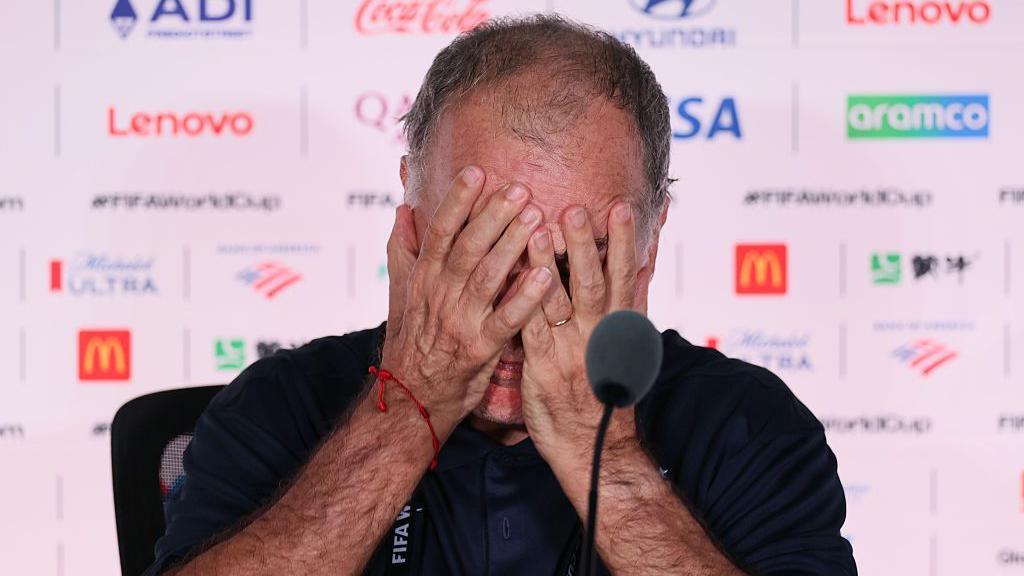 Image source, Getty Images
Marcelo Bielsa had already confirmed he would step down as Uruguay boss after the World Cup
ByTim Vickery
South American football expert
ByAlex Brotherton
BBC Sport journalist
In substituting a national team hero at half-time before delivering a brutally honest self-reflection, the end of Marcelo Bielsa's tenure as Uruguay manager felt rather fitting.
A 1-0 defeat by Spain in Guadalajara condemned the two-time World Cup winners to a humiliating second successive group-stage exit, and neatly summed up Bielsa's struggles as head coach.
Like he did after draws with Saudi Arabia and Cape Verde left Uruguay needing a positive result against the European champions, Bielsa blamed himself.
"I am responsible for this disappointment," said the 70-year old, who before the tournament told reporters "I am toxic".
"Obviously, I don't need to define this performance... if you ask me how my time [with the national team] will be remembered, it is a tenure that left nothing behind.
"I leave nothing to Uruguayan football, because any contribution I might make to a country where I have worked for three years fails to take root if results aren't achieved."
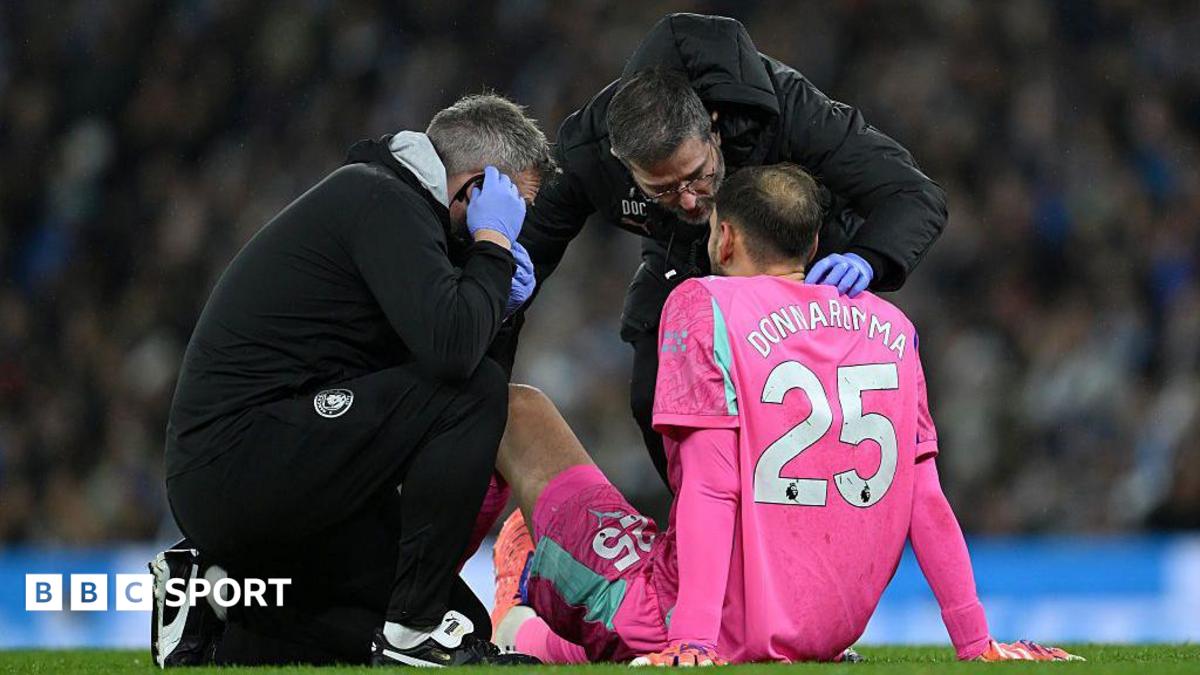
If nothing else, the lasting image of Bielsa's three-year spell may well be the half-time substitution of legendary goalkeeper Fernando Muslera after his mistake gave Spain the lead.
The 40-year-old came out of international retirement in March at Bielsa's request, but became the first goalkeeper in history to make three mistakes leading to goals in a single World Cup.
"Muslera decided to come off at half-time," said Bielsa, who also explained he withdrew captain Federico Valverde in the second half because he wanted to add a more physical presence to his attack.
"The decision I took was not to undermine Muslera's confidence, but rather to maintain it."
Muslera, a hero of Uruguay's run to the 2010 semi-finals, made his 137th and possibly final international appearance.
At 70, Bielsa may be nearing the end of a colourful career at the top level. His work with Uruguay is hardly a convincing advert, and the performance crisis is clear.
Yet, for all their struggles in this tournament, there have been flashes of a level above much of what they produced over the past two years.
It had started so well. After the Qatar World Cup, Bielsa took over a team in need of generational change and, as with Chile before, inherited a group well suited to his dynamic, attacking style.
Uruguay made an impressive start to South America's World Cup qualifiers - winning away to Argentina, beating Brazil and - after six rounds - scoring almost twice as many goals as any other side.
Then came the 2024 Copa America. Uruguay began with a flurry of goals - and then hit a wall. Things have not been the same since.
In November, they were thrashed 5-1 by the USA and his old protege Mauricio Pochettino, and when they snatched a draw against England at Wembley in March, they barely crossed halfway - unthinkable for a Bielsa side.
Has Bielsa become predictable?
So where has it all gone wrong?
Part of the answer may lie beyond the coach's control. It is striking how many of Uruguay's players have failed to kick on at club level. Federico Valverde has yet to make an impact in the tournament, though he is now a star at Real Madrid.
Others appear to have stalled or regressed - Rodrigo Bentancur, Manuel Ugarte, Facundo Pellistri and Darwin Nunez among them.
Even so, Bielsa would have expected to get more from the resources at his disposal.
Has his model become too predictable? His high-press, suffocating style was once revolutionary but is now firmly in the mainstream.
Bielsa himself has shown doubts. Uruguay played no warm-up games before the World Cup, opting instead for intensive work on the training ground that produced a new system - Valverde wide right and two strikers. It failed, abandoned at half-time against Saudi Arabia, with a return to his familiar 4-3-3 bringing improvement.
After the break, and again during the 2-2 draw against Cape Verde, Uruguay at least created chances - and without two moments of self-destruction would have been through to the last 32 with a match to spare.
Yet tactics may not be the root cause. A more convincing explanation lies in personal relations. A month together during the 2024 Copa America appeared to strain the dressing room.
Luis Suarez said as much when he retired from international football, using a news conference to criticise what he considered Bielsa's lack of warmth, his treatment of players and the tense atmosphere in camp.
Notably, no-one in the squad moved to contradict Uruguay's all-time leading scorer.
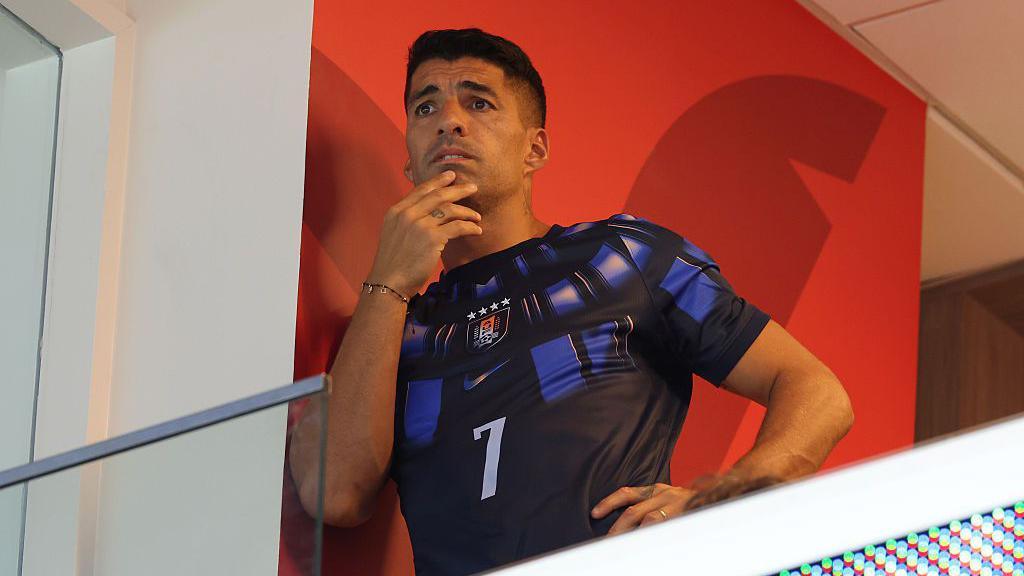 Image source, Getty Images
Luis Suarez was in the stands during Uruguay's 2-2 draw with Cape Verde
Winger Agustin Canobbio, who was sent off late in the defeat by Spain, had earlier been involved a blazing row with Bielsa, saying the breaking point came when the coach criticised the way he was sitting.
After the thrashing by the United States, Bielsa spoke openly about his own difficulties in relating to people, describing himself as a "toxic perfectionist".
It raises the possibility that his familiar blend of aloof eccentricity is less effective with modern players, who often look for a stronger personal connection with their coach.
Bielsa himself has reflected - in typically thoughtful fashion - that, for all the advances in sports science, enthusiasm matters more than preparation in getting a team to function as one. For whatever reason, over the past two years he has been unable to instil enough of that quality.
He has, at times, also appeared out of step with the modern game. He criticised the tournament's hydration breaks - a classic piece of Bielsa-ese - saying they "interfere with the culturally constructed conception of interpreting football. They add nothing..."
He also refused to take part in an official World Cup photoshoot. "I'm not a model," he said, after his picture was taken as he stared at the floor.
Bielsa was always going to step down after this tournament, but that prospect failed to bring renewed energy to the dressing room.
Uruguay, a nation whose impact on global football is oversized in relation to their modest 3.4 million population, will be back.
When it comes to Bielsa, one of football's most compelling managerial careers may well be over.