.png)
 4 weeks ago
52
4 weeks ago
52
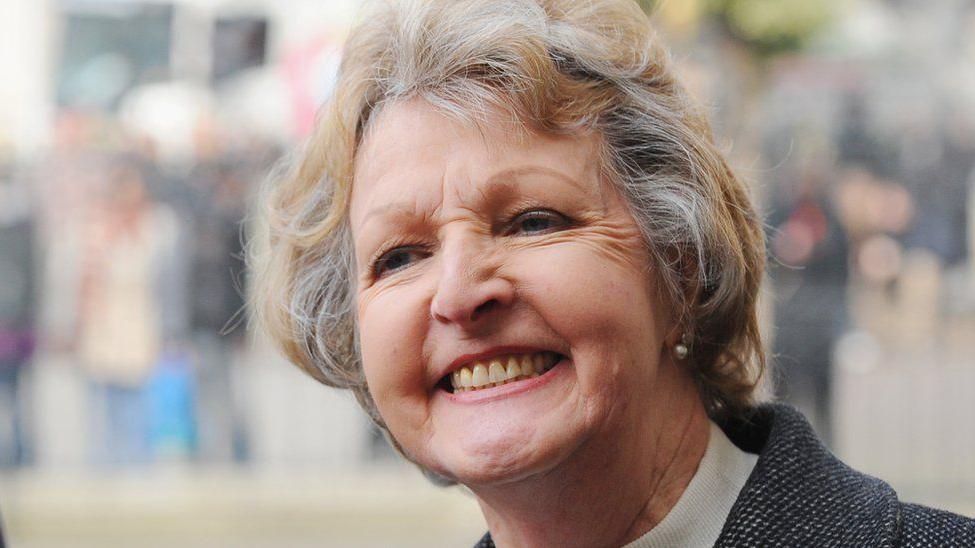 Image source, WireImage via Getty Images
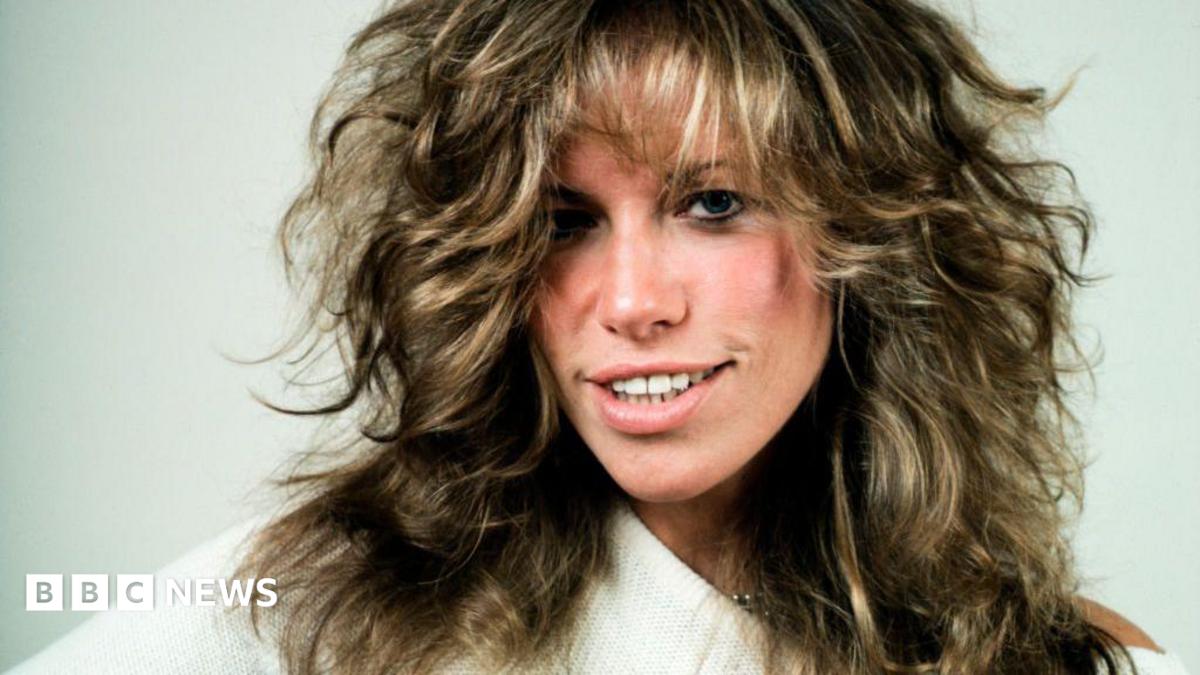
Dame Penelope Keith was one of Britain's best-loved comedy actresses thanks to her inimitable portrayal of Margo Leadbeatter in 1970s sitcom The Good Life, among other roles.
As Margo, the formidable social-climbing snob with a cut-glass voice but a soft interior, Keith ensured her place in the nation's hearts.
And her transition to her next comedy hit To the Manor Born, playing true-blue aristocrat Audrey fforbes-Hamilton, felt seamless.
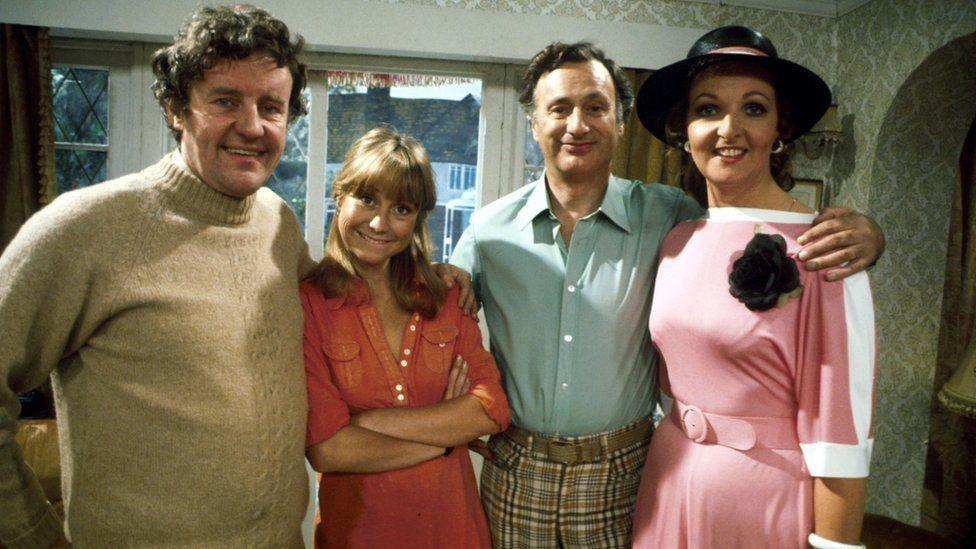
The Good Life made Penelope Keith a household name
Keith starred in several other sitcoms before later fronting shows about her passion for the British countryside.
Over a career that began in the late 1950s, Keith also remained devoted to her theatre roots, performing up and down the UK.
For her contribution to entertainment, and charity, Keith was rewarded with TV Baftas, an Olivier, an OBE, a CBE and ultimately a damehood in 2014 - not forgetting the rose named in her honour.
In an interview with the Daily Mail,, external she summed up her love of making people smile.
"Humour is power and a force for good because if you can laugh, particularly at yourself, you are some way to being able to make sense of things," she said.
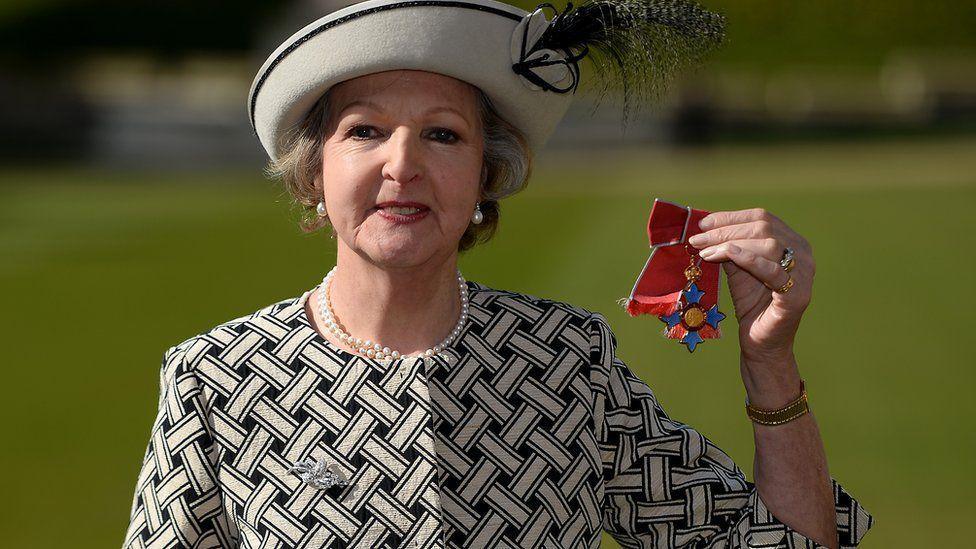 Image source, WPA via Getty Images
Penelope Keith was made a dame for her services to entertainment and charity
While Keith's voice contributed to her success, it also gave a false impression of her background.
Keith (nee Hatfield) was from relatively humble stock. Born in Sutton, Surrey, in 1940, she grew up in Clapham, south London, in the thick of World War Two.
Her mother Connie worked as a hotel child entertainment organiser and was often away, so the young Penelope spent a lot of time with her grandparents.
Her father had left when she was very young and Connie later remarried, but although she took his surname, Keith wouldn't talk about him.
Aged six, she went to a boarding school run by nuns, where the performing arts and elocution lessons were encouraged.
It became the happiest of times for the would-be actress.
"I apparently came home from school one day and sat in the bath and said to my mother that when I grow older I was going to be either a nun or an actress," she told chat show host Michael Parkinson in 1977.
"She was a bit taken aback and said, 'Darling, nuns can't wear pretty clothes'. So I said, 'Well, I'll be an actress then.'"
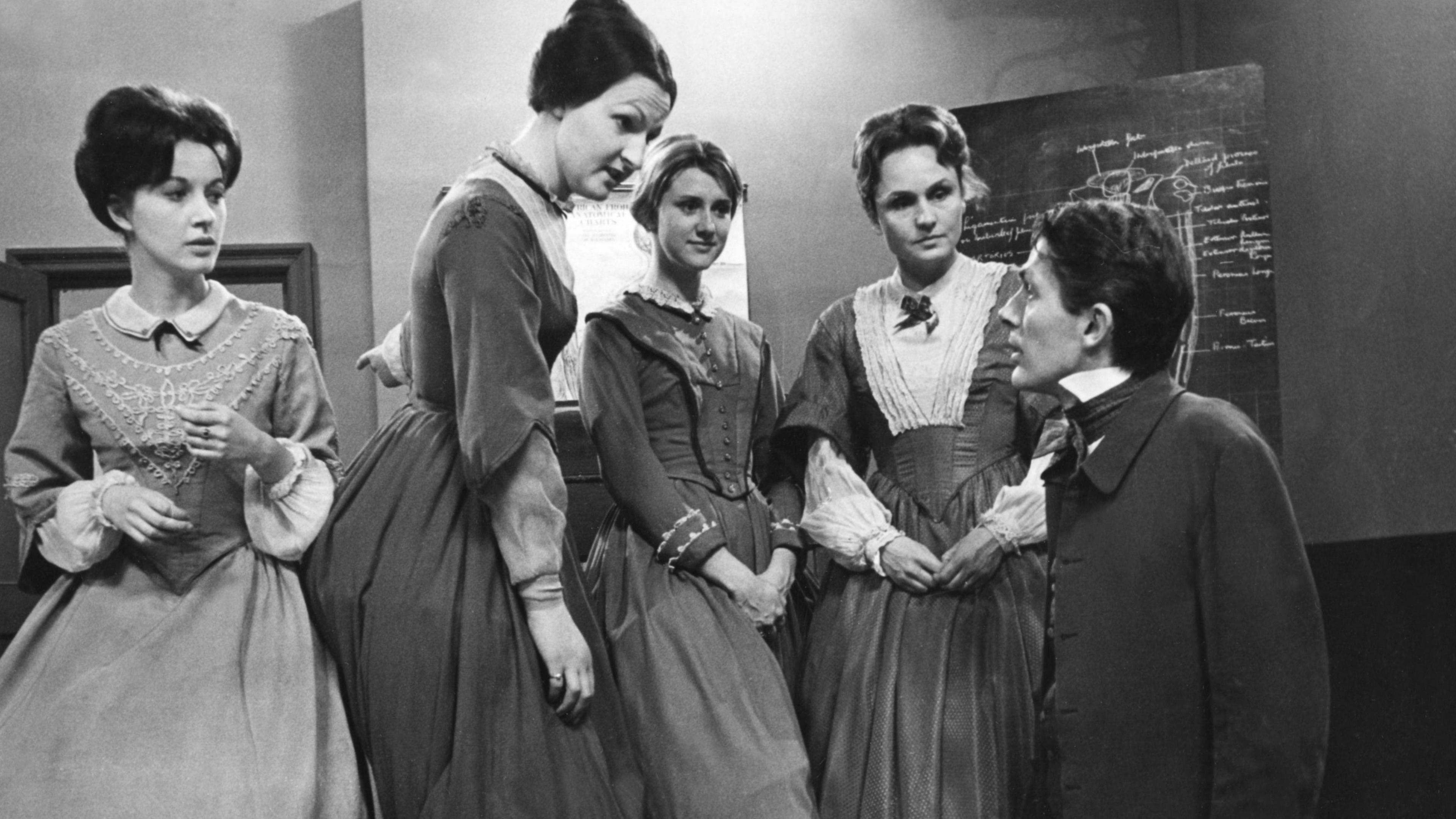
Penelope Keith (second from left) appearing in a production of Pioneers of Social Change in 1962
But out in the "real" world, the 5'10" stature that had landed her lead roles at school became an issue.
Top drama school Rada rejected her for being too tall, and although she found a place at the Webber-Douglas acting school, tutors made clear her perceived limitations.
"I was very tall and very plain; I think this is where the comedy came from because I wasn't going to get very far on my looks. So I thought I'd better be the 'gag girl'," she told Parkinson.
Jobs in repertory theatre and with the Royal Shakespeare Company followed, with her height again leading to mainly supporting roles.
But in retrospect, Keith said, it was a great way to learn.
"It meant I had a good bash at all the character parts from 19 to 90, so one broadened one's range," she recalled in the 2000 TV tribute Lady of the Manor., external
Roles in radio plays and popular TV shows such as The Avengers came her way before she was "spotted" in Thames TV's Hadley.
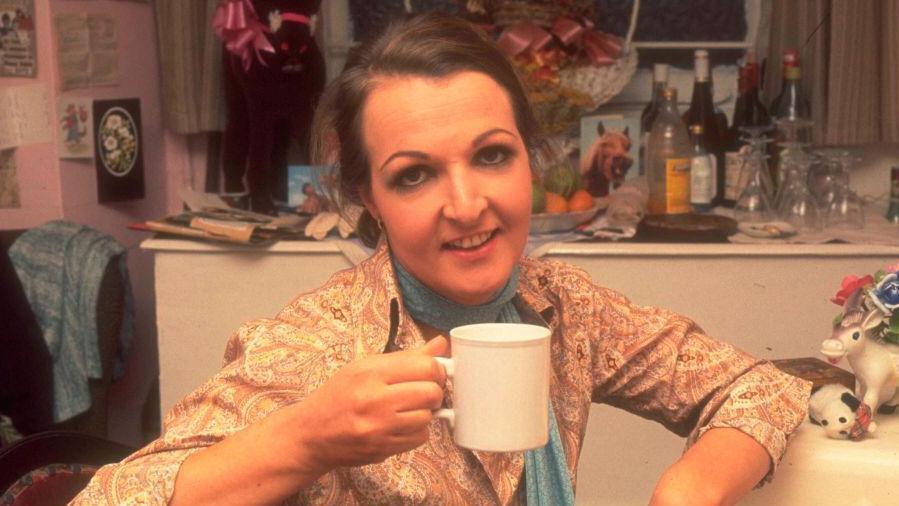 Image source, TV Times via Getty Images
Penelope Keith photographed in her dressing room in 1977
It led to her own series Kate (1970-72), playing a ruthless magazine editor, which prompted tongue-in-cheek headlines including "Penelope, the woman you love to hate" in the TV Times.
But the real break came three years later in 1975 with The Good Life,, external the sitcom about suburban neighbours who end up poles apart when one couple ditch their bourgeois lifestyle to become self-sufficient.
Initially the Goods, played by Richard Briers and Felicity Kendal, were the stars. Margo, wife to Jerry Leadbeatter (Paul Eddington), was a peripheral character. Only her voice was heard in the first episode.
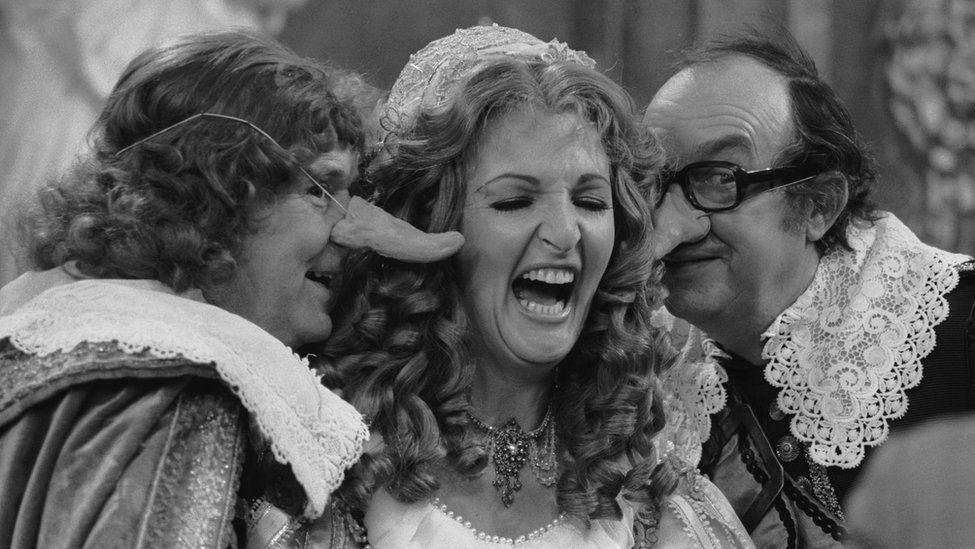 Image source, Hulton Archive via Getty Images
Morecambe and Wise got Penelope Keith involved in a Cyrano de Bergerac spoof
But, said then head of BBC comedy John Howard Davies in Lady of the Manor, , externalKeith's part "grew and grew because she took a very firm grip on the character from the outset".
And the more exasperating Margo became, the more the audience wanted.
Asked by Parkinson if Margo was a "bitch", Keith said: "She has a heart of gold but says a lot of the things we'd like to say ourselves."
The actress said she believed Margo spoke for the "silent majority" - as the character said in the episode Just My Bill.
In 1977, Keith enjoyed what turned out to be a stand-out year.
She won her first Bafta for The Good Life, was invited onto the coveted Morecambe and Wise Christmas special - and met her husband, policeman Rodney Timson.
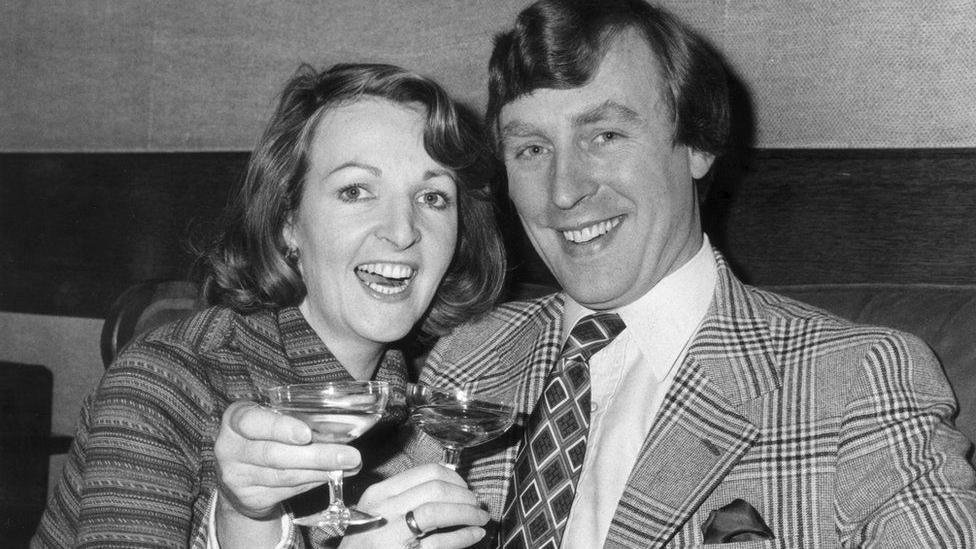 Image source, Hulton Archive via Getty Images
Penelope Keith married Rodney Timson in 1978
Timson was twice divorced and eight years younger than Keith. They met when she was in a play in Chichester. After the wedding, Timson left the police to become Keith's manager.
There was speculation about how long they would last, and the motives for the union, but the couple rode the wave.
"Lots of people who said I was making a mistake have divorced in the time we've been married, and we are still very happy," declared Keith in the Daily Mail in 2007., external
"I don't think I was desperate to find somebody. I certainly hope not. I was frightfully busy with work."
Ten years after they married, they adopted twin brothers.
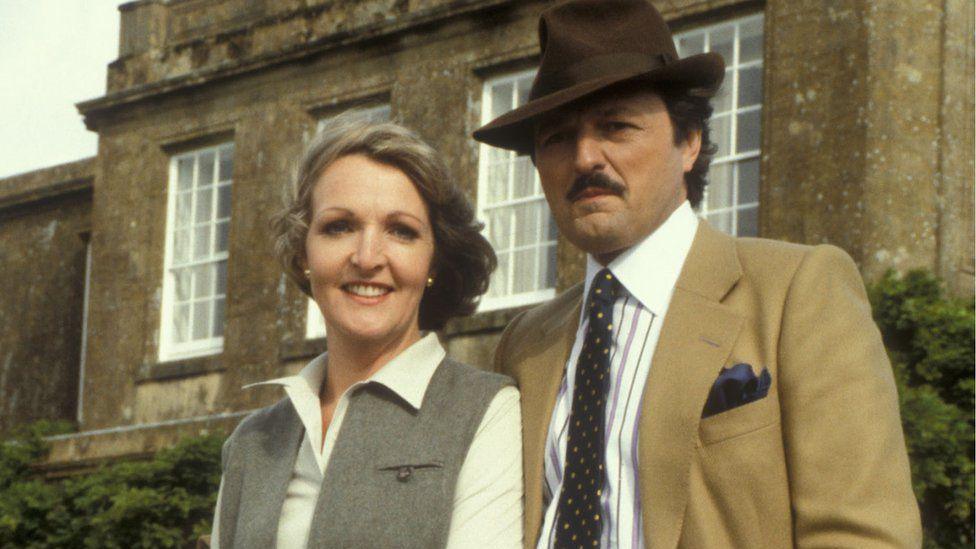
To The Manor Born, with co-star Peter Bowles, was Penelope Keith's second major TV hit
In 1978, Keith won her second Bafta for a TV adaptation of Alan Ayckbourn's three-part comedy The Norman Conquests (the play in which Keith was performing with Kendal when Briers thought they'd be great for Margo and Barbara).
The suggested mismatch in Keith's personal life was followed by that between Audrey and nouveau-riche supermarket tycoon Richard DeVere (Peter Bowles) in 1979's To The Manor Born.
In the sitcom, Audrey had to give up her country pile to DeVere when the death of her husband left her in debt.
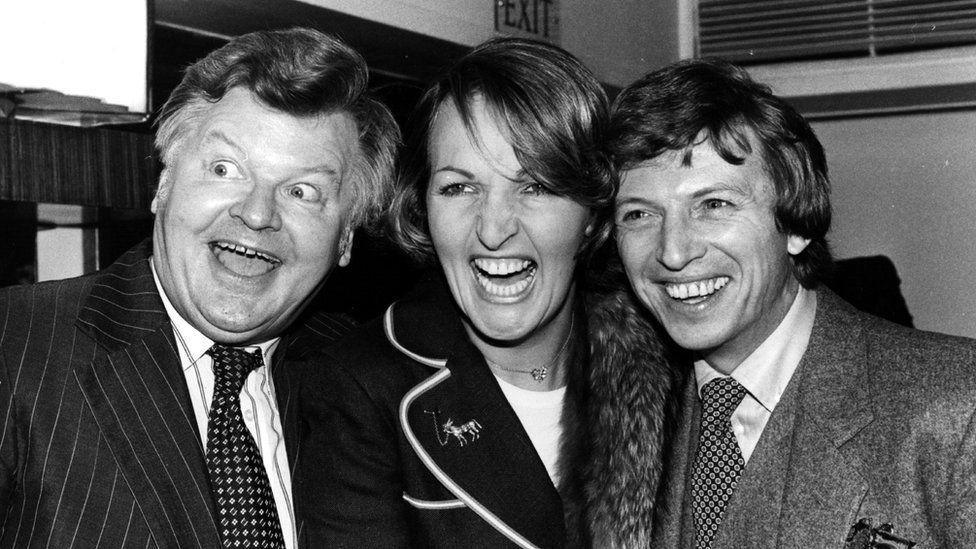 Image source, Getty Images
Keith, with Benny Hill (left) and Tommy Steele, celebrates winning the Variety Club's best TV personality of the year in 1980
The "will they, won't they" scenario kept viewers hooked. The final episode in 1981, in which they married, drew nearly 25 million viewers.
The show, which ran for three series, was later adapted for radio and there was a 25th anniversary Christmas special in 2007.
Following To The Manor Born, Keith continued in theatre, in such plays as Noel Coward's Hay Fever, before venturing back into TV sitcoms.
Six shows followed, providing a variety of roles. They included a Labour MP (No Job For A Lady), the wife in a work colleague couple hiding the fact they are married (Executive Stress, again with Peter Bowles) and a no-nonsense barrister in Law And Disorder.
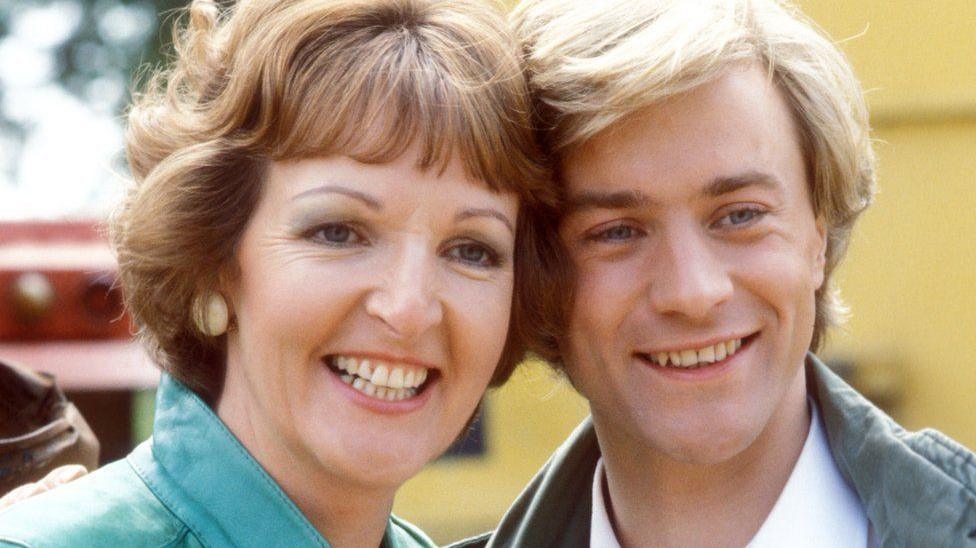
Sweet Sixteen starred Christopher Villiers as the love interest of Keith's character Helen Walker
Each had various degrees of success but two of them ruffled feathers. Sweet Sixteen in 1983 saw Keith's character becoming pregnant by a much younger man.
The public didn't take to it and it was dropped. John Howard Davies said the series was too "ahead of its time".
In 1995, Keith starred in Next Of Kin as Maggie Prentice, a grandmother who made no secret of disliking her orphaned grandchildren when taking them in after the death of her estranged son.
When the second season began, The Independent was unimpressed, saying: "Had the critical antennae been on full beam, [it] would never have made it to a first." The show lasted for another series before being dropped.
With the exception of the one-off comedy drama Margery and Gladys in 2003 (co-starring EastEnders' June Brown), Keith's TV comedy career went into hiatus.
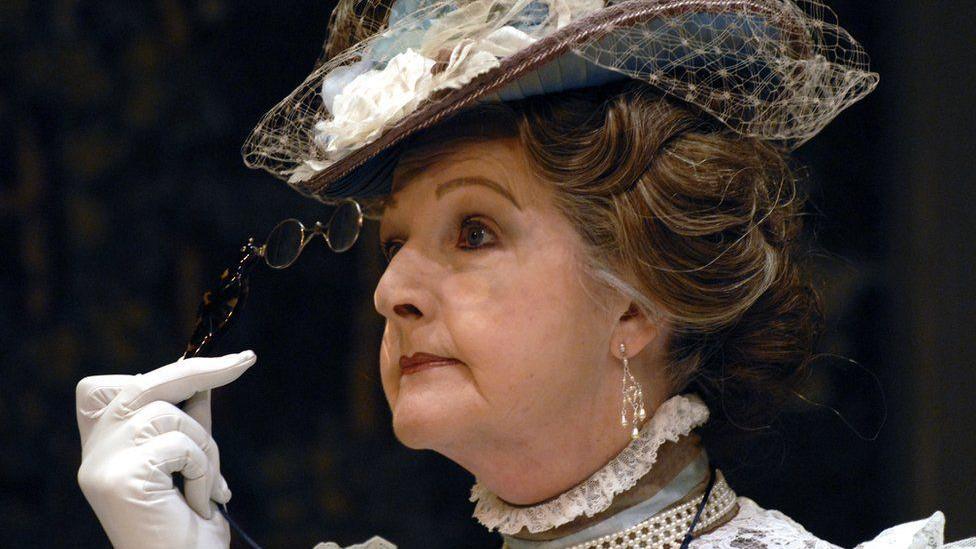 Image source, Corbis via Getty Images
Penelope Keith starred as Lady Bracknell in Oscar Wilde's The Importance of Being Earnest
She concentrated on her theatre work, which Keith had continued to nurture alongside TV - particularly comedy classics from the likes of Noel Coward and Oscar Wilde.
And in 2010 she told The Telegraph, external that being reunited with Peter Bowles in The Rivals was like "putting on an old glove".
Away from the limelight, Keith had long devoted time to public causes and her OBE was upgraded to a CBE in 2007 in recognition of her charity work.
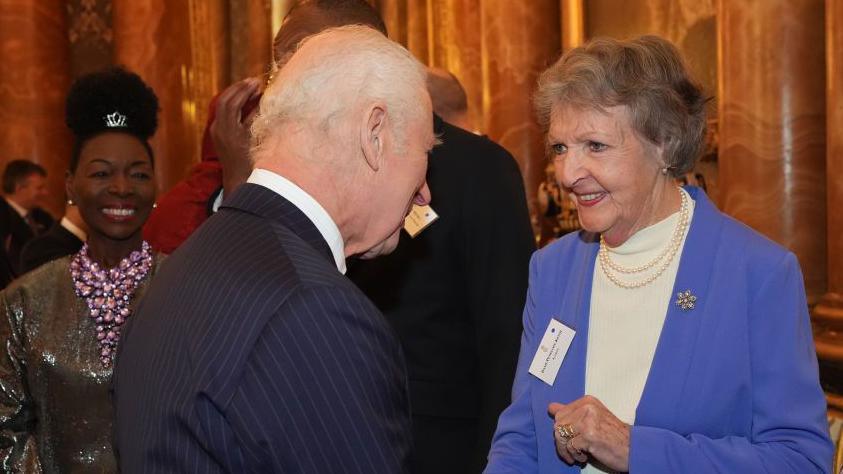 Image source, WPA via Getty Images
Penelope Keith in conversation with King Charles in 2024
Penelope Keith was a keen supporter of the British armed forces, and sat on the Human Fertilisation and Embryology Authority for six years from its foundation in 1990, giving her a key role in some controversial decisions about fertility.
Involvement in the National Trust and a stint as High Sheriff of Surrey (where she lived) allowed her to focus on her interest in the British countryside.
In 2014, she took this back onto TV, presenting three series of Penelope Keith's Hidden Villages.
She presented a guide to coastal villages and a search for Village of the Year.
Well into her 80s, she made several appearances alongside Alan Titchmarsh, on the gardener's Love Your Weekend series, and fronted a series about saving country houses for Channel Four.
She had served as president of the Actors' Benevolent Fund from 1990 until 2022, having taken over after the death of Lord Olivier.
But Keith's time as president ended bitterly, when she - and her supporters - were replaced by a rival group, a move that prompted years of legal action.
Looking back over her career, her former Good Life co-star Richard Briers perhaps best nailed Keith's enduring appeal: saying that - as Margo - she "would go down in the hall of fame, in fact I think she will be remembered forever".