.png)
 1 month ago
52
1 month ago
52
Daniel Wainwright, Tom Edgington and Tamara KovacevicBBC Verify

 Getty Images
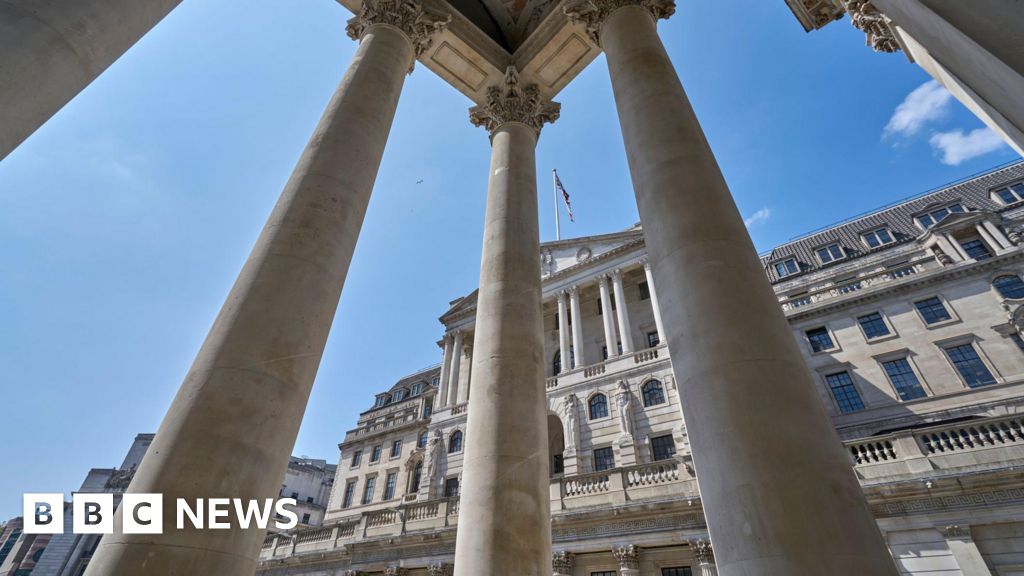
Council tax will rise by 4.9% on average for households across England in 2026-27, outpacing inflation and adding to cost of living pressures, new figures show.
The increase takes effect from 1 April and will mean the average council tax for a Band D property in England will increase to £2,392 a year - up £111 on last year.
The Local Government Association (LGA), which represents councils, says authorities are under financial pressure to raise bills to protect services.
Band D council tax bills will rise by an average of 9% in Shropshire, while in North Somerset they will rise by 8.6% on average.
The lowest increases will be for Hartlepool, Middlesbrough, Rutland, and Merton, where bills will increase by about 2.5% on average.
Councils which have a legal responsibility to look after vulnerable people are allowed to increase their council tax by up to 5% a year.
BBC Verify analysis of the figures shows 124 of the 153 councils with these social care duties are imposing a rise of 4.99% or more.
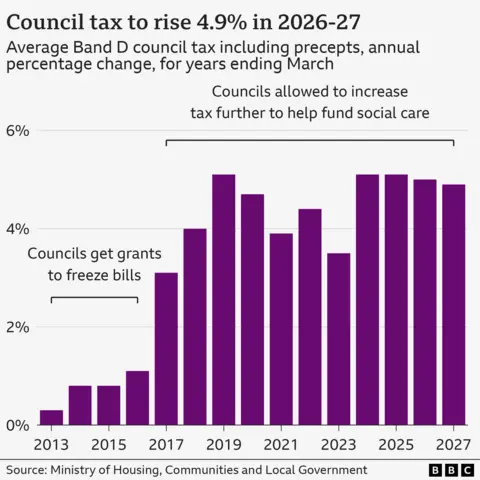
With February's inflation rate remaining at 3%, the average council tax hike will outpace the cost of living - although further price rises are expected in the coming months due to the US-Israel war with Iran.
Rising costs and increasing demand
Council tax is a compulsory charge on properties in England, Scotland and Wales and provides almost half of the funding for England's local authorities.
The money funds local services ranging from social care and libraries to bin collection and street cleaning.
However, councils are facing a combination of rising costs and increasing demand for services, said Owen Mapley, chief executive of the Chartered Institute of Public Finance and Accountability.
"In particular, pressures in services that councils have strict legal obligations to provide, such as adults' and children's social care, special educational needs and disabilities and homelessness are continuing to grow," he said.
Smaller councils without these social care responsibilities can increase bills by up to 3%.
Parish and town councils can also levy a charge - known as a precept - to fund their work, which is not subject to a cap.
Police and fire authorities, as well as combined authorities led by elected mayors, can also raise bills this way.
All of these charges can be reflected in a household's council tax bill.
The LGA has warned that "while council tax is an important funding stream, it cannot solve the long-term pressures facing councils".
Changes to government funding
Aside from council tax, about a third of local authority funding comes from central government grants, with the rest raised from business rates.
April will mark the start of major changes in how central government funding is allocated between councils.
The Institute for Fiscal Studies thinktank said the new system would try to match funding more closely to what each council actually needs to spend.
"Some councils will see their central government funding increase, others will see it cut," said David Phillips, IFS associate director.
"That will mean the pressure to increase council tax will vary across councils - and it will be interesting to see if the winners from the funding reform put up council tax by less than the losers."
The government is set to distribute £83.5 billion in 2026-27 to councils across England.
Scotland, Wales and Northern Ireland manage their own funding.
Additional reporting by Rob England