.png)
 1 month ago
43
1 month ago
43

 Getty Images
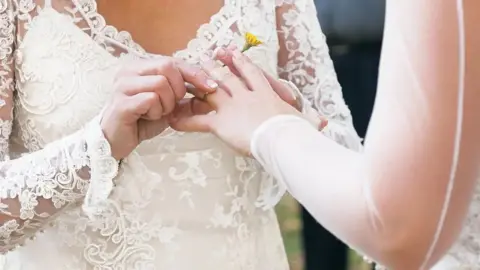
The ruling does not allow the church to solemnize the marriage ceremony itself
The governing body of the Church in Wales has approved a bill to make a blessing of same-sex marriages permanent.
Several senior figures within the Church in Wales, including the bishops of St Asaph and Llandaff, spoke in support of the proposal before it was passed.
Individual clergy would still be able to opt out of offering blessings to same-sex couples.
Its 143 members voted overwhelmingly to make the service of blessing permanent.
The motion needed a two-thirds majority from each of the three Orders – bishops, clergy, and lay members.
Lay members voted by 48 to eight in favour with two abstentions, with clergy voting 32 to seven with five abstentions, before bishops confirmed the passing of the bill with no objections.
It means the wording, first introduced five years ago, will now be added to the Book of Common Prayer – which includes the standard form for the Church in Wales' common prayers and blessings.
Prior to the vote, the Church in Wales said the proposed permanent change "follows a period of reflection and listening across the Church".
The trial period for the temporary blessing introduced in 2021 had been set to expire at the end of 2026.
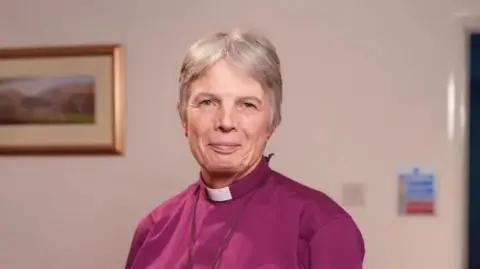
Cherry Vann became the first LGBT+ Archbishop of Wales last year
During a debate on the bill on Wednesday the bishops of St Asaph and Llandaff, Gregory Cameron and Mary Stallard, spoke in favour.
Bishop Gregory said that he had seen "the damage that rejection of our LGBT brothers and sisters in Christ does" and recounted a story of a young man who had not spoken to his parents for four years fearing what their reaction would be to his homosexuality.
"Please can we not be a church that inflicts such pain, and that I believe is the fundamental choice at the base of this bill," he added.
Bishop Mary said someone close to her had "been in a dark place because of attitudes towards their sexuality", where a "culture of shame [within the Church] told them it was not OK to be gay".
She added that "the Church in Wales did something good and beautiful" by introducing the blessing, albeit temporarily, in 2021.
Rev Rhun ap Robert from the Bangor diocese said that Jesus "never spoke against same-sex relationships", and that what was important was "the quality of a relationship".
But other speakers opposed the bill, including Andy Grimwood, a deacon in St Asaph diocese, who said that friends in the Anglican community from other countries who "uphold the traditional position on sexuality" had been "pained to see what the Church in Wales is proposing".
"My fear is today doesn't bring unity, but it brings division.
"Within the Church in Wales, within the Anglican community, and I see friends and colleagues leave the church they love," he added.
Rev Melanie Prince, from the diocese of St Davids, said she had been speaking recently to members of the Anglican Church in Nigeria, about how they could help Christians in that part of the world.
"Do not water down the gospel we are dying for," was the response she received.
Julia Schulz, a lay member from Bangor diocese, added that the blessing "looks like a marriage service in all but name", and that they should remember Bible teachings about the "blueprint for what a Christian marriage is".
The move to permanently incorporate a blessing for same-sex marriages underlines a divergence between the Church in Wales and the Church of England, which does not have an equivalent blessing.
It has been seen by some as a potential indicator for whether the Church in Wales could permit same-sex marriages in the future.
In July 2025, Cherry Vann became the first female and first LGBT+ Archbishop of Wales, and said the wanted the Church in Wales to represent the "diversity around the world and in our communities".
But her election was criticised by a group of conservative Anglicans, who described her appointment as "another painful nail in the coffin of Anglican orthodoxy".
Archbishop Vann was elected by her fellow bishops with a two-thirds majority, following the retirement of her predecessor, Andrew John, in the summer.
He retired after issues with safeguarding, excessive drinking and church members overstepping sexual boundaries came to light at Bangor Cathedral.
A report in February also revealed that a priest sexually who assaulted a 15-year-old boy over three decades was allowed to rise through the ranks to become a bishop, with the allegations covered up by the Church in Wales.