.png)
 1 month ago
68
1 month ago
68
Watch: How the BBC traced the identity of people smuggler "Kardo Ranya"
A leading people smuggler, whose network is believed to be responsible for the majority of illegal cross-Channel journeys in recent years, has been unmasked by a BBC investigation.
The 28-year-old Iraqi Kurd has evaded arrest for several years by operating under the alias "Kardo Ranya". He has kept his real name a closely guarded secret, which has frustrated law enforcement agencies in their efforts to issue an international warrant for his arrest.
The lack of information about Kardo Ranya's real name has also made it harder for individual police forces in Europe to track his whereabouts or follow leads beyond their own borders.
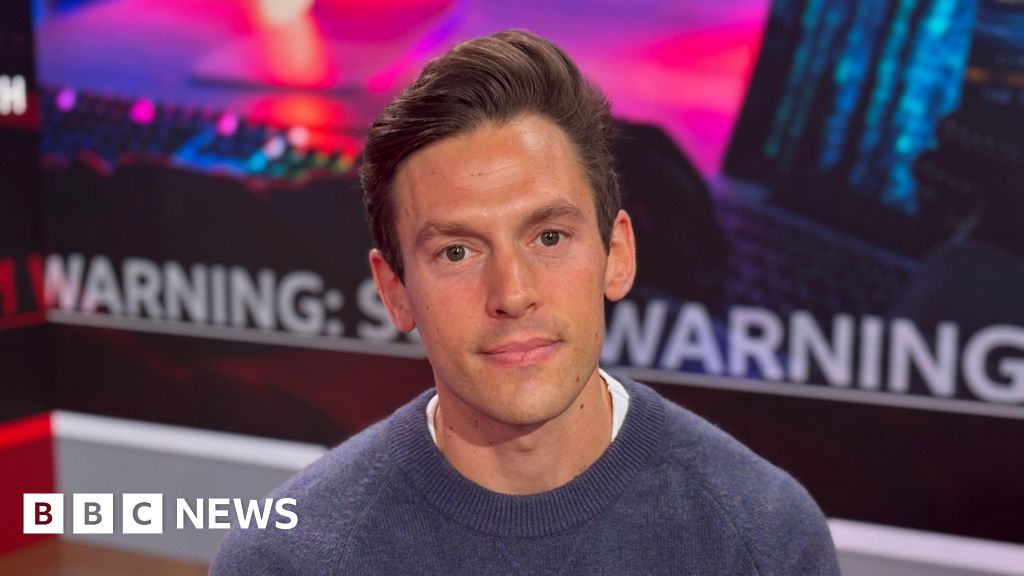
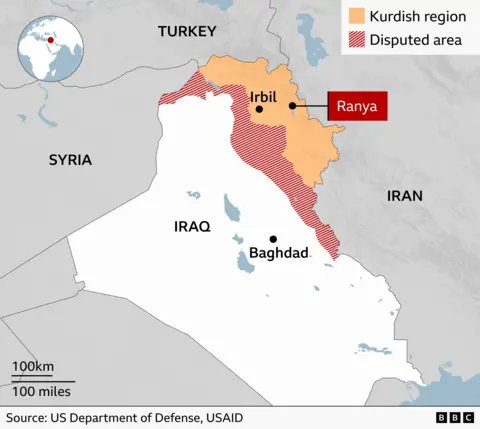
However, using contacts in the smuggling world, my colleague Rob Lawrie and I were able to follow a trail from migrant camps on the northern French coast, all the way to Iraqi Kurdistan, obtaining Kardo Ranya's real identity and details, and ultimately confronting him. The story of this search is told in a new BBC Radio 4 podcast, Intrigue: To Catch A King.
Kardo Ranya is believed to operate a smuggling operation with routes stretching from Afghanistan to the UK.
"We'd say the majority of the small-boat criminal business model is controlled by Kurds," said Dan Cannatella-Barcroft, acting deputy director of the UK's National Crime Agency (NCA).
A number of smugglers who have either come from Ranya, or operated there, have recently been targeted by the NCA, he added.
This echoed what we heard from a smuggler in a French migrant camp, who said the network that controlled the cross-Channel trade was often referred to as the Ranya Boys.
Kardo Ranya's real name may have been a secret, but he has not been reluctant to show his face when advertising his services as a smuggler on social media platforms. He has also posted videos tempting customers with images of luxury in London, and testimonies from apparently satisfied customers who have already made the journey to the UK.
A former smuggler told us that Kardo Ranya's network charges about €17,000 (£15,000) to transport a migrant all the way from Iraq to the UK. Although this price is often higher than that of his rivals, the network claims to offer a safer journey (and a VIP service for those who can pay). "[Kardo Ranya] charges more," the former smuggler said, "but still the migrant goes to him."
However, the long journey across the Middle East and Europe is both illegal and unsafe at almost every step of the way. It has proved fatal for many migrants.
Small-boat crossings have become the most common way for people to be detected entering the UK illegally since 2020. Nearly all those arriving this way claim asylum - saying they cannot live safely in their own country because of persecution or violence.
Almost all those making the journey across the Channel are aged under 40. Men and boys made up nearly nine in 10 small boat arrivals between 2018 and 2025.
There were 103,426 people in asylum accommodation as of December 2025 - including hotels, houses of multiple occupation (HMOs) or former military sites.
In a French migrant camp, we heard the story of a young man from Ranya called Shwana, who had made the journey from Iraqi Kurdistan to the English Channel last year.
The 24-year-old is known to have reached the coast of northern France in November, where he was one of about 100 people put aboard a boat fit to carry fewer than 20. Smugglers pushed them out to sea but remained on shore themselves, according to a fellow passenger.
The craft began to sink mid-voyage. Most passengers were picked up by a coastguard patrol and returned to France, but four people appear to have been lost overboard in the dark, among them Shwana. His body has never been found.
The crossing had been co-ordinated via a WhatsApp group, according to Shwana's fellow passenger, who showed us a mobile phone number used by the smugglers. It was also a number that featured in one of Kardo Ranya's social media adverts.
We were later able to talk to Shwana's family in the town of Ranya itself. They say he had been influenced by adverts such as these, dangling the idea of a more prosperous life in the UK.
High unemployment rates and the lack of prospects in Iraqi Kurdistan have made it easy for gangs to tempt young people to gamble everything on a journey to mainland Europe and the UK.

"The voice of the smugglers is louder than the voice of the media and the voice of the government," the region's interior minister, Dr Hemn Merany, told us.
However, there are many families in Ranya like Shwana's, who are left mourning a lost loved one, and there is some evidence that people are becoming more willing to speak out against the smuggling trade.
A small museum has been set up in the town, devoted to remembering all the local people who have died in boat crossings. Its walls are covered with hundreds of photos.
The museum's owner, Bakra Ali, now needs 24-hour police protection because of death threats from local smugglers, but he remains defiant.
When we showed him a picture of Kardo Ranya, Ali instantly recognised him. He said he did not know the man's real name, but he gave us contact details for some low-level smugglers who he said might.
On WhatsApp we messaged one of them. He replied first by text and then by phone.
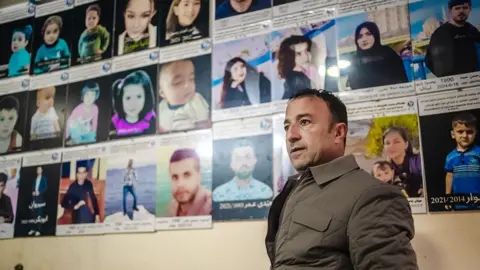
Bakra Ali runs a museum in Ranya dedicated to people who have died on the migrant route to Europe
He claimed he and Kardo Ranya were closer than brothers, which made us wonder why he was calling us. We thought he might be eyeing up a leadership role in the gang and saw our investigation as a way of taking his boss's place.
After a few days' back-and-forth, Rob received a text message: "Are you ready?"
The screen went dead and stayed that way for 15 minutes. Then it lit up. A document appeared bearing Kardo Ranya's photo, his date of birth and most important of all, his real name - Kardo Muhammad Amen Jaf.
We decided it was time to put the allegations of people-smuggling to the man himself.
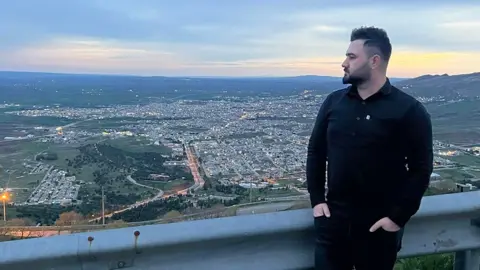
Kardo Jaf's identity was leaked to the BBC by a fellow smuggler
During our investigation, we had been given a WhatsApp number on which Kardo Ranya and his associates were said to be running his business. Our translator rang the number and pretended to be a would-be migrant who had the money to fly his whole family to the UK.
He spoke to someone over the phone who said the cost of the VIP service would be £160,000. The flight would go to an airport outside of London, apparently for security reasons. Someone would then pick up the family and take them wherever they needed.
Our translator said he would think about the offer but said that his wife was nervous. He left our number, hoping the lure of a big sale might tempt Jaf himself to call back.
A few days later, that was exactly what happened.
When Jaf returned the call, we confronted him with what we had found about his business. He denied being a smuggler and said he had only ever advised people on how to leave Iraq, adding that he did not believe he had committed any offence.
We then asked Jaf about his involvement in the Channel crossing in which Shwana had disappeared. He admitted he knew that one of the people in the boat had not been found but claimed it was nothing to do with him.
Jaf then hung up. The number on which he called us has since been disconnected.
Meanwhile, one of his collaborators has recently been given a 10-year jail sentence in France.
Like Jaf, Noah Aaron was a member of the Ranya Boys and had been active in sending illegal migrants over to the UK since 2019.
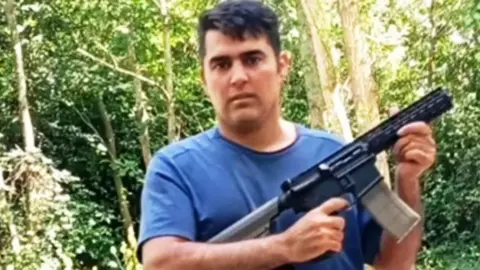
Smuggler Noah Aaron is now serving a 10-year jail sentence in France
Aaron was found guilty of a number of offences including money-laundering and organising "the illegal entry, movement or stay of a foreign national".
Despite being wanted in more than one country and being linked to two deaths in the English Channel, he had managed to move between the UK and Europe unnoticed for several years.
Since Brexit, getting access to some information about potential criminals has been more difficult, says the Immigration Services Union.
"We're no longer in Europe, we no longer have a data-sharing agreement with many of the countries in Europe. So we don't see lower level [criminal] records," the union's Lucy Moreton told BBC Radio 4.
"Also we don't see their immigration records. Where once we would know if someone had claimed asylum elsewhere in Europe and been unsuccessful, or even been successful… we don't have access to that data any more."
Crossing borders unnoticed may be much harder for Jaf in future, now his real name has been revealed by our investigation. He is currently wanted for questioning by at least one European police force, although his present whereabouts are unknown.
Additional writing by Ben Milne

Get our flagship newsletter with all the headlines you need to start the day. Sign up here.