.png)
 1 month ago
72
1 month ago
72
Donning protective kit for a first glance at the Bayeux Tapestry
By
Culture and Media Editor
The Bayeux Tapestry, which is now housed in the British Museum, is in a "wonderful state", the French Culture minister has told the BBC, having viewed it on site.
The early medieval masterpiece, which tells the story of the events leading up to 1066 and the Norman Conquest, is being checked over by French and British conservators ahead of going on display in September.
There has been alarm from some, particularly in France, that the tapestry was too precious to move from there to the UK.
French culture minister Catherine Pégard said: "We can see that all the precautions have been taken… I believe that it will reassure all the sceptics".
She was thronged by French and British media as she viewed the 11th Century embroidery, along with the chair of the British Museum, the former Chancellor George Osborne.
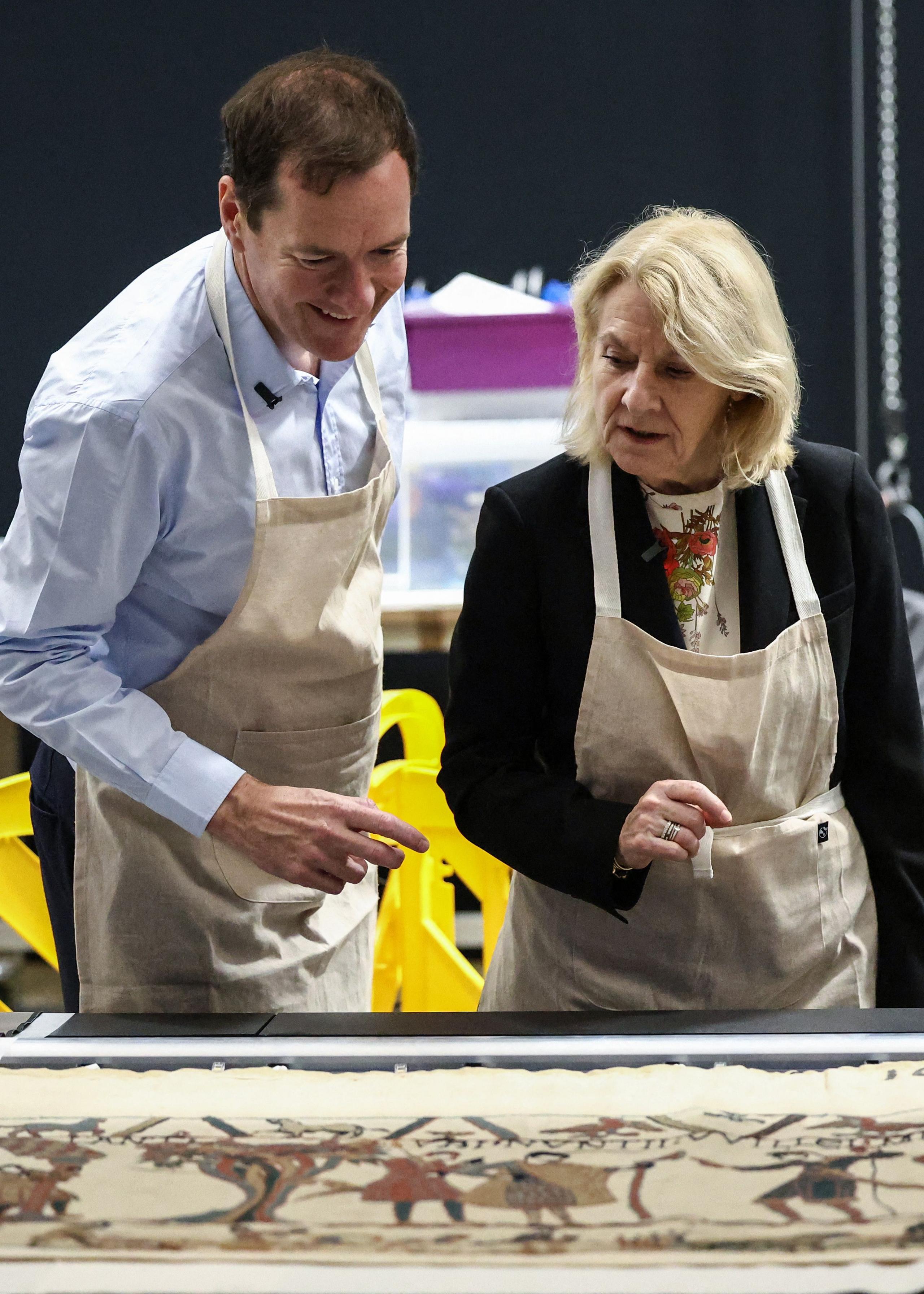 Image source, AFP
British Museum chair George Osborne and French culture minister Catherine Pégard looking at a scene from the tapestry
Osborne praised the "French and British experts" who transported the tapestry from Bayeux Museum in Normandy to London.
It is the first time the tapestry has been seen in England for 1,000 years.
"They have done an amazing job in transporting this very very delicate item across the Channel and unfurling it here for us," Osborne told the BBC.
"It's our responsibility, this generation's responsibility, to do what previous generations have done, which is look after this tapestry so it's there for all time".
Professor Michael Lewis, curator of the museum's Bayeux Tapestry exhibition, first suggested back in 2013 it should come to Britain after he realised the Bayeux museum would need to close for renovation.
He called the collaboration between the French and British teams "remarkable".
"There is no evidence that there is any damage to the tapestry whatsoever. It has travelled really well," he added.
 Image source, BBC/Katie Razzall
The tapestry was carefully taken out of a lorry from France at the British Museum, in the early hours of 10 July
Much of the stitched masterpiece, which is actually coloured yarn embroidered on linen rather than a woven tapestry, is currently covered up in giant polyester sheeting, to protect it from light damage.
Yesterday, over 18 painstaking hours, teams of French and British conservators and British Museum staff unfurled the 70-metre long artwork from the folding stand where it had been concertinaed, surrounded by protective mattress-type padding.
I'm told there were tears.
Professor Lewis said it was "just so exciting. I've been dreaming about this moment for a very, very long time".
The French visit was about optics.
The delegation viewed one of the early scenes which shows William, then Duke of Normandy, on his throne. He's despatched messengers on horseback to free Harold who has been taken captive in France. At this point in the story, Edward the Confessor is still King and William and Harold are not yet locked in combat.
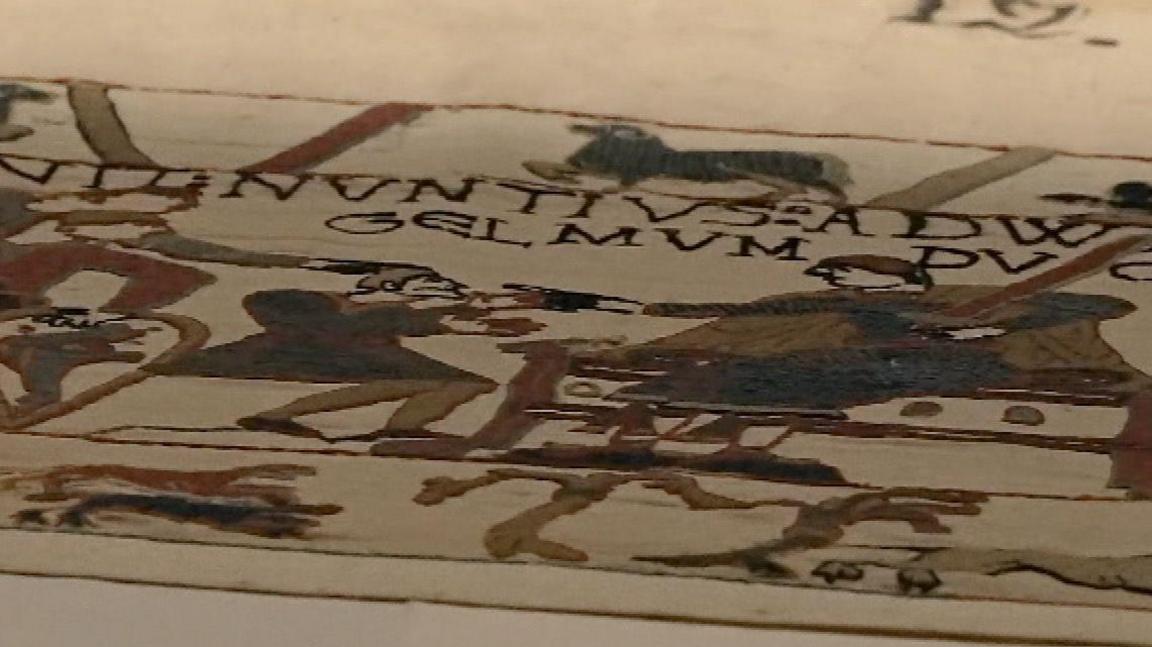 Image source, BBC/Jonathan Sumberg
First glimpse of a section of the Bayeux Tapestry at the British Museum
Viewing an early medieval embroidery close up is quite something.
It's smaller than I expected - around 50 centimetres high - and even in the fairly low lighting, the work is exquisite.
Millie Horton-Insch, the project curator, pointed out to me the detail on the messengers who are riding away in this scene.
"They're travelling at such pace that actually the riders' hair is blown back in quite an expressive cartoonish way, to show how fast they're moving".
Time and again, the 11th-Century seamstresses who created it - who are believed to have been in England, probably Canterbury - were so skilled that the story they are telling looks like it's in 3D.
It's just one detail in an artwork that visitors will have just 40 minutes to view. The British Museum is expecting one million people to come to the exhibition, believing it will rival the famous 1972 exhibition of Tutankhamun that saw record numbers.
One stipulation of the loan was that the tapestry must be displayed flat (there's an understanding that hanging it upright, as visitors have viewed it for years, isn't wise; the impact of gravity wasn't a concern until recently it seems).
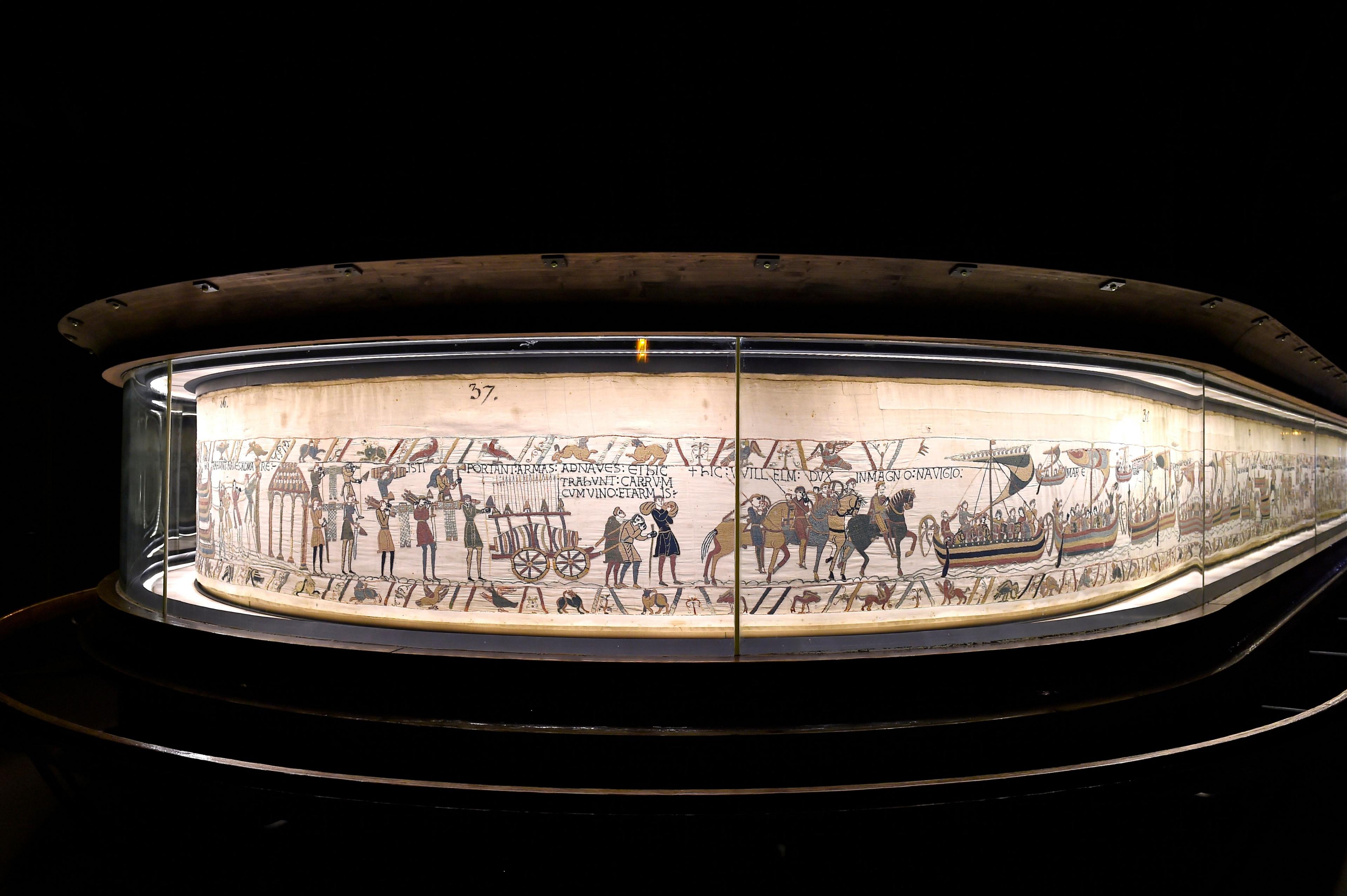 Image source, Bayeux Museum
The 70-metre-long tapestry, which was shown hanging in Bayeux, will be displayed flat at the British Museum
Visitors will enter via a mezzanine which means they will be able to see the entire length of the work in one go from afar.
They'll then walk - presumably at some pace - closer to the action; the 58 scenes of the events leading up to 1066 and the Battle of Hastings, complete with 626 figures, 202 horses and six women.
We got a glimpse of one of those women as the conservators working on the tapestry lifted up a section of the cover that is on it now to protect it from the light.
It shows a woman fleeing with her child from her house as Norman soldiers begin to torch it during the Conqueror's devastating journey to fight Harold for the throne. A human interaction that reveals the horror of war.
Horton-Insch called it "one of the most poignant moments on the tapestry".
"Her experience is the experience of the everywoman if you will, the experience that a lot of english women, including the english women who probably made the tapestry, would have lived through and would have experienced".
Lewis told me there are still so many mysteries about the tapestry. One I wanted cleared up was about a section - sadly under cover for our visit - which shows a figure, believed to be Harold, with an arrow in his eye at the Battle of Hastings.
Some historians believe the arrow was added later, during restoration in the nineteenth century. Lewis agrees it's a later addition.
"The earliest drawings of the tapestry don't show the arrow in the eye... my feeling is the arrow is a later invention based on a tradition that comes along in the 12th Century that Harold died with an arrow in his eye. But I'm happy to be proven wrong".
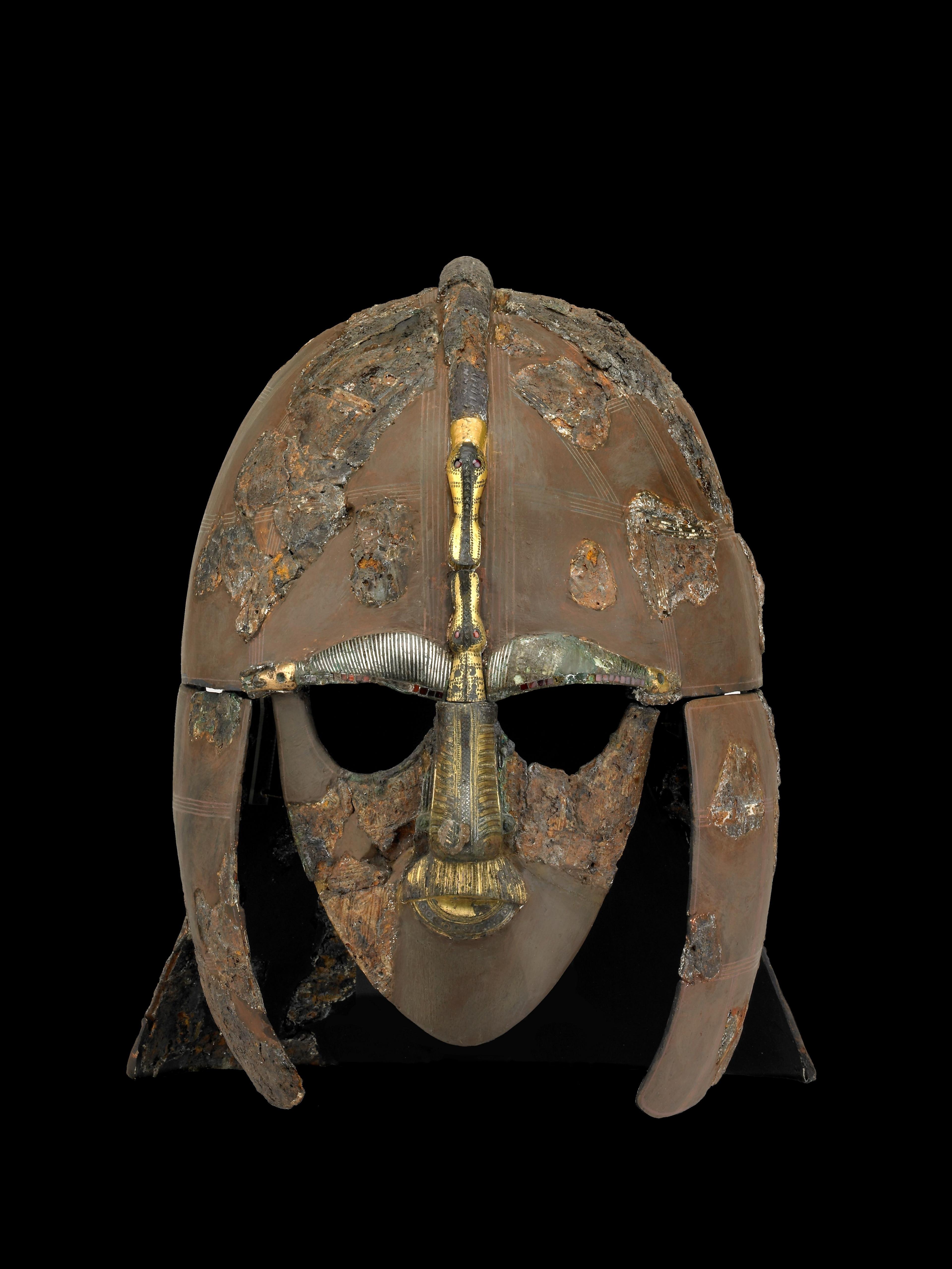 Image source, The Trustees of the British Museum
Sutton Hoo Helmet will be one of the precious items that will be on show in Normandy next year, as part of the historic loan agreement between France and the UK
For Osborne, the tapestry tells a story of destruction and invasion, but also of two nations, two peoples, forever entwined.
"There's a kind of frenemy, love-hate relationship between the British and the French, because we're so close, we're neighbours, and I think that is demonstrated in the tapestry. It's part of our shared history, and I think it's a really fitting tribute to friendship between our two nations".
In return for the historic loan, the British Museum is sending prized items from its collection, including one of only four complete helmets that survive from Anglo-Saxon England, part of the collection of treasures found at Sutton Hoo in Suffolk.
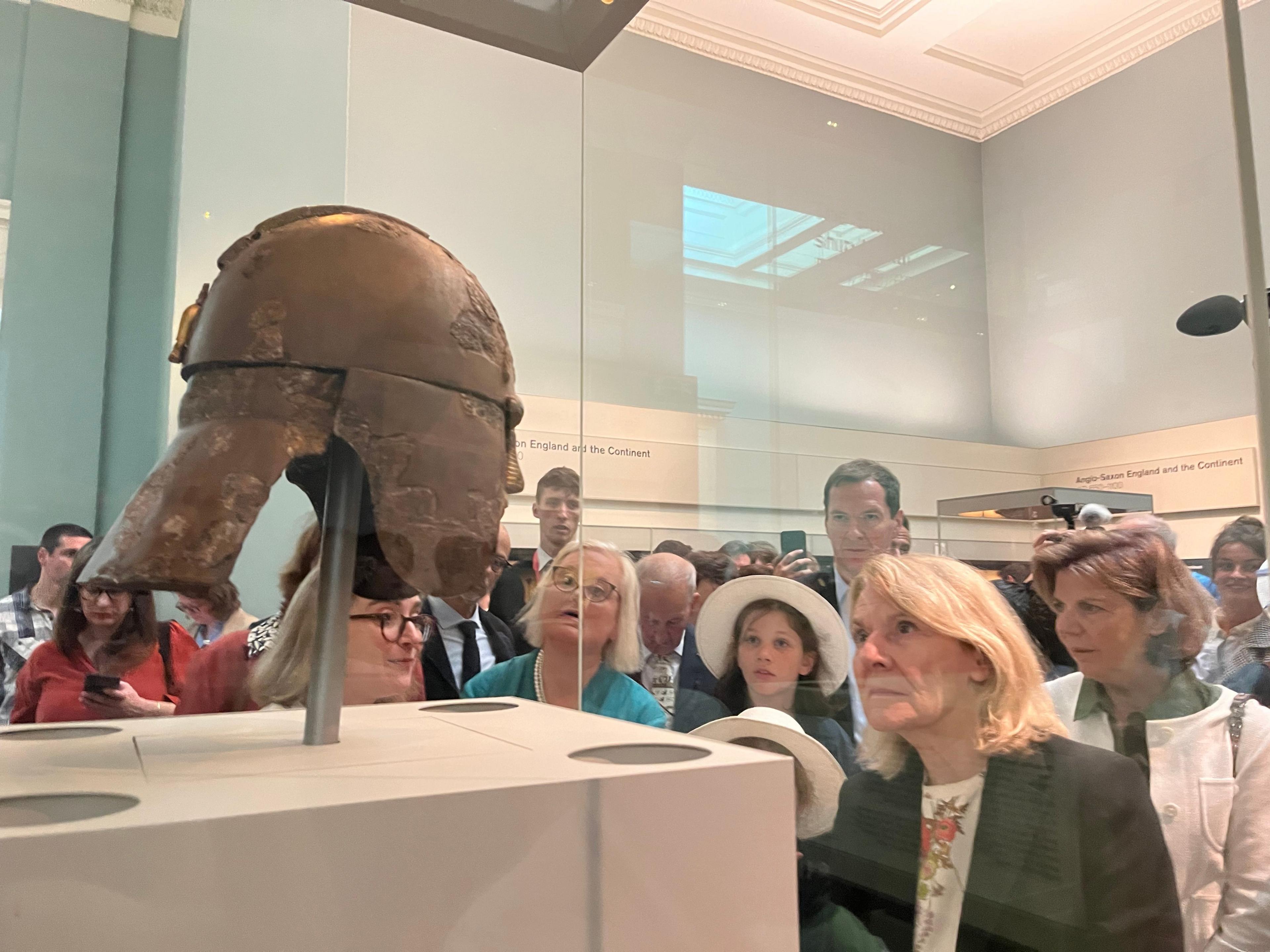 Image source, BBC/Roxanne Panthaki
The French Culture Minister was shown the Sutton Hoo helmet by George Osborne
As England and France face each other in the third place World Cup match on Saturday, where ancient enmities may be on show, this cultural exchange is being seen as a win-win.
The Bayeux Tapestry will go on display for nine months from 10 September.
More tickets will go on sale in the Autumn.