.png)
 1 month ago
69
1 month ago
69
People talk a lot about character in sport without always agreeing on a precise definition. Hanging in there when times get tough? Arguably that is a pre-requisite across top-level competition. The ability to keep cool, calm and collected under the most extreme pressure? Valuable, certainly, but not every cherished champion – John McEnroe or Diego Maradona, for example – fits that unflappable mould.
A more accurate gauge, perhaps, is how much certain individuals are missed once they are gone. In recent days rugby union has lost two titans who absolutely belong in that special category. Not every modern Prem flanker will be familiar with the exploits of Fergus Slattery and Roger Spurrell, both of whom have passed away at 77 and 71 respectively, but for many of us they exemplified what unquenchable warrior spirit looks like.
Give or take Willie John McBride, there was no more renowned Irish international forward in the 1970s than “Slattery of Ireland”, to borrow from Cliff Morgan’s famous commentary of the 1973 Barbarians v New Zealand game in Cardiff. On the 1974 British & Irish Lions tour he was at the peak of his powers on the hard fields of South Africa, setting new standards for fit, fast-paced and forthright wing forwards everywhere. As the suitably warm tribute issued by Blackrock College put it: “He played with ferocity and grace but without ego or theatre … Fergus never sought admiration but earned it universally.”
Spurrell, for some bizarre reason, never won an England cap but the example he set as Bath’s unflinching captain during their glory years remains indelible. His former teammate Jeremy Guscott described him in the Rugby Paper as “a true Bath rugby icon” and the former paratrooper was renowned as one of the hardest players in a notable tough Bath pack who underpinned the club’s consistent success. The journalist Jon Newcombe described the curly blond-haired Spurrell as “the West Country’s answer to Jean-Pierre Rives” and his impact on youthful imaginations was similarly vivid.
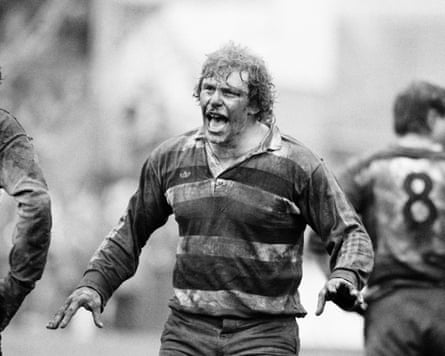
Perhaps it helped that Slattery and Spurrell were also men with a bit about them off the field. Among his many accomplishments, Slattery was a highly amusing public speaker and did a huge amount of unselfish work for charity. Spurrell, in his early Bath years, combined his rugby with working as a shepherd in the Mendip Hills. Subsequently he ran a well-known nightclub in what used to be the public conveniences near the river Avon in Bath.
If a trip to “Bog Island” was not for the faint of heart, Spurrell was ahead of his time when it came to media relations. While other players in the amateur era beavered away at their desks on Monday mornings, he would happily take calls from your correspondent on condition the phone didn’t ring too early in the morning after a busy club night. A ferocious opponent on the field – his training night duels with his Bath back-row rival Andy Robinson were legendary – he could be extremely obliging off it.
It is another reason why he and the personable Slattery are being mourned far and wide. Spurrell was a Cornishman but poured his heart and soul into Bath and was universally respected as a result. Slattery, sadly, suffered from dementia in the latter years of his life, a particularly cruel condition for such a popular, articulate man. It is hard to sidestep the tragic conclusion that the game he loved ultimately failed to love him back.
He is by no means the only hero of yesteryear to whom that grim asterisk applies. Anything that makes rugby safer for today’s gladiators and their successors clearly has to be paramount. But anyone who has ever pulled on a pair of boots will also tell you there is no more motivating feeling than playing with someone utterly committed to putting their teammates’ interests ahead of anything as trifling as their own personal wellbeing.
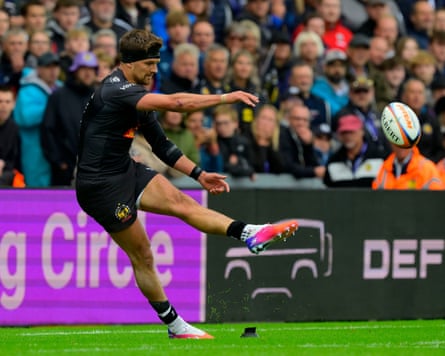
There was another perfect contemporary example in Exeter’s crucial 32-12 win over Saracens at the weekend. Not everyone perceives Henry Slade as a warrior, possibly because he has the ability to make the game look deceptively simple. They overlook his continuing defiance of Type 1 diabetes and the 74 caps he has earned in England’s midfield, hardly the sign of a dilettante. And who was that, head already bandaged to protect a tender cauliflower ear, somehow scrambling back to make an almost impossible try-saving tackle on Rotimi Segun? In addition to quietly contributing 17 points? When they talk rugby in Devon decades from now, Slade will still be among the region’s all-time favourite sons.
With the final knockout stages of the Prem and the United Rugby Championship looming, it may just be that such old-fashioned commitment to a cherished cause makes the crucial difference this month. Many assumed months ago, for instance, that Bath and Northampton would contest the Prem final, but try selling that complacent theory now to the re-energised players of Exeter or Leicester.
Likewise the Bulls of South Africa as they prepare to make their 11th trip of the season across the equator to face Leinster in the URC final in Dublin next week. It should be an impossible mission, but where the requisite character exists there is always a way. “I would much rather play with somebody who has very little talent but total commitment rather than the reverse,” Slattery once said. Like wartime Spitfire pilots, he and Spurrell sensed opportunity where others saw only risk. Both have now gone to the great clubhouse in the sky but their inspiring example will live on.
-
This is an extract from our weekly rugby union email, the Breakdown. To subscribe just visit this page and follow the instructions.