.png)
 1 month ago
74
1 month ago
74
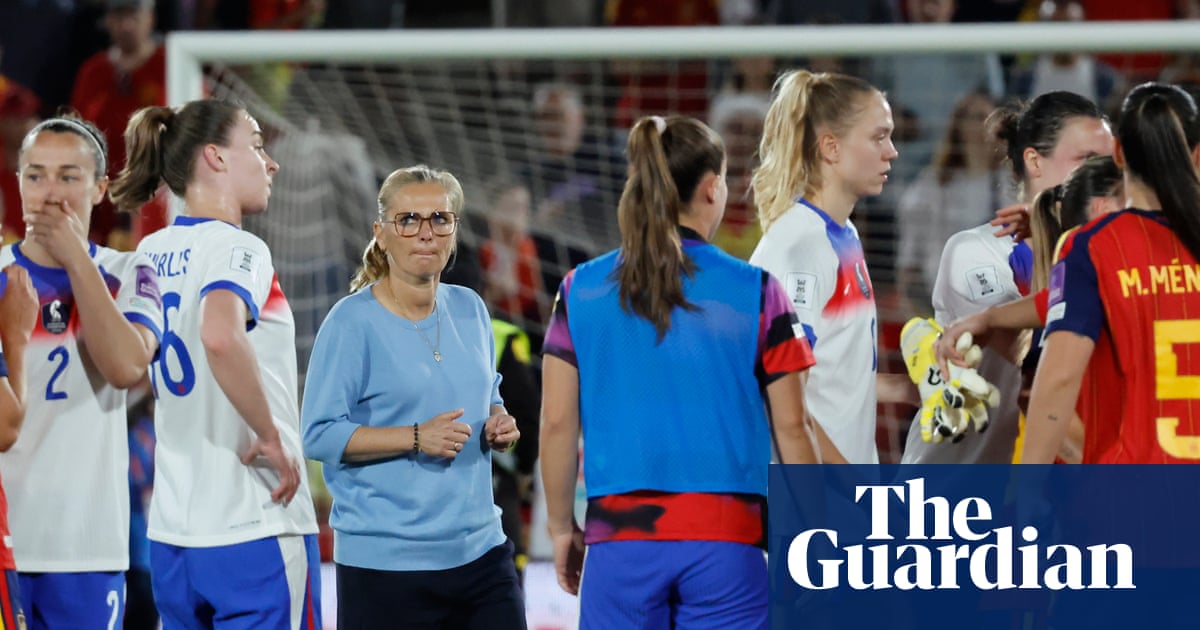
Enzo Fernández and Rodri would quite like to move to Madrid; many people would. They both said as much in the international break, those special parts of the season when players join up with their national teams and give interviews while apparently unaware that media are global these days: a whisper on Luzo TV can soon become a hurricane in London. But Rodri will line up for Manchester City at Chelsea on Sunday, while Fernández will not, suspended by the club for “crossing a line”.
It’s worth, perhaps, looking at exactly what was said. Fernández expressed disappointment at Enzo Maresca’s departure on New Year’s Day. “It … hurt a lot,” he told Luzo, “because we had a lot of identity, he gave us order, but it’s the way that football is, sometimes it’s good, sometimes it’s bad. But we always had a clear identity when it came to training, playing and obviously his departure hurt us especially in the middle of the season – it cuts everything short.” Sadness that a manager has gone surely isn’t a crime; it could even be supportive of Liam Rosenior and the difficulty of taking over a club mid-season.
Fernández also said: “I always tell my wife that if I had to choose a city in Europe to live in, I’d love Madrid because it’s very similar to Buenos Aires in terms of lifestyle and everything.” Which seems reasonable enough. Madrid is much more similar to Buenos Aires, where Fernández grew up, than London. It’s not unreasonable for an Argentinian in Argentina to reflect on that.
The midfielder did then, though, compound the impression by speaking of how much he admired Luka Modric and Toni Kroos. Again, in isolation, that is unremarkable: Fernández, like the former Real Madrid duo, is not the most physically imposing midfielder. It’s entirely reasonable that he should draw inspiration from the way they still controlled games through their positioning and tactical intelligence. But, equally, everybody in football knows what Fernández was doing: he was making clear to Real Madrid, and possibly Atlético, which would perhaps seem a more natural fit, that he would be open to joining them.
In the same international break, Rodri was far more explicit. “I have one year left on my Manchester City contract,” he said. “At some point, we’ll have to sit down and talk. Even though I’ve played for Atleti, Madrid isn’t a closed door for me – you can’t turn your back on the best clubs. Playing at the Bernabéu is always incredible, it’s very intimidating. I hadn’t planned to play outside of Spain but Manchester City came up. I would like to return to the Spanish league, I still follow it. The Premier [League] is my weakness but it is also a very demanding league. For now, I am very happy there [at Manchester City].”

That’s as clear an example of a come-and-get-me plea as you’ll find. In most industries it would be unacceptable, in some cases perhaps even a sackable offence. But football is different, not least because sacking a player would simply make it easier for them to move on, without any need for awkward negotiations over a fee. And, from the other side of the equation, players’ careers and contracts are short and clubs ruthless in moving players on once they’ve outstayed their usefulness; it’s only right that a player coming to the end of his deal should be able to negotiate at least fairly openly. Given the regulations on tapping up (not that they’re enforced especially stringently) it’s pretty much the only way for a player to advertise his availability and apply pressure to his current employers.
Pep Guardiola and Manchester City seem to understand that. Bernardo Silva often complains about the weather in Manchester, apparently yearning for a return to the sun-dappled evenings of Iberia. Nobody has taken any action against him. Guardiola’s response to Rodri’s comments was to shrug. “There is not one player I would think that will turn down the chance to play [for] Madrid,” he said, “and I understand completely, he was born in Spain.”
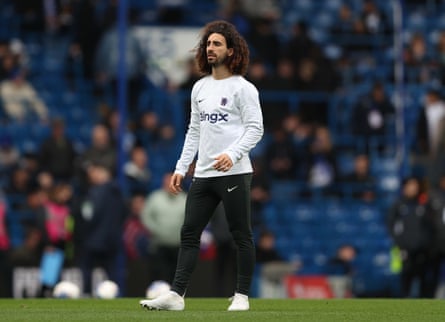
So why then have Chelsea reacted in the way they have, banning Fernández for two games? The first might have been the FA Cup sixth-round tie with Port Vale that they still won easily, but the second, on Sunday afternoon, is a vital game for Chelsea in their attempt to finish in the top five and qualify for the Champions League. Chelsea’s players, aware how important the game against City is, reportedly petitioned Rosenior unsuccessfully to let Fernández play. The decision may not be the manager’s to make; he was very clear to stress that “the club” had imposed the ban and has since said that his relationship with Fernández is good.
Perhaps, as Rosenior hinted, there is something else going on, which may explain why Fernández has been punished when Marc Cucurella, who said during the international break that a move to Barcelona “would be hard to turn down”, has not. But still, the difference in attitude between City and Chelsea is striking, perhaps because for Chelsea the issue is existential.
When Todd Boehly and Clearlake took over promising to disrupt staid old football, their plan was to sign young players to long contracts, with a relatively low basic wage but high incentives. Let them develop and grow together. Which is fine, until you start dealing with footballers, very few of whom ever expect to see out a contract, certainly not an eight-and-a-half-year one, without improvements or a possible move. There is a hierarchy of clubs and the truth is that if a £107m player does well enough at Chelsea to justify that fee, the likelihood is one or more of the absolute elite will come calling, no matter how well Chelsea are doing.
Which, quite apart from the obvious point that a couple of experienced heads are useful to have around, is why clubs cannot build championship-winning sides on kids alone. As they develop, young players will want more: more money, more challenges, more success. To admit that, though, is to acknowledge the fatal flaw in the Chelsea project. Fernández is essentially the child who has pointed out the emperor’s nakedness.