.png)
 3 weeks ago
60
3 weeks ago
60
For all that the job wore him down over a five-year period, Joe Root was only ever going to say yes when England found themselves needing a sensible stand-in captain in the wake of Ben Stokes and that late night after Lord’s.
But there will surely have been a few doubts in Root’s mind when the call from Rob Key came in; flashbacks to the final throes of his reign, when even a personally celestial last 12 months with the bat could not prevent the team’s overall slide.
The second day against New Zealand at the Oval may also have been a bit triggering in this regard. It was certainly a turbulent one for this much-changed England side, who after struggling to shut down New Zealand’s innings first thing closed on 222 for six from 59 overs – still 169 runs in arrears.
How well Jordan Cox (22 not out) can shepherd England’s remarkably long tail on debut may well dictate the outcome of this Test. It will not be easy, with New Zealand’s four-pronged attack, led by the impeccable Matt Henry, in a rich groove and operating to some shrewd plans from their captain, Tom Latham.
The best of them was the response to Harry Brook’s dancing feet and a truly absurd square-driven six early on in his innings. It prompted the keeper Tom Blundell to move up to the stumps and shut down the footwork, and it allowed Henry to finagle a couple of precious lbws as Root, 46, and Brook, 24, departed in quick succession.
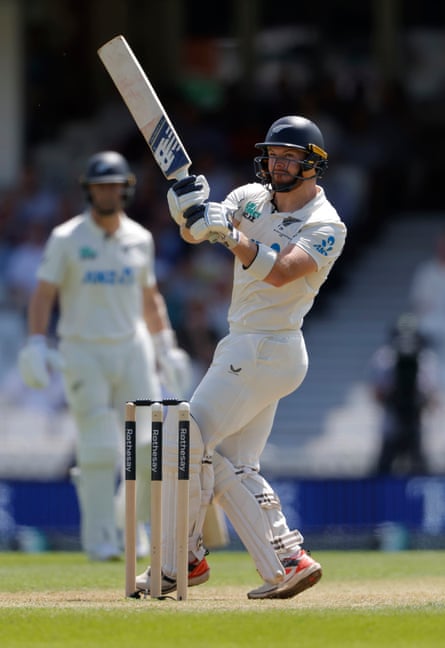
Cox was picked as a specialist batter at No 7 specifically for the afterburners he can turn on if left with the lower order. Although he will have to go some to match Glenn Phillips, who on a maddening morning for Root helped stick 100 runs on New Zealand’s overnight 291 for seven and register his maiden Test century.
Root was clearly the man directing traffic out in the middle but then stand-in captains rarely have a mandate to rip up existing tactics. A feature of the Stokes era has been a bombardment of the lower order and at times it has worked well. Why it continued after the second new ball came out was the mystery.
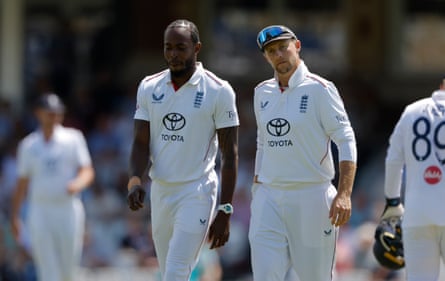
Root was juggling a pretty green attack, in fairness. His most experienced bowler, Jofra Archer, was stiff after his day-one exertions and not called upon until 90 minutes – and a heap of runs – had passed. Not that this should have been a surprise to the management after his two‑month diet of four-over spells in the Indian Premier League.
Things might have been different, too, had Ben Duckett not grassed a regulation catch in the deep when Kyle Jamieson was on 15. Sonny Baker was the bowler denied here, with the rookie’s delight at seeing the ball track perfectly to Duckett evaporating in an instant when it slipped out of upturned palms.
Jamieson went on to make 41 as one half of an eighth-wicket stand with Phillips worth 87 runs. Phillips played a superb hand, it must be said, his 100 from 135 balls meaning the busy right-hander became only the third New Zealander after Martin Guptill and Brendon McCullum to score centuries in all three formats.
Another source of angst for Root was watching Duckett run out for 36 from 25 balls. The left-hander appeared to be glowing with form on this surface, only for Emilio Gay, his new opening partner, to call him through for a single that never was and Nathan Smith to bullseye the stumps from cover.
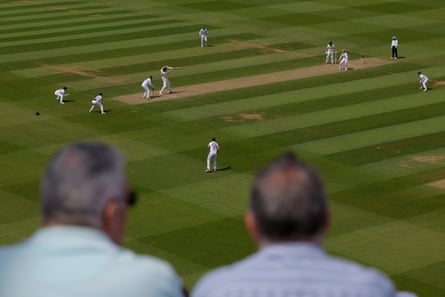
Key compared Root’s temporary elevation this week to the number of times he has “dug England out of a hole from 10 for two”. As it was, Root found himself walking out at a healthier 68 for two in the afternoon after Smith found the edge of Jacob Bethell’s bat on nine with a nice bit of wobble-seam bowling.
To his credit, Gay had managed to shake off the Duckett error to bring up his second Test half-century and shared a stand worth 74 runs with his second Test captain. The Oval, where the square runs all the way to the rope, also suits the left-hander’s game and his penchant to lace drives through point.
But two balls after the milestone Gay was undone by a brutish delivery from Will O’Rourke, a fast bowler who gets his short balls to jag lavishly off the seam. It still needed a review, however. Only a couple of slip fielders realised the ball had brushed the shoulder of Gay’s bat while he got in a tangle.
O’Rourke is a handful, no question, but this was also Gay’s first examination against the short stuff after that slow, shoddy surface at Lord’s. James Rew, emerging at 170 for four, similarly struggled with it, surviving one drop in the deep but eventually being undone by O’Rourke and another rocket that ballooned off the top edge.
All of which shows that the tactic of bowling short on this far flatter surface is a decent one, provided the execution is spot-on. Root’s rookie attack could not achieve this first thing and their day rather unravelled thereafter.