.png)
 1 month ago
74
1 month ago
74
1 hour ago
Hugo BachegaMiddle East correspondent, Beirut 
 BBC
BBC
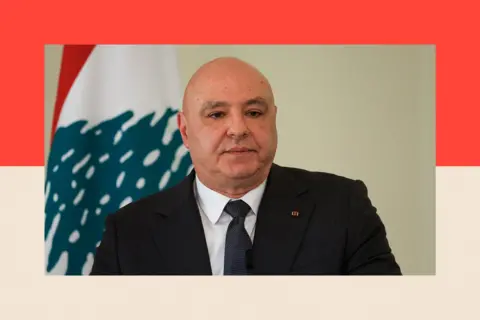
With Lebanon, again, engulfed by war, I remember a meeting I had with President Joseph Aoun at the Baabda Palace, a modernist building at the top of a hill overlooking Beirut last August.
Aoun, a former army chief, took office after a devastating war between Israel and Hezbollah, a Lebanese militia and political party that is backed by Iran. At that point, Hezbollah had been weakened and was isolated at home and Aoun had vowed to disarm it. The seemingly intractable issue over Hezbollah's weapons has long divided Lebanon, but Aoun appeared to believe he could solve it. "I was born an optimist," he told me.
At the time we met, a fragile ceasefire was in place in Lebanon. This deal had ended the war between Israel and Hezbollah in November 2024, but Israel was carrying out near-daily attacks on what it described as people and targets linked to the group. In some parts of the country, the conflict had never stopped. Even from my home in east Beirut I could occasionally hear the buzz of Israeli drones circling overhead.
 Reuters
"Disarmament can't be done by force", said Joseph Aoun
For Hezbollah's supporters, the group is their only protection against Israel, which they see as an enemy intent on capturing Lebanese land. Opponents accuse Hezbollah, which is a Shia Muslim group, of defending the interests of its Iranian patron, dragging the country into unwanted and unnecessary wars.
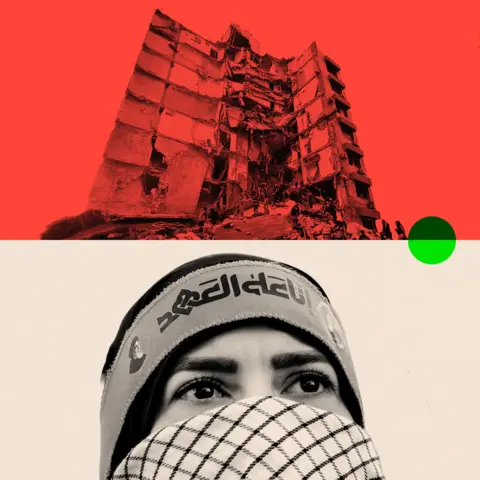
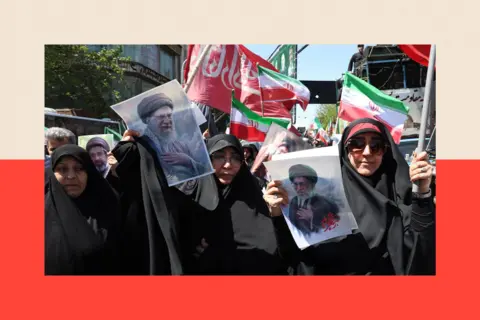
When Ayatollah Ali Khamenei, the Iranian supreme leader, was killed in a strike on the first day of the US-Israeli bombardment of Tehran in February, Hezbollah fired rockets into Israel. The group said this was in retaliation for his death and the constant Israeli bombing during the ceasefire; Israel responded with air strikes and another ground invasion of southern Lebanon.
 Getty Images
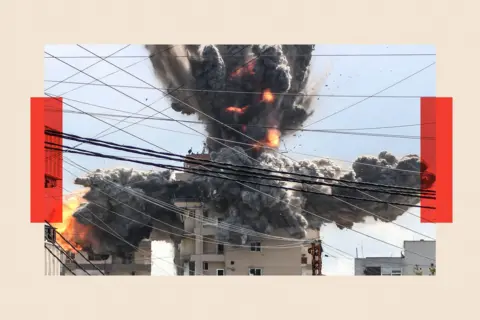
Israel launched a wave of air strikes that brought horror and destruction to Lebanon
President Aoun, hoping to stop the bloodshed, proposed to negotiate directly with Israel, a significant step for two countries that do not even recognise each other. Israel ignored the offer until last week, after the US agreed a ceasefire with Iran and Israel carried out widespread air strikes that killed more than 300 people in just one day in Lebanon.
A meeting between ambassadors from both countries, expected to focus on a ceasefire here, is scheduled to take place later on Tuesday in Washington. With very limited influence over Hezbollah, what can the Lebanese government do? And what are the chances of finding lasting peace?
Hezbollah, or Party of God in Arabic, was created in the 1980s during Israel's occupation of Lebanon in the Lebanese Civil War. From its beginning, the group has been financed, trained and armed by Iran, and the destruction of Israel remains one of its official goals.
In 1989, the Taif Agreement that ended Lebanon's conflict mandated the disarmament of all militias and introduced a power-sharing deal between sects in a country that is multi-cultural and multi-faith. However, Hezbollah, branding itself as a resistance movement fighting the Israeli occupation, managed to keep its weapons. Israel withdrew its troops in 2000 after an 18-year occupation of southern Lebanon, but territorial disputes remained. And the United Nations Resolution 1701, that ended the war with Israel in 2006 and demanded Hezbollah's disarmament, has never been fully implemented.
The group is designated as a terrorist organisation by countries including the UK and the US. But, in Lebanon, Hezbollah is more than a militia. It is a political party represented in parliament and in the government, and a social movement that runs services including schools and hospitals in areas where the state has been absent. It is the country's most powerful group.
 AFP via Getty Images
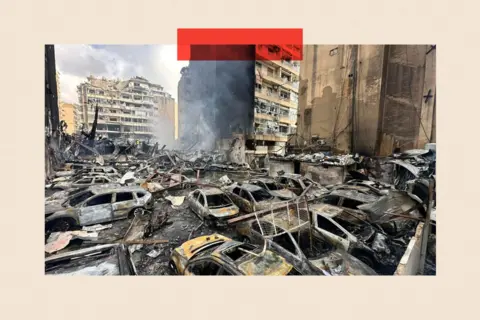
Israeli airstrikes such as these in sourthern Lebanon have left many Lebanese exhausted, feeling stuck in a state of permanent crisis
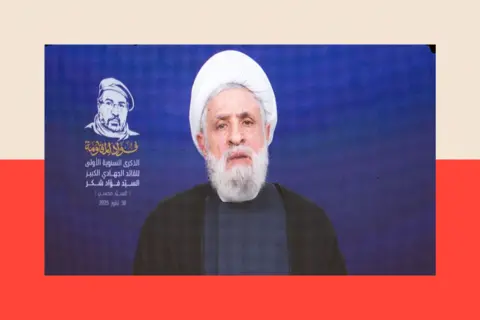
Since coming to power, President Aoun has defended a policy he calls the "state monopoly on arms". As part of the ceasefire deal in 2024, Hezbollah had agreed to remove its fighters and weapons from southern Lebanon which, for decades, had effectively been under the group's control. Hezbollah also holds sway over Beirut's southern suburbs, known as Dahieh, and the eastern Bekaa Valley, where part of its arsenal is located, but Naim Qassem, its secretary-general, has rejected discussing a full, nationwide disarmament.
Aoun, however, has warned that action to remove Hezbollah's weapons without its consent could lead to violence. "We can't let the country descend into another civil war," he said when we met in August. Amid continued Israeli attacks and Hezbollah's refusal to negotiate, I asked Aoun what his plan was. He said there was almost nothing else he could do.
A government without cards
Lebanon, a tiny country measuring just 4,000 square miles on the eastern Mediterranean, has a population of around 5.8 million and officially recognises 18 religious sects. Two thirds of its people are thought to be Muslim – Sunni and Shia populations are relatively equal in size – and a third is Christian. In December, a Gallup poll suggested that nearly four in five Lebanese were in favour of only the country's army being allowed to maintain weapons – in other words, that factions including Hezbollah should be disarmed. Responses to the poll, unsurprisingly, followed default lines. There was overwhelming support among Christians, Druze and Sunnis; more than two thirds of Lebanese Shias disagreed.
Michael Young, senior editor at the Carnegie Center think tank in Beirut, told me that some people "were naïve to think that the army", chronically underequipped and underfunded, had not disarmed Hezbollah "because of a lack of will".
 Getty Images
Hezbollah's secretary-general Naim Qassem has rejected discussing a full, nationwide disarmament.
"You can't come to the Shia community and impose this by force. You'll fail, and this will be a disaster. Armies are not made to enter military confrontations with their own population," he said. "What does it mean to disarm a group like Hezbollah? Does the army have the capacity to go into every Shia home and disarm it? No, it doesn't. Can they go into areas where Hezbollah has missiles and heavy weapons and disarm those areas? They can't".
When I asked him about the expected negotiations with Israel, he told me, "Lebanon has nothing to offer" as it cannot deliver Hezbollah's disarmament. "The government is without any cards," he said, "and this is a reality we need to accept".
'Our patience has limits'
In a televised address last month, Qassem said Hezbollah had not responded to Israel's attacks during the ceasefire to "not be accused of impending diplomacy" but that Israel "had not abided by a single term" of the deal. Israeli troops had also remained in five positions in the south occupied during the war, in another violation of the agreement, measures Israeli officials said were needed to protect the country's northern communities. "Our patience has limits," Qassem said, and Hezbollah "would not debate… its weapons with anyone". So, can it ever disarm?
Armed resistance is key in Hezbollah's raison d'etre – its flag features a hand carrying an assault rifle. The group is part of what Iran calls the "Axis of Resistance", an alliance of armed factions that include Hamas in Gaza and the West Bank, and the Houthis in Yemen. They have been severely downgraded by Israel and the US in the conflicts that followed the Hamas-led attacks on Israel on 7 October 2023 but not defeated. Nicholas Blanford, the author of Warriors of God: Inside Hezbollah's Thirty-Year Struggle Against Israel, told me that, given Iran's role, any decision about the group's path would likely be made not in Beirut, but in Tehran.
 Anadolu via Getty Images
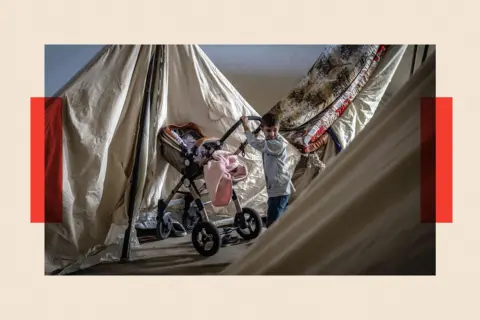
The situation has worsened for millions across Lebanon
Last year, I reported from southern Lebanon on how communities were living under fear from the constant Israeli attacks, and some appeared to question Hezbollah's strategy. In this conflict, the group has demonstrated, by attacking Israel and fighting invading forces, that it managed to rebuild some of its military capabilities, degraded in the previous war – as Israel had warned – which had reignited part of its base. A Western diplomat told me the recovery was led by officials from Iran's elite Islamic Revolutionary Guard Corps, who were sent to Lebanon following the 2024 war.
Amid its current invasion of Lebanon, Israeli officials say they aim to create a so-called security buffer zone in southern Lebanon, along the border with northern Israel, which has raised concerns within Lebanon that parts of the country will remain occupied even after the conflict. This means that thousands of people displaced from their homes in the south may never be able to return. This is likely to boost Hezbollah's narrative that their weapons are needed in a state that is unable to defend its territory.
Blanford says this is another reason Hezbollah is unlikely to disarm. "Hezbollah is all about what it calls its 'resistance priority'. All the other elements of the party… are there to protect and sustain it. This is its beating heart. If you remove the military component, the organisation becomes something else entirely," he said.
Over 1.2 million people have been displaced in Lebanon since the start of the conflict, most of them from Shia communities. This has exacerbated sectarian tensions. With Israeli air strikes targeting people allegedly linked to the group outside areas where Hezbollah is strong, residents are suspicious of new arrivals. Clashes have erupted in some areas.
Kim Ghattas, a journalist and former BBC correspondent who wrote the book Black Wave, told me Hezbollah was an essential part of the lives of many in the Shia community. "Shia Muslims have historically been the downtrodden of Lebanon," she said. "For many, this is an issue about belief and ideology, and the sense of fear and vulnerability. If they were to give up their weapons, what would happen to them? Will they be downtrodden again or outcasts? It's very difficult to argue with these deep-seated fears."
 AFP via Getty Images
In late February, the US and Israel launched a war on Iran, and the initial bombing killed Ayatollah Ali Khamenei
Last week, Israel launched a wave of air strikes that brought horror and destruction to Lebanon. Some are calling it Black Wednesday. In Beirut, the intense bombing, which came in the middle of the day without warning, hit some busy, densely populated areas that had never been attacked before, and where people felt safe. Even for people who have become used to violence, that day felt different. Since the start of the war six weeks ago, more than 2,000 people have been killed in Lebanon, Lebanon's health ministry says, without distinguishing combatants from civilians.
Many Lebanese feel stuck in a state of permanent crisis. In the Ain Mreisseh neighbourhood near the Beirut Corniche, I met a man called Mohammed Hamoud. In disbelief, he looked at a residential building that had partially collapsed. "You don't get rest. All my life, I've had the feeling that we're in a continuous war," he told me. "Let's hope it'll be the last one, and things get better."
Top picture credit: AFP via Getty Images
 AFP via Getty Images
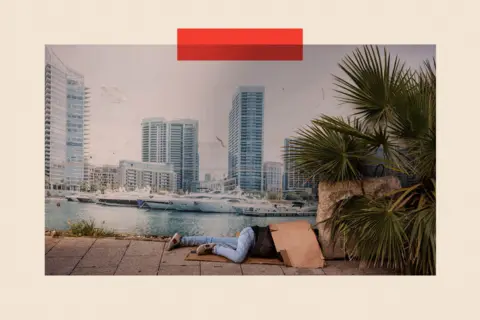
Lebanon has a population of around 5.8 million and 18 religious sects officially recognised

BBC InDepth is the home on the website and app for the best analysis, with fresh perspectives that challenge assumptions and deep reporting on the biggest issues of the day. Emma Barnett and John Simpson bring their pick of the most thought-provoking deep reads and analysis, every Saturday. Sign up for the newsletter here