.png)
 1 month ago
59
1 month ago
59
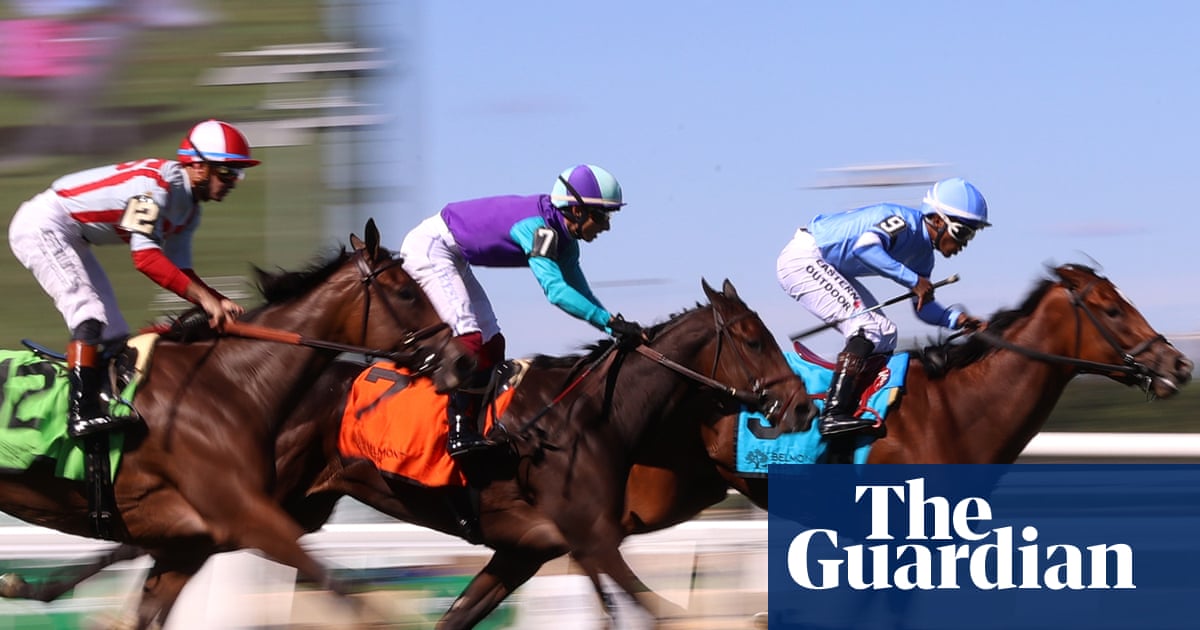
Amid fears in the wider racing industry that affordability checks, tax raids and falling attendance will be the end of us, Ascot sails serenely on towards an exceptional renewal of the King George VI & Queen Elizabeth Stakes on Saturday.
The crowds for last month’s Royal meeting were up on all five days to set a post-Covid record. The track is debt-free, having paid off the final £3m of the loan taken out to build its statement grandstand back in 2006. On Monday, meanwhile, the King’s racecourse announced annual pre-tax profits of £10.5m in 2025 – and almost casually dropped in the news that next year’s King George will be worth a British-record £2.5m. In tough times for racing, and the country as a whole, how does the track keep on keeping on?
Ascot, as the hard-pressed execs at plenty of other British tracks might fairly point out, was born 3-0 up. It was founded by Queen Anne in 1711, has been intimately entwined with royalty ever since and has a branding in the British public’s consciousness that money cannot buy. And above all, it has the unique advantage of the Royal meeting, the richest and most profitable event in the sport.
At the same time, though, Ascot does not just sit back and enjoy its good fortune. Its planning goes well beyond mere survival or maintaining the status quo, and the King George is a case in point.
In recent years, Ascot’s midsummer showpiece – a 12-furlong all-aged Group One – has struggled to keep up with the Prix de l’Arc de Triomphe, its French counterpart in October, in terms of prize money and prestige.
While older racing fans can reminisce about unforgettable afternoons when greats like Mill Reef, Grundy, Shergar and Dancing Brave added the King George to their CV, truly memorable King Georges have been much more of an exception than the rule since Galileo’s epic defeat of Fantastic Light in 2001.
“Two years ago, we made a very conscious strategic decision that we would focus on the King George as our primary race asset,” Nick Smith, Ascot’s director of racing and public affairs, said this week. “The Royal meeting is the Royal meeting, it’s completely different to everything else, but our primary race asset is not the Gold Cup, it’s not the Prince of Wales’s Stakes, it’s the King George.”
Chelmsford saved
ShowThe future of Chelmsford City racecourse in Essex seems secure following an agreement between Arena Racing Company and the track’s freeholders that is expected to ensure the renewal of the course’s licence.
There has been no racing at Chelmsford City since March, when the British Horseracing Authority refused to grant a licence to a company formed after the site’s previous operator, Great Leighs Estates Limited, was placed into administration.
”Racing at Chelmsford City is hugely important to the fixture list,” Martin Cruddace, ARC’s chief executive, said on Friday, “and we are therefore delighted to work with the freeholders to reach agreement that will allow racing to return to the venue.
“We are in discussion with BHA with regards to the relevant licences required to resume racing as soon as possible.”
On paper, at least, Saturday’s renewal feels like a throwback to the King George’s glory days, and an immediate reward for the decision to make it – until next year, at least – the most valuable race in Ascot’s history, with a prize fund of £2m.
“The bottom line is that this is the best King George this century, it has to be,” Smith says. “You’ve got the last year’s best and second-best racehorses in the world [Calandagan and Masquerade Ball], and the best one-and-a-half mile three-year-old [Benvenuto Cellini] on current performances. Then you might sort of expect it to dry up, but they’re still coming: Kalpana, Minnie Hauk and also Goliath, the winner two years ago. It’s everything you would ever want a King George or a horse race to be.”
The presence of leading fancy Masquerade Ball, one of two Japanese-trained runners, in the field feels particularly significant, given that Japan’s racing industry – by many measures, the richest and most successful on the planet – cherishes stamina as much as speed in its champions.
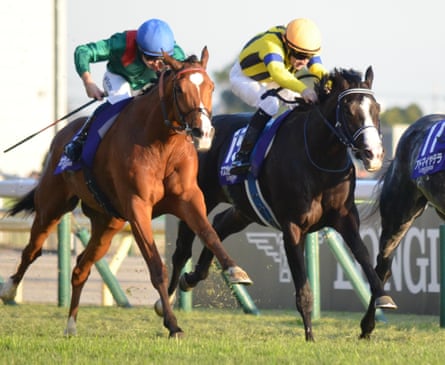
Millions of Japanese fans are expected to tune in to live coverage of Saturday’s race, hoping to witness a first-ever success in the contest which would make Masquerade Ball the hottest stallion prospect in a racing-mad nation. Ascot’s ultimate aim, though, is to promote the King George as a race in itself, rather than as a proving ground for future stallions.
“On Saturday, there will be flags down the course with the colours of every single King George winner, right back to the start,” Smith says. “There’s banners of previous winners around the parade ring and we are unashamedly promoting the horse race.
“We’re not saying come for the concert. We’re not saying come and have your face painted. We’re saying this is Britain’s premier all-aged race and it’s a very special sporting moment.”
Next year’s prize-money boost to £2.5m will leave the King George behind only the Arc, which has a purse of €5m (£4.24m), among European races, and Ascot’s long-term goal is to match the money on offer for the Longchamp showpiece in the autumn.
It is a bold ambition, not least because French racing’s bookmaker-free funding system, via a pari-mutuel monopoly, ensures a higher return to the sport from betting. Ascot, in fact, is probably the only British track that could seriously hope to achieve it.
“There may be no way that next is going to be as good as this year,” Smith says, “as it’s almost impossible to believe you can put a better field together for a race. But over the next three, four or five years, you’d hope that the King George stays in the top four of the world’s race rankings, as it was last year. And we won’t get to the Arc prize money overnight, it will take several years.
“But the increase [to £2m this year and £2.5m next year] is a very firm statement that this is the start, not the conclusion.”
Masquerade can rule in King George
Six horses trained in Japan have tried and failed to win the King George VI & Queen Elizabeth Stakes at Ascot, a losing streak that dates back to 1969, but the country’s long wait for a victory may finally come to an end this weekend when Masquerade Ball (3.35) goes to post for Britain’s premier all-aged Group One.
Saturday’s King George is the strongest in terms of both quality and depth for at least 20 years, although last year’s winner, Calandagan, has been chalked up as a clear favourite at around 13-8 to record a seventh Group One win in his last eight starts.
Francis-Henri Graffard’s gelding is as tough and consistent as they come, and ended 2025 as the world’s top-rated racehorse. Masquerade Ball, though, was just 2lb behind him on the ratings and only a head adrift at the end of the Japan Cup, and there are sound reasons to believe he could be an improved horse this year.
Takahisa Tezuka’s colt went toe-to-toe with the much more experienced Calandagan in the closing stages of the Japan Cup, and has scope for continued progress as a four-year-old after just nine career starts.
The effects of a long journey to Britain via Anchorange and Amsterdam will always be a slight concern for a Japanese runner, but Tezuka has been delighted with Masquerade Ball’s wellbeing since he touched down in the UK on 12 July.
“He has matured and developed a lot from three to four,” Tezuka said earlier this week, “not just mentally but physically as well. He is a lot bigger and stronger. I was nervous about the journey over, but everything went smoothly. The horse seems very happy, while his training is going better than I expected.”
Benvenuto Cellini, the Irish Derby winner, is another serious rival for Japan’s big hope on Saturday, while Minnie Hauk, a close second in last season’s Prix de l’Arc de Triomphe, looked back to something close to her best in the Prince Of Wales’s Stakes last time.
Normal improvement from three to four would put Masquerade Ball alongside Calandagan, however, and his latest run into a close second behind Romantic Warrior, one of the biggest stars in Hong Kong, over 10 furlongs suggests he has made significant progress. At around 7-2, he is a very fair to get the better of the favourite on Saturday.
York 1.30 A novelty sprint with jump jockeys taking the reins, but course-and-distance winner Mon Na Slieve has a fine draw in stall one if Brian Hughes can exploit his early speed.
Greg Wood's Saturday tips
ShowAscot 1.10 Crazee In Havana 1.45 Dark Issue 2.20 Touleen 2.55 Great Acclaim 3.35 Masquerade Ball (nb) 4.10 Ohara 4.45 Grizedale 5.20 All Ways Glamorous
York 1.30 Mon Na Slieve 2.00 Evening Blues (nap) 2.35 Item 3.05 Kiss Me My Love 3.42 Hout Bay 4.17 Caliban 4.52 Flight Control
Newcastle 1.35 Naturalia 2.05 Tripoli Flyer 2.39 Star Martini 3.15 Sovereign View 4.00 Fantastic Fox 4.35 Mercurius Power 5.10 Black Cab 5.45 Angel Of England
Chester 1.53 Al Maslool 2.28 Cool Molly 3.10 Velociraptor 3.48 Calico Blue 4.23 Right And Exact 4.58 Break The Bank 5.33 Keldeo
Lingfield 5.27 Panthere Noir 6.00 Homeland 6.30 Rocsane 7.00 It Dunt Marra 7.30 Rumble Ruby 8.00 Debrief 8.30 Diomed Duke
Salisbury 6.15 Sierra Belle 6.45 Matins 7.15 Liosa 7.45 Queen’s Companion 8.15 Rossa Raheen 8.45 Escape Magic
Ascot 1.45 Strong form when fourth in the Albany over track and trip at the Royal meeting makes Dark Issue the one to beat.
York 2.00 Evening Blues was much improved when dropped back to six furlongs here last time and deserves a chance to back up the form.
Ascot 2.20 A drop in grade should do the trick for Touleen, who had no luck in running when second in the Group One Coronation Stakes at the Royal meeting.
York 2.35 The Dante winner, Item, was a disappointment on softening ground in the Derby but may appreciate a return to York and also a sounder surface.
Ascot 2.55 Great Acclaim has yet to win at Ascot but has put up several fine performances in big-field handicaps and has a decent pitch in stall 10.