.png)
 4 hours ago
4
4 hours ago
4
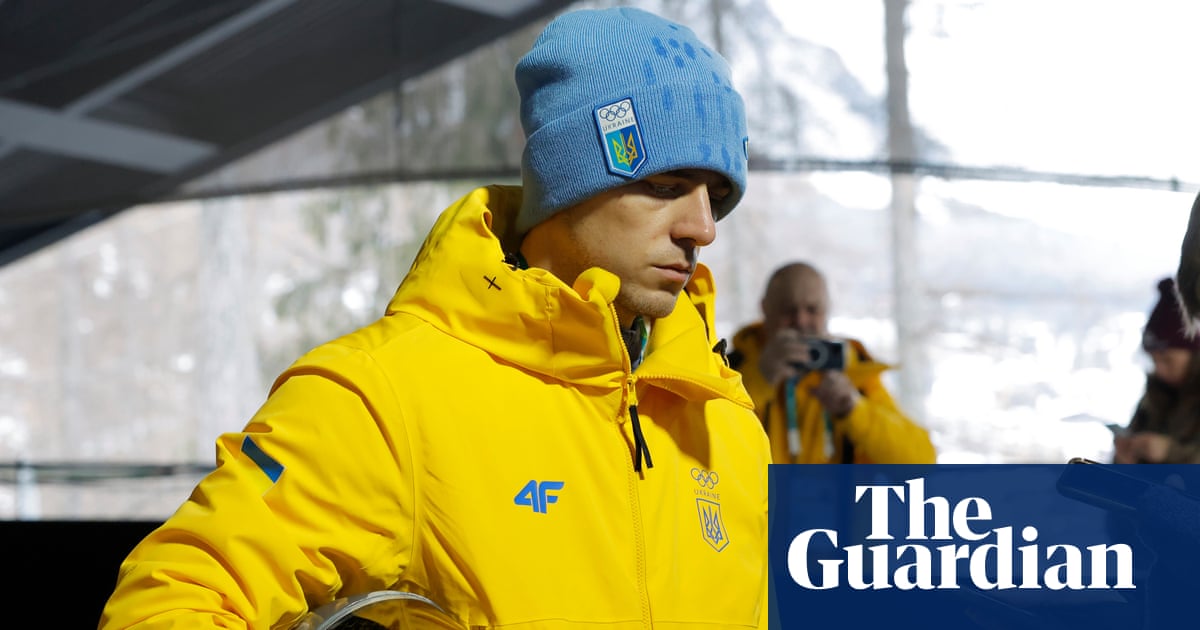
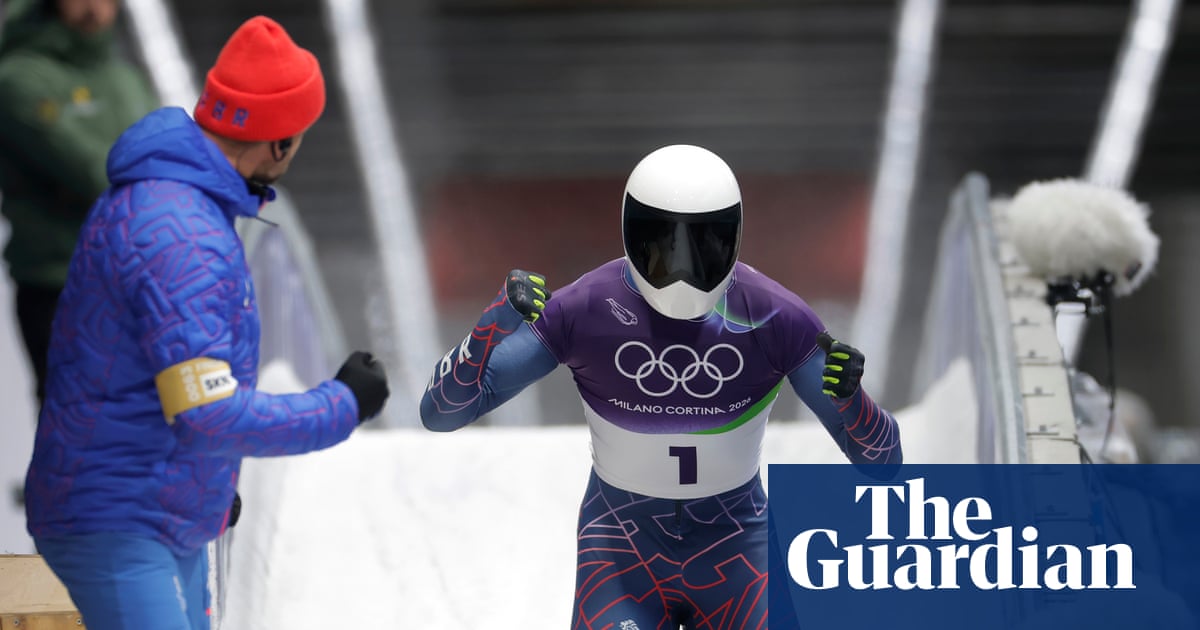
Vladyslav Heraskevych has accused the International Olympic Committee of doing Russia’s propaganda for them after he was barred from racing in the Winter Games because he wanted to wear a “helmet of memory” in honour of Ukraine’s war dead.
In one of the most controversial decisions in recent Olympic history, the Ukrainian skeleton racer was informed only minutes before he was due to compete that his accreditation had been rescinded.
It followed a last-ditch meeting in Cortina on Thursday morning with the IOC’s president, Kirsty Coventry, who left in tears after she failed to persuade Heraskevych to change his mind.
The IOC has maintained all week that the helmet, which shows the images of 24 athletes and children that died from Russia’s invasion of Ukraine, violates its athletes’ charter because the field of play must be free from political expression.
However Heraskevych, who had a genuine chance of winning Ukraine’s first medal at these Winter Olympics, has insisted that the helmet is an act of remembrance for the friends he has lost and that it would be a “betrayal” to back down.
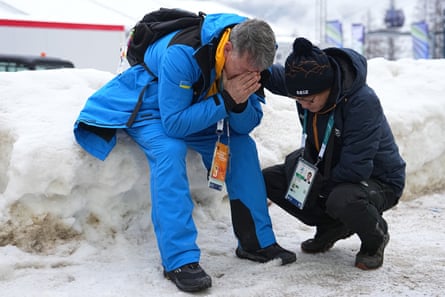
Speaking to journalists after the IOC’s decision, the 27-year-old was asked how he felt. “Emptiness,” he replied. “Yesterday was amazing training. I could be among the medallists in this event, but suddenly, because of some interpretation of the rules which I do not agree with, I am not able to compete.
“I was at many funerals when I was in Ukraine and it’s a truly terrible tragedy that young people at such a young age were killed for nothing. Because of their sacrifice, we’re able to be here today, and I want to honour them, and I want to honour their families.”
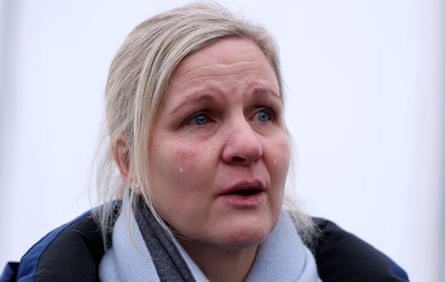
Heraskevych also thanked Coventry for meeting him at 8.30am, an hour before the skeleton competition began, and for what he said were her kind words to him. But he added: “But, as I told her, this situation plays along with Russian propaganda and it does not look good. I believe it’s a terrible mistake that was made by the IOC.”
The IOC said that it made multiple efforts to accommodate Heraskevych’s wish to remember his friends, by allowing him to wear his helmet in his six practice runs and offering him the rare opportunity to wear a black armband in competition.
However Coventry, who had changed her plans to come for the last-ditch meeting in Cortina, said that the IOC was left with no other choice after Heraskevych insisted on wearing the helmet in competition.
“Athletes asked us to keep certain areas – the field of play, the podium and the Olympic Village – safe zones,” she said, pointing out that if the IOC did not have the rule then countries might tell their athletes to do something they did not agree with.
“No one – no one, especially me – is disagreeing with the messaging. The messaging is a powerful message. It’s a message of remembrance. It’s a message of memory.
“But this is literally about the rules and the regulations. And sadly, that just means no messaging is allowed.
“For me, I was not speaking to him in that room as a president. I’m speaking to him as an athlete. I really wanted to see him race today.”
At lunchtime, the IOC also said it would be reversing its decision to strip Heraskevych of his accreditation, thus allowing him to stay in Milano Cortina. It said its disciplinary commission had made the decision because of the respectful conversation between Heraskevych and Coventry, but he would still not be allowed to compete.
However the mood in Ukraine was reflected by president Volodymyr Zelensky who said that the decision to ban Heraskevych played “into the hands of aggressors”.
“His helmet, bearing the portraits of fallen Ukrainian athletes, is about honour and remembrance,” said Zelensky. “It is a reminder to the whole world of what Russian aggression is and the cost of fighting for independence. And in this, no rule has been broken.”
“It is Russia that constantly violates Olympic principles, using the period of the Olympic Games to wage war,” he added. “In 2008, it was the war against Georgia; in 2014, the occupation of Crimea; in 2022, the full-scale invasion of Ukraine. And now, in 2026, despite repeated calls for a ceasefire during the Winter Olympics, Russia shows complete disregard, increasing missile and drone strikes on our energy infrastructure and our people.
“We are proud of Vladyslav and of what he did. Having courage is worth more than any medal.”
However in a press conference in Milan, the IOC spokesperson Mark Adams said there were 130 conflicts going on in the world and the organisation could not take a stand against countries involved in war.
“You would have maybe five National Olympic Committees here today, and in the summer, probably even less,” he said. “Because once you start, as a sporting organisation, taking stands against wars and conflicts there is no end.
“And this leads partly into why we have these guidelines. Because if we start reflecting all of those conflicts in the world on the sporting field, there will be no sport. But the one thing we can do is to bring all of those different countries together, even when they are in conflict.
“It may not solve wars, it may not bring peace, but it is a powerful message to bring people together.”