.png)
 1 month ago
56
1 month ago
56
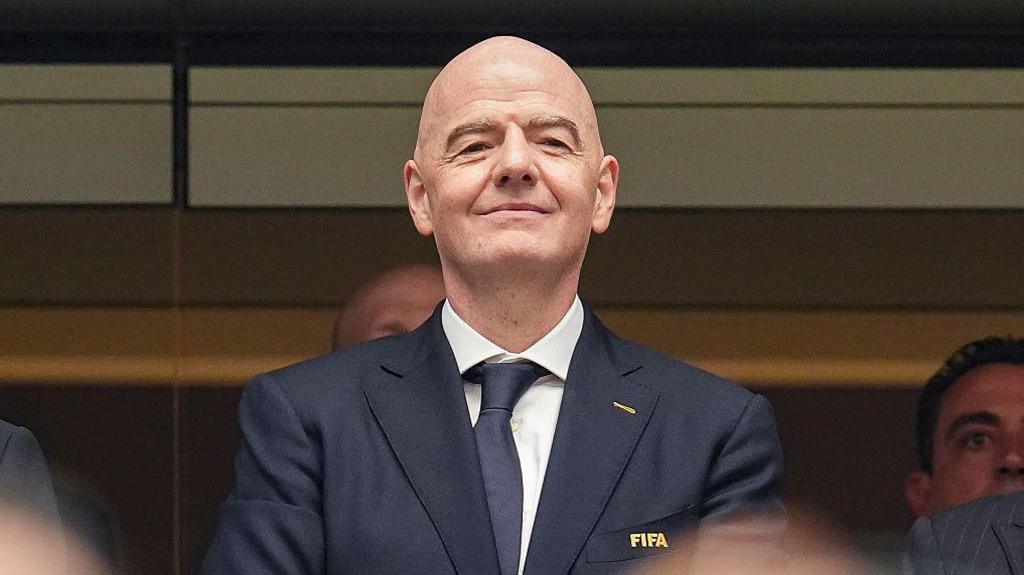 Image source, Getty Images
Gianni Infantino is making the boldest move of his 10 years in charge of Fifa
ByDaniel Austin
BBC Sport senior journalist
Gianni Infantino is billing it as the democratisation of football.
But Fifa's announcement that it aims to sell off stakes in its football competitions - including the World Cup - to private investors via associates of US President Donald Trump has been met with incredulity and rage from fans, politicians and regional governing bodies.
The big selling point, according to Infantino, is $20m (£15m) in funding given to all Fifa countries to "develop the game" once the deal is finalised.
This is the boldest move Infantino, an administrator who views himself as a world leader on par with presidents and prime ministers, has made in the decade since he became Fifa president.
If Fifa pushes the plan through, he will have consolidated his power for the long-term future and made investors wealthy along the way.
So why exactly does Infantino feel powerful enough to enact something so controversial, and what could the consequences be?
How can Infantino push his plan through and could he brought down?
Infantino has enough support to suggest the plan is more likely to go ahead than not.
Since being elected Fifa president in 2016, Infantino has earned long-standing, widespread backing from many countries in Africa, Asia, and the Americas, which have gained financially from various policies he has managed.
They include the expansion of the World Cup to 48 teams, the growth in commercial and broadcast revenue Fifa has overseen, and a programme which allocates millions in funding directly to member countries every year.
That gives him a base of support which constitutes more than half of Fifa's 211 members.
Fifa votes require a simple majority - if more than half vote in favour, Infantino's plan will come into effect.
The proposal will appeal to many nations, particularly those lower down the football food chain, for whom a £15m windfall would be more than they would ordinarily make over several years.
The level of backing Infantino enjoys appears to have emboldened his approach to the presidency. Decisions such as the introduction of hydration breaks and a musical half-time show to the World Cup were taken by his administration without a vote of members, and would have been deemed unthinkable when he took charge a decade ago.
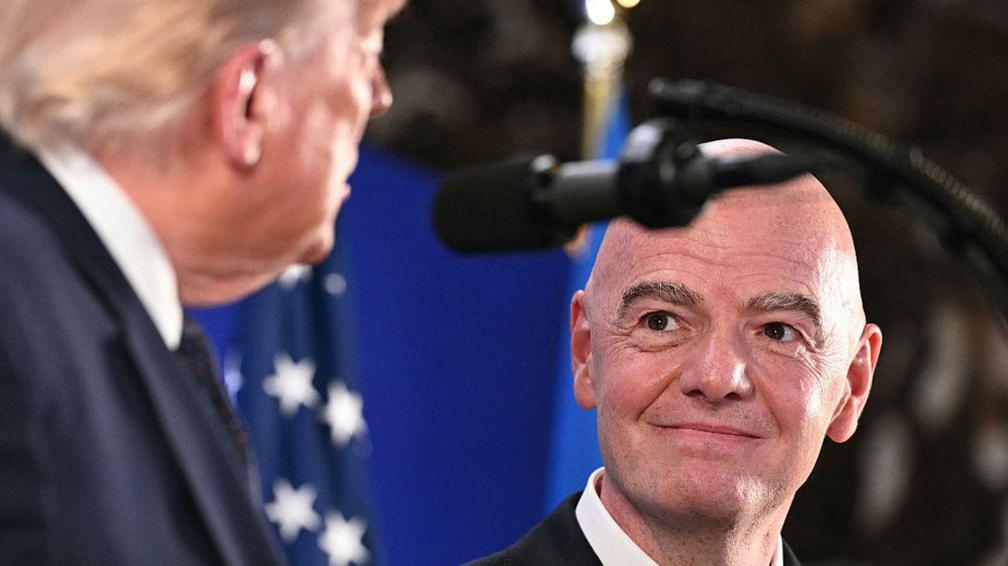 Image source, Getty Images
The Trump family stands to gain financially from Infantino's proposal
And his close relationship with Trump is key too.
The investment fund Fifa is dealing with - Thrive Capital - is led by Josh Kushner, the brother-in-law of Trump's daughter Ivanka.
Fifa says Greg Maffei, the American former president of Formula 1 owner Liberty Media who has donated to Trump's political campaigns in the past, is acting as a "key commercial advisor".
The proposal follows years of Infantino making overt attempts to deepen his and Fifa's ties with Trump.
He created a Peace Prize and awarded it to Trump. He opened a Fifa office in Trump Tower, New York. He allowed the Club World Cup trophy to be kept in the Oval Office at the White House. He laughed along during Trump's inauguration speech in which he threatened World Cup co-hosts Canada and Mexico.
And last week, Infantino heavily mimicked Trump's language when he released a statement describing those who criticised aspects of the organisation of the World Cup as "so consumed by hate and criticism".
Working with Trump associates on the plan allows Infantino to harness the power of the bond he has cultivated with the world's most powerful person, with the promise of a mutually beneficial outcome.
Fifa has engaged in discussions about the potential sell-off unilaterally, generating anger among nations and regions who feel it was done behind their backs.
But while there is a significant element of risk attached to this move, the chances of Infantino being brought down by it are slim, given how strong support is for him elsewhere.
What's in it for Infantino and the investors?
Fifa would receive a huge influx of cash in one go if the plan is approved, and the proportion earmarked for national federations would be made available from 1 January 2027, according to a letter sent to each country by Infantino.
He added: "The decision whether or not to proceed with this proposal belongs entirely to you.
"In exchange, all that is required is your trust - everything else remains the same."
The appeal is clear - vote to help make us richer and we'll make you richer too.
But each World Cup makes significantly more money than the last - it will probably be worth far more in four years, and four years after that, than it is now.
If Fifa sells stakes now, then the private investors will share in the rewards of that growth in the coming years, rather than Fifa and football doing so alone.
And ultimately, Fifa is a non-profit organisation under Swiss law, meaning its ultimate goal is - theoretically, at least - the long-term wellbeing of football rather than making a profit.
The big winners from the plan, then, would arguably be some of the smaller football nations, the private investors, and Infantino.
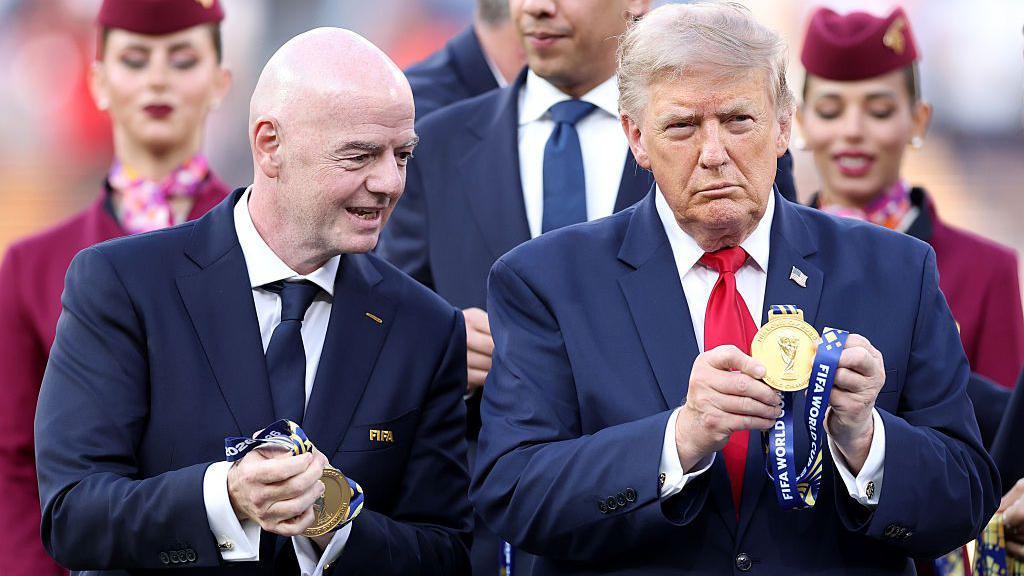 Image source, Getty Images
Infantino and Trump were booed by the crowd at the World Cup final
"What we know so far about how some national federations spend their money raises a lot of doubts about whether the money reaches the levels of football which Fifa promises," says Miguel Maduro, a former chairman of Fifa's governance committee.
Maduro claims he quit that role after 10 months because Infantino and Fifa's wider leadership disagreed with how the committee was operating.
"Fifa works as a political cartel - it is fed and supported on a system of patronage, that works through the money Fifa distributes to national federations. There have been cases of corruption," he added.
"There is a very high likelihood that this [proposal] will be approved.
"It is a form of legalised bribe."
BBC Sport has contacted Fifa for comment about Maduro's assessment.
Private equity investment has already transformed sports in the USA.
Rules have been changed in baseball, basketball, American football and ice hockey to allow for more minority investments in the past decade, causing team values to skyrocket.
And La Liga and Ligue 1 have already sold portions of their operations to private equity firm CVC Capital Partners in exchange for an immediate influx of money.
Infantino is hopping on a trend in sports economics rather than trying out something entirely new, but stands to further entrench his own power if he succeeds.
Why are Infantino and Ceferin in conflict and where could it end?
Infantino's proposal has deepened his ongoing conflict with European governing body Uefa - the most powerful and wealthy regional organiser.
Uefa President Aleksander Ceferin boycotted the World Cup final in protest against Fifa's decision to overturn USA striker Folarin Balogun's suspension after an intervention from Trump.
That followed a series of Uefa announcements making clear it would not follow Fifa policy on controversial issues including dynamic ticket pricing and hydration breaks.
One of the cornerstones of the division between the two is that Fifa's revamped and expanded Club World Cup has become a clear, direct threat to Uefa's Champions League.
Previously Uefa was the only organisation which ran an international club football competition featuring the best players, watched by billions around the world and generating significant profits.
Last summer Fifa muscled in on that elite club football territory, adding teams from other continents to the mix.
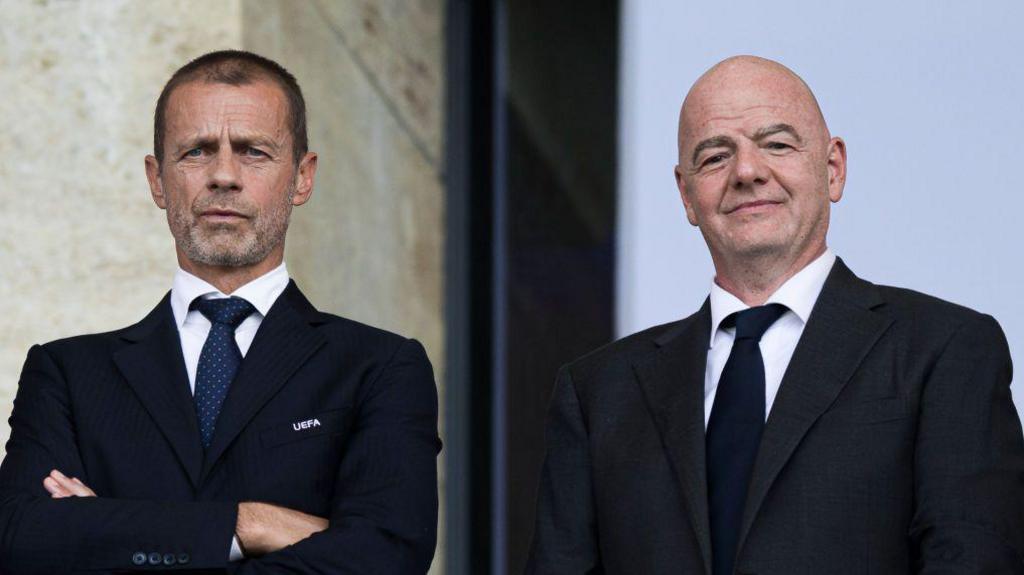 Image source, Getty Images
Aleksander Ceferin and Gianni Infantino's previously cordial relationship has become deeply fraught
Some national federations have expressed anger that they found out about the plans only when Fifa made them public, but crucially, many of the statements released so far have not explicitly condemned the concept of the sell-off itself.
That said, BBC Sport understands many Uefa members are angry about the plan and that a meeting is set to be convened for them to discuss a response.
On Tuesday Uefa said Fifa's plan is "to use our sport to enrich themselves and their friends".
Some reports indicate a threat by European nations to boycott the World Cup could be possible. The theory is that a World Cup without European countries would severely compromise the tournament's value to Fifa.
But the chances of that coming to pass are debatable.
Europe is one of the main hosts of the next tournament in 2030, with Spain and Portugal holding the majority of matches alongside Morocco, and Spain is currently lobbying hard to win the right to host the final ahead of Morocco.
There is also a women's World Cup next year in Brazil, which could be an early target for any action, if Uefa does want to take a bold step of its own.
Uefa could potentially find and field a candidate to stand against Infantino in next year's presidential election, but given Uefa nations comprise only 55 votes, they would be unlikely to win.
If Ceferin and other European leaders really want to fight Infantino's plan as hard as possible, they must be willing to make a big move of some sort very quickly indeed.
For now, Infantino is as emboldened as he has ever been.