.png)
 3 weeks ago
79
3 weeks ago
79
Nice World Cup you’ve got there. Be a shame if something … happened to it. The opening acts of this bloated, roided-up summer tournament have been surprisingly fun, light and sparky.
Surprising, that is, if you’ve absorbed much of its doom-laden buildup. Football always does this. There is a reason this sport has become humanity’s great brain-wipe distractor ray, the tool of mega-brands and jumped-up administrators with a Football Jesus fetish. You can stretch it thin, loan it out to despotic regimes. But the games will still be good. Football remains an indestructible substance.
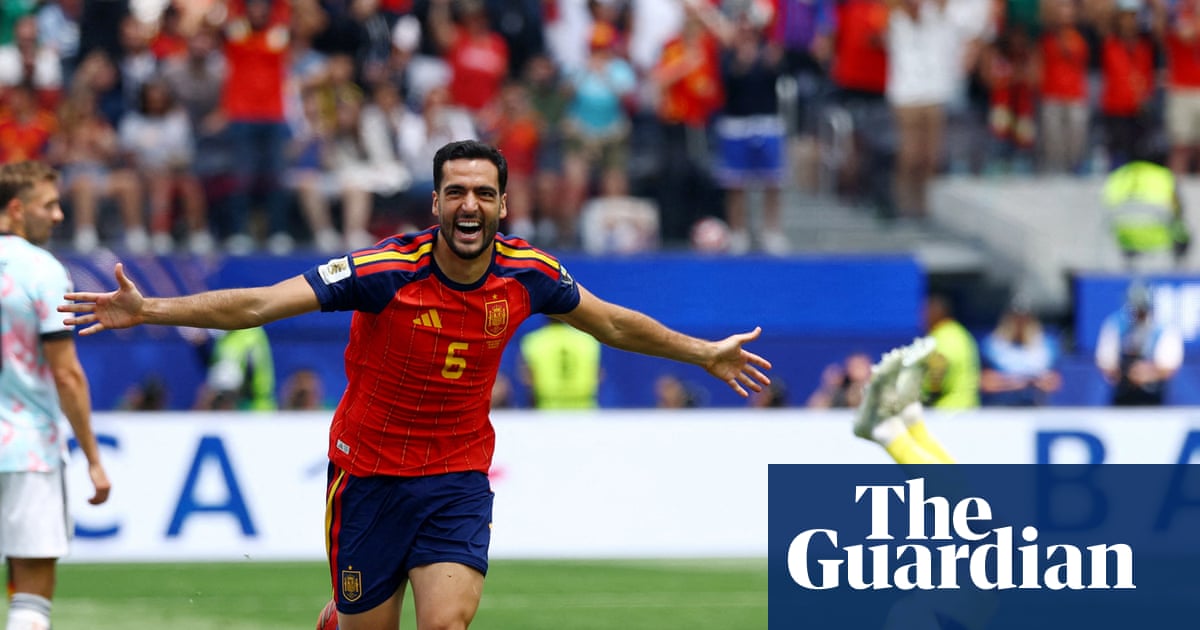
So we’ve had joy and Cape Verdean tears, bow-tie-twirling host-nation razzmatazz, fans who seem, of all things, just happy to be here. In the United States the World Cup has felt like just another high functioning element of the leisure-sphere. It’s David Beckham selling chainsaws, crisps and beer. It’s Chuck Flipburger beaming into a camera outside the Anusol Megadrome saying: “Spain’s super-duper-star Lamine Yarrmaarrrl.”
Even the games have been fearless and flowing and not, for example, dominated by a weird sense that everyone has their legs on backwards, that the ball is filled with helium and fear, that the whole experience is analogous to stabbing yourself in both eyes with a knitting needle made from pork-pie meat and self-loathing. Yeah, well. Enjoy that while you can.
You can sit there playing with your silly little machines as much as you like. I’ll show you a World Cup. Close to a week in, with almost an entire round of cloudless group games in the bag, the coffin lid is starting to creak. By late Monday morning the first little knots of Three Lions shirts could be seen wandering the blank, baking streets of Dallas, blinking in the light. England are at the door. And it’s time for a vibe shift.
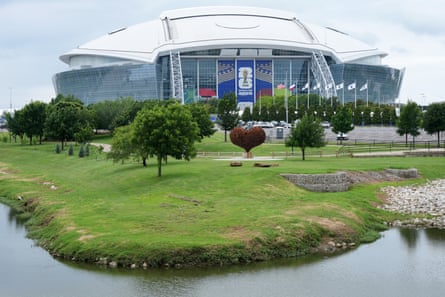
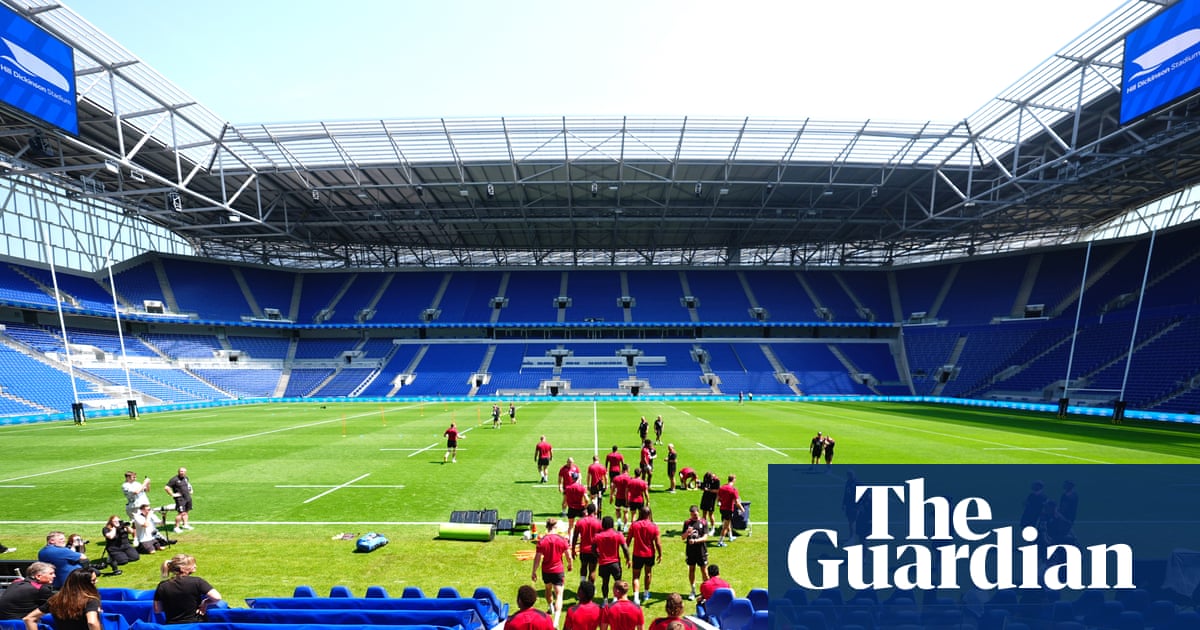
Well, maybe. England will play Croatia on Wednesday at the Dallas Stadium, a thrillingly vast concrete dome dumped down in the low, throbbing plains to the south of the city. It is a genuinely spectacular venue, sealed on all sides beneath its swooping panelled roof, with the feel inside of a vast and humid tropical shed, a place to keep your pet stegosaurus.
That Group L opener will be England’s first proper game in two years, a first meaningful regeneration of the England football identity since the last days of Gareth in Berlin, and as ever an opportunity to find out two things. First: are they any good? And second: what will it feel like? What is the energy? How much will it hurt? More importantly this time around, will people still care like they’re supposed to care?
This has been the dualism of England football. Results can often seem like a distracting subplot from England content, England feelings, the idea that every tournament appearance is an angst-ridden referendum on national identity. Euro 2024 was the perfect example, marked by howls of frustration, booing of the players, hatred of the manager, blocked systems, basically just a disaster; but simultaneously the most successful overseas men’s tournament ever.
There has been a shift in the nature of this. Interest in England football drops through the floor between tournaments these days but returns in reliably feverish form once the games begin. The change is also textural. You wouldn’t write a song about “hurt” any more. Younger people don’t feel the same bruised and helpless longing for victory. The England women’s team have won two tournaments. Club football and celebrity player-fawning have entered that space.
The signifiers of England fandom, the songs, the yearning, the beer in the air, have been ritualised, transformed into a semi-ironical costume party, another way of going to the pub. This is not to say extreme England fandom has dissipated. People still love and follow the team. But this has also been radicalised on the fringes.
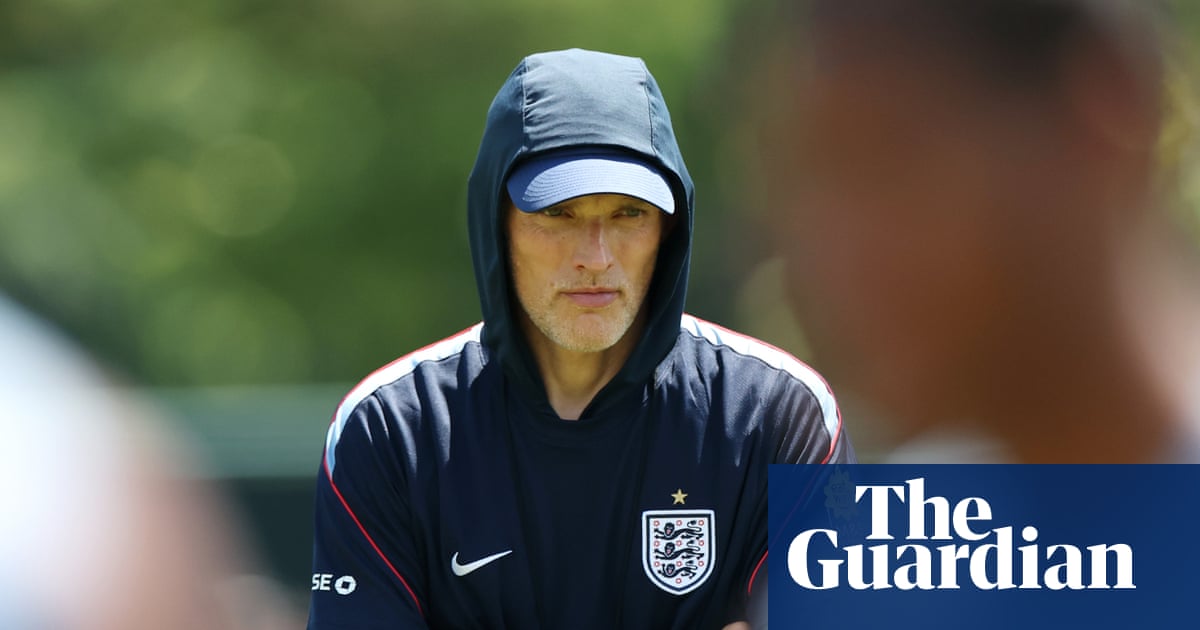
It is worth noting a strange online event that flared up around England’s pre-World Cup friendlies, one that may come again now, and which speaks also to a defining early note of this World Cup. In the days after England’s 1-0 victory over New Zealand in Tampa there was a surge of nakedly racist posts, mainly on X, about England’s players not singing the national anthem, or singing it with insufficient gusto. Thomas Tuchel was asked about this in Kansas City and shrugged it off.
But it is now out here, a lever, a wedge for targeted division. It feels even more jarring at a World Cup where there has already been a great deal of chat about cross-border nationality, about countries as porous, mutable things: the Swedish-Tunisian scoring goals for Sweden against Tunisia, the Curaçao team of dual-nationality Dutch.
This is not a loss of shape, or a blurring of meaning, or the dissolution of the World Cup as a robust entity. This is the World Cup telling us what countries are, what countries have done, how countries become countries.
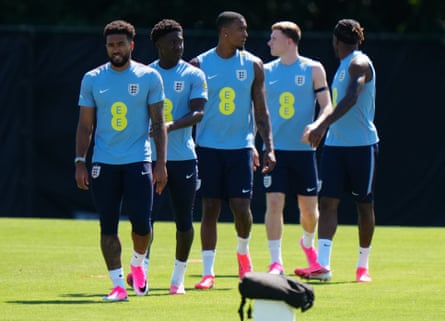
England have a remarkable squad in many ways, one that reflects clearly the history of the nation. Of 26 players, 20 had the option to play for another country under Fifa heritage rules. Eight have Caribbean ancestry, 10 African, four Irish and three Scottish. A record low number, six of 26, are English and only English. It takes a wilful ignorance of history to interpret this as some kind of betrayal, migrant opportunism, or whatever the line is. It is instead a fine-point portrait of what England is and has been.
Here’s an interesting stat. This World Cup is being contested by 48 nations. At some point in its relentlessly feisty imperial history, England or Britain have either invaded, occupied or taken military action against 44 of them (albeit this requires the broadest definition of all these things). The exceptions are Sweden, Uzbekistan and Côte d’Ivoire, who should all probably be watching their backs right now, particularly you, Sweden.
And England aren’t alone here. Belgium have five players of Congolese descent, not because of some random insurgency but because Belgium effected a violent occupation of Congo for 75 years. Similarly, Curaçao’s rise on the back of its Dutch dual-heritage diaspora isn’t a haggle or a cheat, but instead a legacy of the slave trade and the Dutch presence in the Caribbean, the cradle of Dutch wealth, the birth of the modern nation. The World Cup is teaching us about the world here, giving us a map of how those borders were made and reinforced.
All of which makes the question of who does or doesn’t sing a song before a football match seem a little by-the-by. Never mind that singing the anthem hasn’t really done much good anyway; every one of the great canonical defeats was accompanied by Tony Adams or similar belting it out on a roasting foreign field.
The anthem does, however, lead into the more fun side of the tournament. Are England a better, lighter, more adaptable team now? Englishness was Southgate’s key obsession, to the extent his “where art thou, England?” stuff may have become a limiting factor by the end. Even this week’s pre-tournament message, putting himself centre stage by insisting he doesn’t want to be centre stage, felt a bit like your dear old dying dad passive-aggressively insisting he doesn’t want any flowers when he’s gone. No really, don’t even think about me.
Now England have Tuchel, who really doesn’t care and who is, in his state of extreme pragmatism, probably closer to this generation of players. Premier League hype-derangement aside, England are somewhere between fifth and eighth favourites to win the World Cup, behind France, Spain, Argentina and Portugal and level-ish with the Netherlands, Germany, Brazil, Morocco and Belgium.
They have four very good players: Harry Kane, Declan Rice, Reece James and Jude Bellingham, plus a very reliable tournament goalkeeper. The midfield still lacks the extreme possession-based craft that wins tight knockout games. A semi-final would be a fine achievement. A quarter-final would be par, although even this may involve beating Mexico in Mexico City and Brazil in Miami.
One key plus point: the episodic, broken-up nature of play might suit Tuchel’s style, his interest in set pieces, the barked in-game battleship manoeuvres, the gangling arms at the drinks break. Much will depend on how Kane and Bellingham work together, how willing Bellingham is to make runs without the ball, to vacate the spaces where Kane likes to lurk.
Best of all, nothing is coming home here, because nothing ever was coming home, because there is nothing to come home. The team reflects the country, in so far as anything can reflect a country. Expectations seem reassuringly room temperature. Perhaps, for once, England may even have a single-track tournament experience, live in the moment, not the Arthurian past, and rise or fall simply on the merits of here and now.